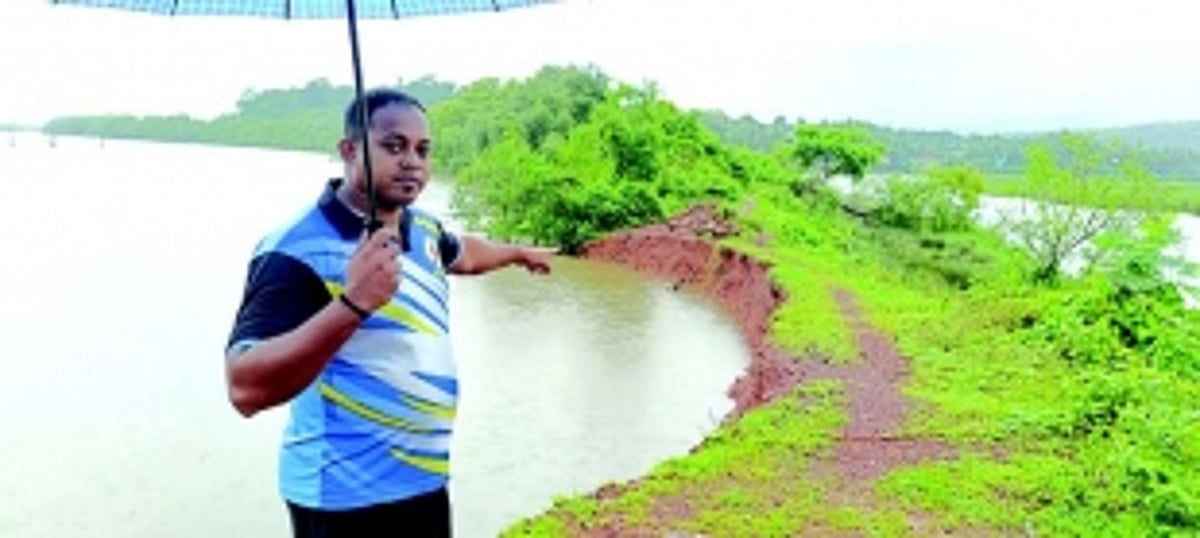
MARGAO: Farmers from Loutolim have responded strongly to Environment Minister and Nuvem MLA Aleixo Sequeira’s attempts to downplay their opposition to the alignment of the new High-Level Borim Bridge and its approach roads. The farmers defended their stance and questioned why the Minister repeatedly emphasises that no houses would be destroyed when their primary concern is saving the khazan fields, which would be impacted by the present alignment.
Reacting to the Minister’s statement that only 1.2 lakh square metres of khazan fields are being acquired and not four lakh, Loutolim farmers countered that even if only 1.2 lakh square metres of land is acquired in Loutolim, the entire four lakh square metres of khazan lands will be affected. The farmers pointed out that besides Loutolim, the total land to be acquired in other areas exceeds two lakh square metres, necessitating an Environment Clearance (EC), which the PWD has claimed is not needed. They also stressed that farmers will lose their livelihood if they lose their khazan land, and any compensation won’t be adequate.
Against the backdrop of the upcoming hearing before the National Green Tribunal (NGT) on 24 July, the farmers reiterated that the issue is not about the size of the acquired land but that they do not want to part with any portion of their khazan fields for the Bridge.
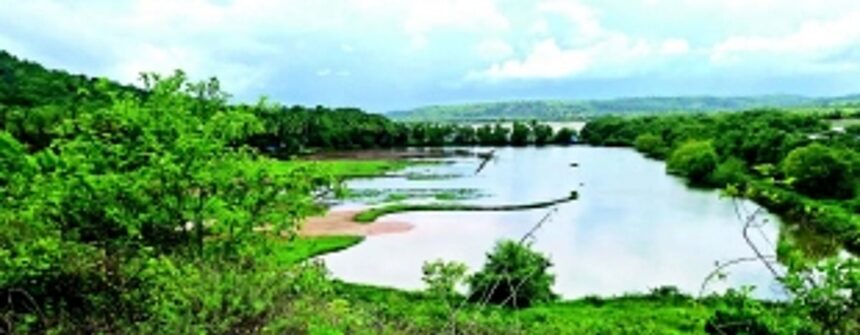
The farmers emphasised the unique nature of the khazan land, explaining, “If 1.2 lakh square metres of our khazan land is acquired (as per the Minister), and the roads are made for carting material or laying of stilts, then the entire khazan will get permanently damaged. The consultants fail to understand what a khazan is; they must first study how that khazan was made as it is a reclaimed agricultural area made after the construction of a bundh.”
They further described the delicate ecosystem of the khazan: “It is only about two feet of crust of clay on top which gets hardened in summer for three months. As soon as rain descends, it is soft clay again. Below the crust, it is all water. So, if the bridge is constructed, the khazan is lost forever. If any part of the khazan is acquired for the construction of the bridge, then the satisfaction of organic cultivation of organic food is lost forever, and so are our local fishermen who depend on fishing.” During the PWD inspection, a lady farmer-fisher presented two ‘shevte’ fish to the engineers, symbolising the intertwined livelihoods at risk due to the bridge construction.