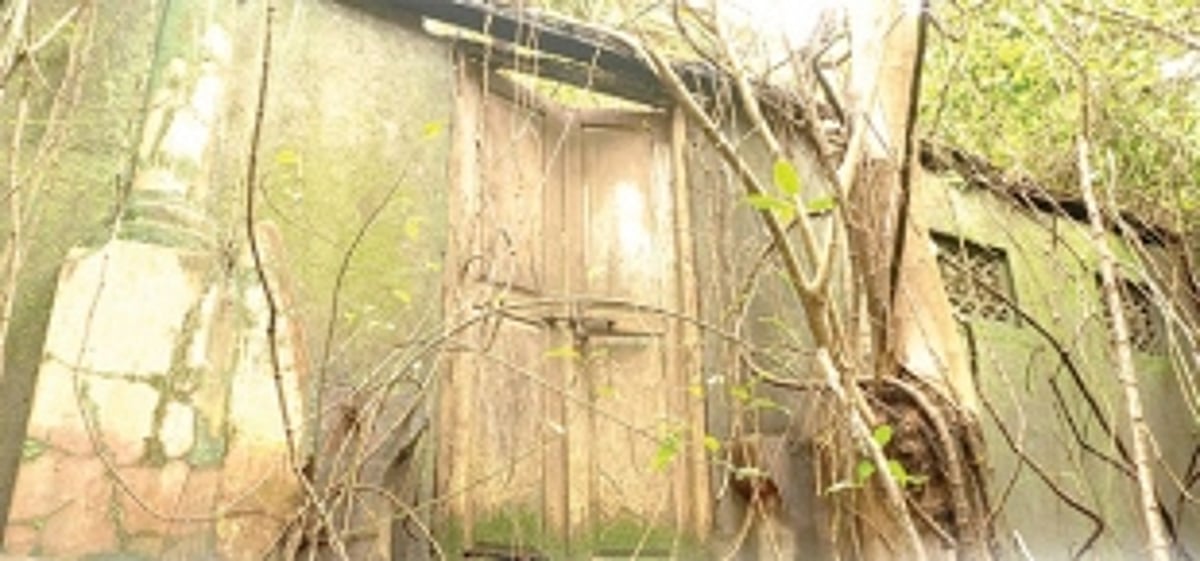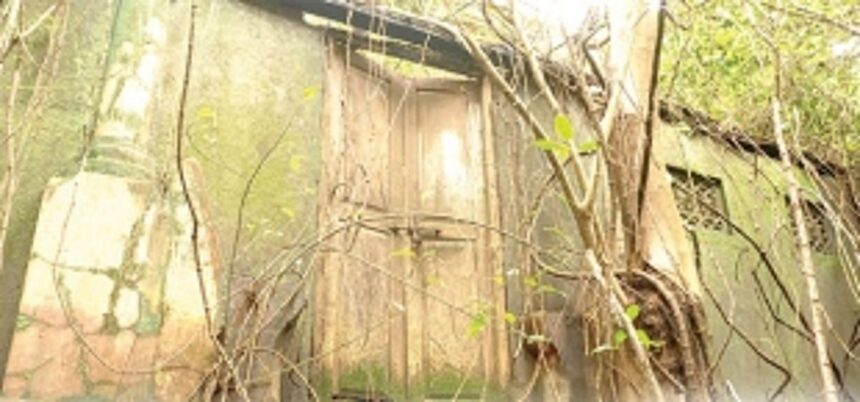
MARGAO: The 150th death anniversary of noted Goan Parliamentarian in the Portuguese Parliament Dr Francisco Luis Gomes will be on September 30 and yet Margao Municipal Council (MMC) is sleeping over its own resolution to acquire and preserve his house that is situated at Colmorod in Margao.
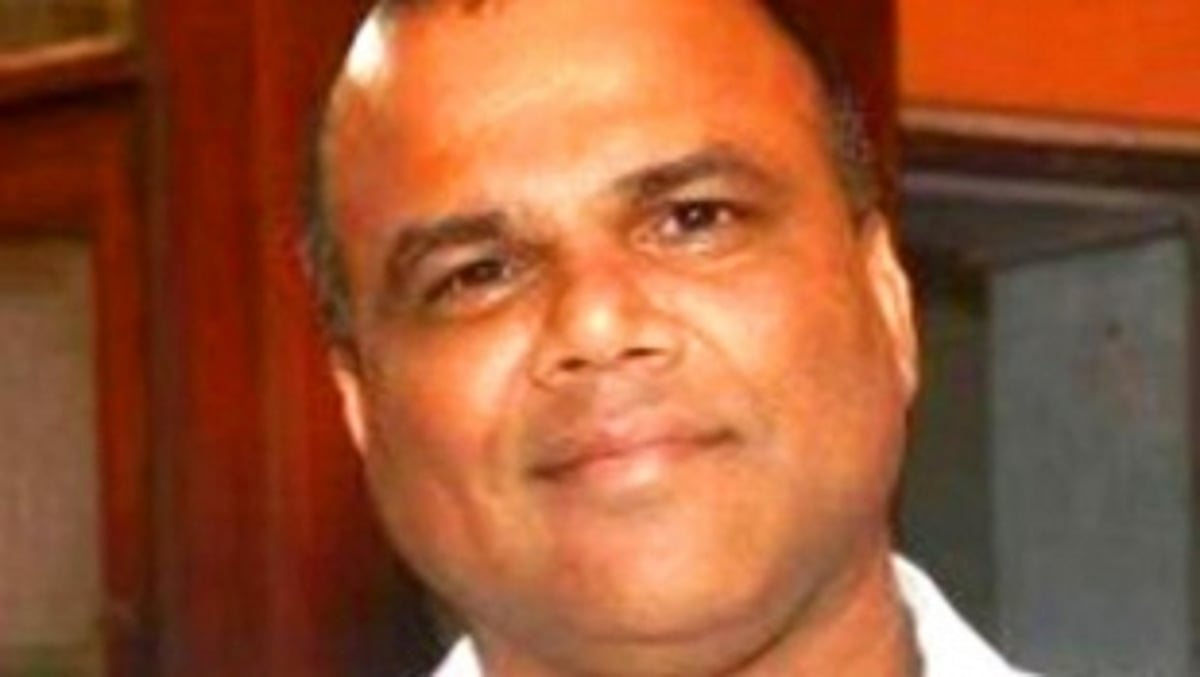
Not only the MMC but even former minister Avertano Furtado had proposed to acquire the house that is presently occupied by a tenant kept there by the current owners of the house. MMC Chairperson Babita Angle admitted that the council has not done anything about this matter.
Veena Patwardhan has written about the life of Dr Gomes who lived from 1829 till 1869 and called him a “forgotten Goan genius”.
He represented Goa in the Cortes Gerais or the Portuguese Parliament and was acknowledged to amongst the prominent intellectuals of that time and was called the “Prince of Intellectuals”. He was even felicitated by the then French emperor Napoleaon III who was the nephew of Napoleon Bonaparte but unfortunately he appears to be a forgotten figure in his home state of Goa.
While a road in Vasco and the district library at Navelim are named after him along with a bridge connecting Margao to Navelim, the most magnificent tribute paid to him was ironically by the Portuguese administration even though he fearlessly denounced their unjust policies.
A life size bronze statue of Dr Gomes is mounted on a pedestal and his many achievements are inscribed on the pedestal at Campal in a garden named after him, which was unveiled by then Portuguese Governor on 23rd December 1931.
His bust is installed near the Communidade Building at Margao and another one is found on the ground of Rosary High School in Navelim.
Dr Francisco Luis Gomes, who shares his birthday with another eminent Goan Abbe Faria, graduated from the Escola Medico Cirurgica de Goa in Panjim at a young age of 21 and became the chief surgeon of the institute subsequently.
He was elected to the Portuguese Parliament when he was 32 years old and impressed everybody with his very first speech in parliament. His superb debating skills made him a leader of his party ‘O Regenerador’, which was then the Portuguese Democratic Party. He was elected to the Parliament for two more terms. During his 9 years as a parliamentarian he was acclaimed as not only a distinguished orator but also as an astute economist, pragmatic political scientist, brilliant physician, social activist, historian, journalist and philosopher.
He vehemently opposed the injustices perpetrated on the people in colonies and in Goa; he demanded withdrawal of marriage and death taxes besides the taxes imposed on toddy tappers. He refused to be a cabinet member thrice as taking that position would clash with his independent views.
As a linguist, he was proficient in his mother tongue Konkani, Portuguese and French besides having a sound grasp over English, Latin, Italian, Spanish and even Marathi. He also contributed immensely to the revised edition of Konkani Grammar that was originally written by Dr Thomas Stevens the Jesuit priest.
His book titled “A liberdade da terra” (The freedom of the land) on the impact of Portuguese policy on Goa agriculture is considered to be his principal work and a masterpiece.
His brilliance won him many honours including being appointed as Associate Member of the Society of Economists of Paris which is a rare honour besides being given special audience by then king of France Napoleon III.
As he was afflicted with a serious ailment Dr Francisco Luis Gomes set sail for Goa his mother land on September 25, 1869 but he died five days later in the ship at a young age of 40 and his body was consigned to the waters of the Mediterranean Sea.