The supposed heightening of tensions over remarks made by Chicalim priest Father Bolmax Pereira is a typical case of trying to stoke the fires, when a retraction, regret and apology, already offered, is a humane and civilised way to end any difference or dispute.
The hurt and even anger at what followers and disciples of Shivaji Maharaj feel is understandable and words that can hurt should never be uttered. But then in a civilised society isn’t there no room for genuine regret? These were Father Bolmax’s words, “If any individual or organisation has been hurt due to this episode and misunderstanding, I express my deepest regret and hope and pray that the long-lasting bond between communities that have existed for centuries is maintained and grows stronger.”
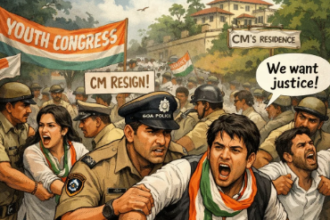
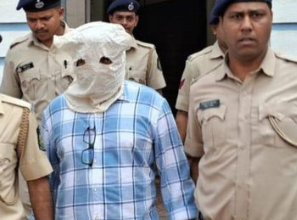
The fact that proxy bodies with the same level of comfort as the ruling dispensation, continue to up the ante and insist on an FIR and when that is done ask for an immediate arrest of a priest, indicates that the motive is not to address an isolated remark but use this as a part of polarisation project. That needs to be condemned.
At the same time, faith leaders and influencers in public life should act with a far greater sense of responsibility caution and even maturity, to prevent those with motives from latching on to words, isolated from their context which leads to a situation where there is tension and hardening of stands. Being responsible and restrained is not only vital but fundamental to any public conduct.
The fabric of harmony and unity in Goan society is too deep for divisive forces to succeed
Let us also remind those who are the star characters in the polarisation project that the biggest hurdle in their mission is their poor or negligible understanding of the ethos of Goa. This land has never had fault lines or enmities with other faiths. Yes, like in all societies people have led diverse lifestyles, and followed different customs and festivals but in a milieu where interfaith participation has happened. And the beauty of this is that this has never been seen as two faiths coming together but as people of Goa coming together.
This is our asset, our pride and our uniqueness. And each Goan will defend this to his or her last day.
At the same time articles of alarm, predicting “A Manipur-like situation” are avoidable. But its call for unity is correct
The context of the enmity, violence and hatred between two tribal outfits which are by and large divided between two communities in Manipur is very different to the Goa context. To raise an alarm, by one contributor to the Pastoral Bulletin, on the lines that the gut-wrenching scenes in Manipur would be replayed in Goa should have been avoided, especially since this writing appeared in a publication of faith read and followed by many.
(The Church has, however, clarified reports appearing in other media that these are not remarks of the Church, but of an individual contributor to the pastoral bulletin. Official comments of the Church are normally published by the Diocesan Centre for Social Communications. O Heraldo, as a responsible paper, has not published those remarks)
Those remarks have an inbuilt assumption that the communities that have lived like brothers will not rise above divides and protect Goa’s peace and harmony as one. That is sad and worrisome. Because alarmist words like ‘holocaust’ etc are used and this leads to further hardening of stands. This is when cracks start to build. But can’t they realise that this is exactly what the lobbies who oversee divisive projects want? After all, you cannot have a communal divide if the community refuses to be divided. “But weak parties will always try to divide and rule.”
However, other aspects of the newsletter are important. The call that all Goans need to unite, fight for the destruction of the land and against political opportunism is not debatable. It is indeed a fact.
When Goa becomes a land of good clean governance, where the destruction of its environment and corruption of its systems is stopped and there are equal opportunities for employment, growth, entrepreneurship and skill development, all Goans across faith will get back the land their ancestors loved and protected. That is the Goa we all want. And this is what one must focus on. These are the real issues that matter now above all else.
This is also a call to those who want FIRs and arrests. While understanding their sentiments and their feeling of being wronged, a call must go out to them to jointly participate in a harmony project where the values that nourish Goa to make it such a humane land, are put on fast-charging mode by all faiths. They will be adored, admired and respected if they work for a Goa for all, a land of peace and opportunities, run by a corruption-free government. After all, good governance has only two faiths – honesty and performance.