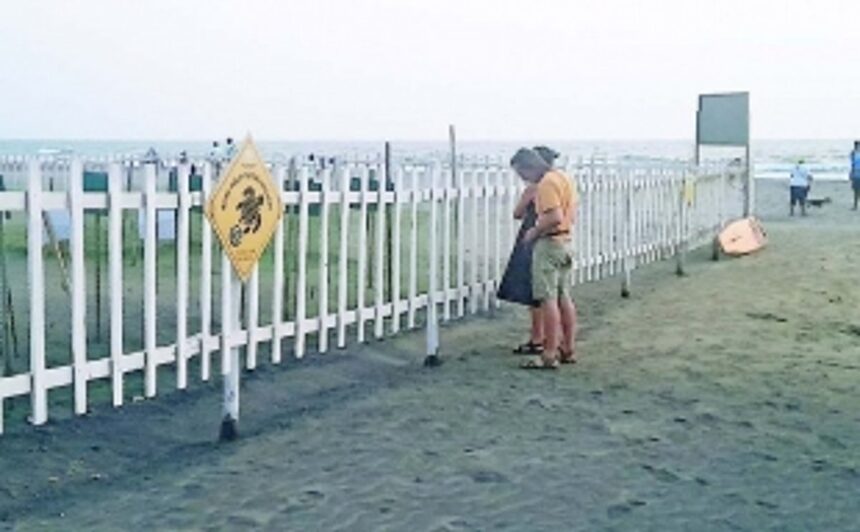
MORJIM: Despite 446 Olive Ridley turtles coming on shore from Galgibaga in South Goa to Morjim in North Goa to lay 24,564 eggs – red flags are being raised in the figures released by turtle guards in Morjim.
In a shocking revelation at the Morjim nesting site it has come to light that 7,869 eggs were laid, 5,435 hatchlings released, 334 eggs dead and 2,095 were reported to have been stolen.
Of the 446, 230 turtles visited Galgibaga and 216 turtles came to Morjim.
“That means poaching has been allowed and it is a crime. It is sad that despite the turtle guards being there, people managed to steal the eggs. This is a crime under the Wild Life Protection Act 1972 and I hope the Forest Department will initiate action,” fumed Sarita Fernandes, former director, Morjim Sea Turtle Trust.
Under the Wild Life Protection Act, sea turtles are classified as “Schedule I” species, which means they are accorded the highest level of protection. The Act strictly prohibits the hunting, poaching, trade, or any other form of exploitation of these animals.
The figures from the Galgibaga turtle nesting site released by the Forest Department indicate that 22,852 eggs were nested and 13,185 hatchlings were released with 7,053 eggs being hatched and 1,115 dead.
The story is different at the Morjim nesting site with 7,869 eggs being laid; 5,435 hatchlings released; 334 eggs dead and 2,095 stolen.
“I am not surprised. If tourists were allowed to drive right up to the nesting site in their cars and clubs on the beach allowed to blast music right through the night with no one bothering, this is bound to happen and even more can be expected,” snarled Albert Fernandes, resident of Morjim.
“The government now, wants to start a parking space near the turtle nesting site. They are verbally ordering us to demolish our traditional structures to raze sand dunes and build a parking space against the wishes of locals,” Fernandes added.
Section 39 of the Wild Life Protection Act specifies that for offences involving Schedule I species like sea turtle, the punishment ranges to imprisonment from three to seven years and a fine of not less than Rs 10,000 which may extend to Rs 25,000.
Section 48 of the WPA states: “This section enables the government to constitute a separate Special Tiger Protection Force (STPF) to control poaching and related offences, including those involving sea turtles.”
Section 49B empowers the government to constitute a Wildlife Crime Control Bureau (WCCB) to collect intelligence and coordinate efforts to combat wildlife crimes, including the poaching and illegal trade of sea turtles and their products.
“It is high time the government and the Forest Department takes note of what has happened. Poaching is a serious offence. Figures were never forthcoming from the turtle guards but now that the truth is out, the government needs to act fast,” implored Sarita Fernandes.