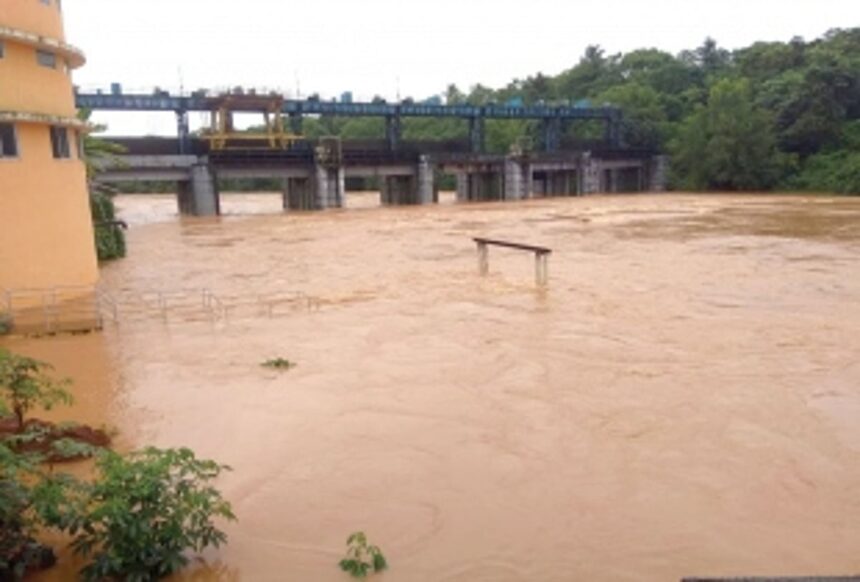
PONDA: During the ongoing rainy season, residents of several areas have reported receiving muddy water supply from the Opa Treatment Plant, raising concerns about the water quality and its impact on public health.
The issue is suspected to be linked to the overflowing of mining pits during heavy rainfall, which then gets mixed into the river water.
Local environmentalist Sandeep Parkar, residing in Khandepar on the bank of the river, has been vocal about the potential source of the problem. He pointed out that mining companies located along the river bank contribute to the issue as their pits overflow during heavy rains, contaminating the river water.
Parkar had previously notified the Goa State Pollution Control Board officials about the issue and demanded action against the mining companies.
Nayan Naik from Kavlem and Vanita Volvoikar from Curti have also shared their experiences of receiving muddy water in recent days, and they expressed concern over the water quality.
While officials from the water treatment plant claimed that they are filtering the water and supplying clean water, they acknowledged that the turbidity and reddish appearance in the river water are caused by mining pit overflows and occasional landslides during heavy rain.
The continuous heavy rainfall led to a significant rise in the Khandepar River level, reaching 6.5 metres on Sunday, which posed a threat to the Opa Water Treatment Plant. The high turbidity levels in the river water increased the workload of the treatment plant’s staff, who had to repeatedly clean clogged filters due to the density of water sediments.
An engineer from the PWD Water Division explained that runoff from mining pits in the surrounding areas flows into the river during heavy rainfall, leading to increased turbidity. However, he assured the public that the water supplied after filtration at the Opa Water Treatment Plant is safe for consumption.
Despite the reassurances, some consumers have reported receiving reddish water, which officials attributed to fine particles that remain even after filtration. The officials emphasised that these particles are not harmful and do not pose a health risk.
Authorities are urged to take swift action to address the water quality concerns and work towards sustainable solutions to prevent contamination during heavy rainfall.