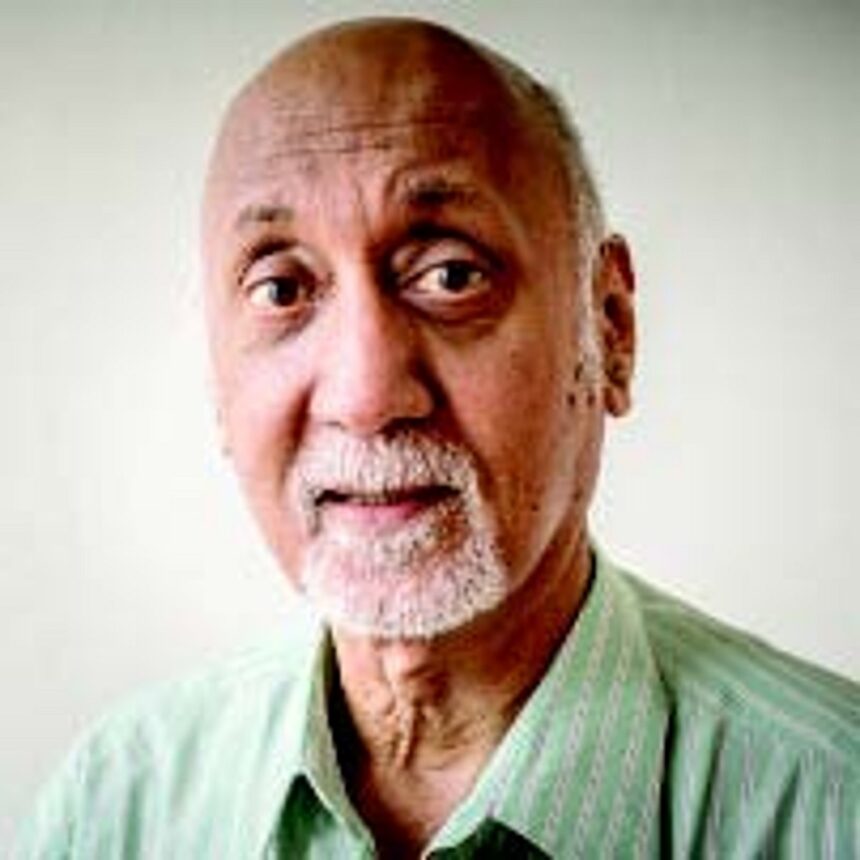
PANJIM: Even as Israel and the Palestinian armed group Hamas have agreed to a four-day truce, Prof Achin Vanaik has stated that the struggle for justice for Palestine is a long-term issue.
Speaking exclusively to O Heraldo on the humanitarian crisis unfolding in Gaza due to the war raged by Israel, the retired professor of International Relations and former Head of the Department of Political Science at the University of Delhi said that one cannot just look at what Hamas did as the starting point. He said, “Israel is guilty of the longest-running illegal military occupation of the 20th and 21st century. And one that has been sustained by the most brutal forms of overt and covert violence. The relationship between Israel and Palestine is a relationship between the colonising power and the colonised.”
Stating that there is no doubt that Hamas carried out a terrorist act on October 7, Prof Vanaik said, “But Israel has been carrying out a terrorist campaign before October 7 and after. But nobody calls it terrorism but uses terms retaliation, reprisal and self-defence, when actually when you see what is happening, it’s a terrorist campaign. Remember the occupied have a right to resist but the occupier does not have the right to continue with its brutality. The British ruled India, didn’t the Indians have the right to resist British colonialism?”
Responding to a question on the future of the current war and the role of India in bringing a solution, he said, “The Indian government did not even call for a ceasefire. The majority of Indians are largely engrossed in livelihood issues and don’t think much about foreign policy. But it’s the middle class which is usually better off and can think of foreign policy but is not interested in questioning the government’s stand.”
Prof Vanaik further said, “You don’t have to be a leftist, a liberal or a Muslim to recognise the justice of the Palestinian people. You only have to have a basic sense of humanity and say, ‘Not in my name’. Don’t separate the question of fighting injustice abroad from the question of how strong democracy is within your own country. The Arab countries are saying what they are saying due to pressure from the public. The struggle for justice for Palestine is an open-ended one and a longer-term issue.”
Drawing parallels to the colonisation of India by the British and Palestine by Israel he said, “Decolonisation of India didn’t happen because Indians were economically and militarily stronger, it was the will to resist the colonial powers. With Palestinians too it’s the will to resist which has continued for generations and will continue for generations.”
When asked about the failure of all ‘superpower’ nations and global platforms such as the United Nations in bringing peace and the execution of the two-state theory, he said, “The creation of Israel was a rectification of injustices done to Jews by the Europeans but at the same time it was a profound injustice to the Palestinians. Despite all that, the Palestine Liberation Organization (PLO) in the Oslo Accord accepted the state of Israel but the Israeli government did not accept the Palestinians’ right to their own State and therefore this brutality continues.”