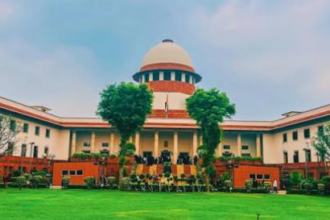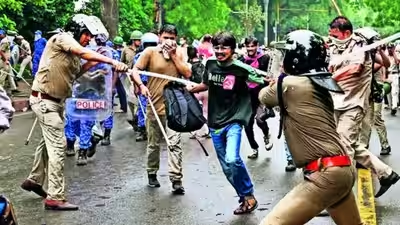
The Supreme Court on Thursday constituted a five-member High-Powered Enquiry Committee to examine allegations of excessive use of force by police and paramilitary personnel during a July 20 Sansad Chalo march organised by the Cockroach Janta Party.
The committee will be headed by former Supreme Court judge Justice R. Subhash Reddy. Its other members include former Punjab and Haryana High Court Chief Justice Ravi Shankar Jha, former Delhi High Court judge Justice Shalinder Kaur, former CBI director Rishi Kumar Shukla and retired Meghalaya Director General of Police Dr LR Bishnoi.

The panel has been tasked with examining a range of allegations relating to the handling of students and protesters during the march. Among the issues it will consider are allegations involving the use of pellet guns, electric batons, lathi charges and tear gas.
The committee will also examine allegations of violence against women protesters during the demonstration. The scope of the inquiry extends beyond the immediate use of force and includes questions surrounding police surveillance and whether the crowd-control measures adopted during the protest were proportionate to the situation.
Another key area before the committee will be the medical assistance provided to those affected during the protest. It will examine the provision of medical aid and the issue of compensation for victims, according to the details contained in the court-related report.
The inquiry will not be limited to allegations against security personnel. The committee will also consider claims made by authorities regarding violence against police personnel and damage to public property during the protest.
The Supreme Court’s decision to constitute the panel places the events of the July 20 march under a detailed independent examination. The five-member body brings together former judges, a former senior investigating agency official and a retired police chief.
With allegations ranging from the use of force and treatment of women protesters to surveillance, crowd-control methods, medical assistance and compensation, the committee’s mandate covers several aspects of the protest and its aftermath.
The panel’s examination is expected to assess the allegations made by protesters alongside the claims raised by authorities concerning violence and property damage. The committee’s findings will therefore have to consider both sides of the events surrounding the Sansad Chalo march.
The Supreme Court’s move comes amid continued attention on the manner in which security forces respond to student demonstrations and the proportionality of crowd-control measures. The inquiry will seek to examine the specific allegations arising from the July 20 protest and determine the circumstances surrounding the actions taken by police and paramilitary personnel.