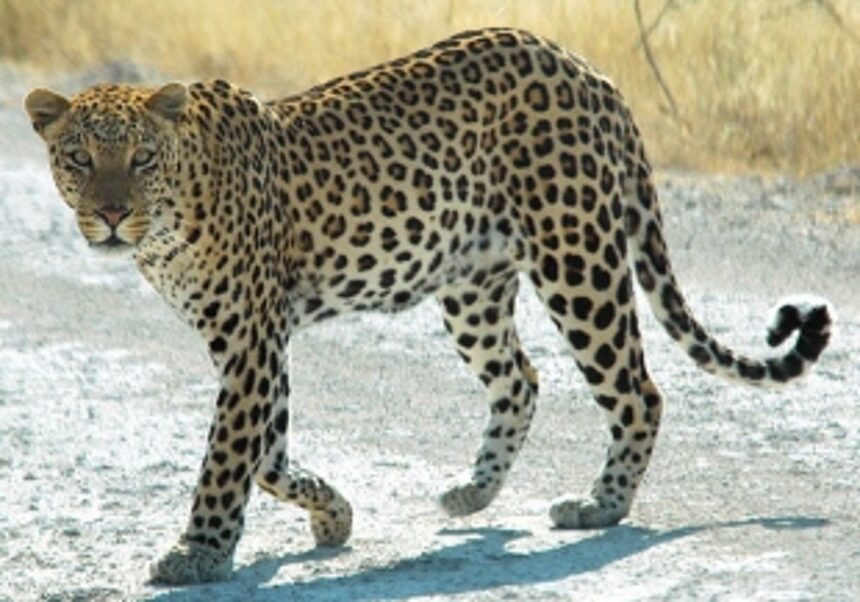
PANJIM: Domesticated animals do not constitute a major part of leopard’s diet, despite there is an increasing trend of wild cats straying into human habitation throughout the year, reveals a joint study conducted by the State Forest department and the Goa University’s Zoology department.
The experts had undertaken scat analysis of 55 scats collected from Protected Area(PA) and inhabitated areas revealed that wild boar constituted a major proportion of the prey biomass (29 per cent), followed by chital (25 per cent), Indian Crested porcupine (15 per cent), barking deer (13 per cent), grey langur (5.6 per cent) among others.
The study conducted in both protected forest areas as well as human dominated areas also shows that wild boars are the most preferred prey for the leopards.
The experts also observed that since the wild species that the leopards preyed upon in protected areas (PAs), are on many occasion also found in forested areas close to human habitation, the wild cat presence in the human-dominated areas is high.
“It can be interpreted from our data that although leopards were reported close to human habitations throughout the year, their dependence on domestic animals was low,” said the study done by Bipin Phal Desai, Avelyno D’Costa, MK Praveen Kumar and SK Shyama.
“Study also indicates that the wild species that the leopards preyed upon in PAs were also present in forested areas close to human habitations. This could be the reason for the presence of leopards in human-dominated areas with a low dependence on domestic animals,” it said.
On the other hand, the domestic animals-dog, pig, cat and goat- constituted only 33 per cent of the leopard’s diet. The dog was the most preyed-upon domestic animal followed by pig.
The diet profile analysis suggests that leopards preferred small-sized prey.
It also said most of the incidents of human-animal conflict involving leopards occurred during the species’ pre-breeding season which stretched through August to October, which triggers movement of the wild cats into normally uncharted territories.
“The conflict during January and February could be mainly due to the movement of females in the post-birth phase. These leopards, which continuously change their location for the safety of the young cubs, come in contact with humans employed in cashew plantations and other agricultural activities,” it said.