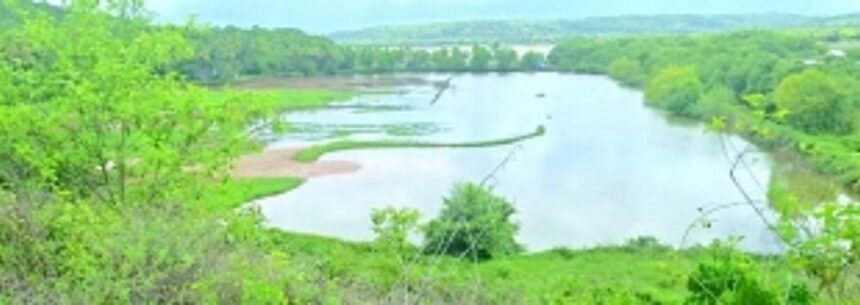
MARGAO: The Public Works Department (PWD) of Goa has presented a detailed environmental plan to the Goa Coastal Zone Management Authority (GCZMA) in response to objections and concerns raised by local farmers and fishermen from the villages of Loutolim and Borim regarding the proposed construction of the High-Level Borim Bridge. The project, designed to reduce traffic congestion on NH-566, has faced vehement opposition due to potential impacts on khazan fields and the livelihoods of the local community.
According to the PWD, the 8-km bridge will have 30 piers and a navigation span with a 14-metre vertical clearance. To mitigate environmental concerns, the PWD has outlined a comprehensive plan. Measures include phased tree cutting and replanting to combat soil erosion, using interceptor sheets or HDPE barriers to prevent soil contamination, and implementing a mangrove plantation program in consultation with the Biodiversity Board and Forest Department. The plan also addresses air and noise pollution, with monitoring stations to be set up in collaboration with the Goa State Pollution Control Board. Water management is another key aspect. The PWD has committed to preserving existing stormwater drains and integrating them into the project’s drainage network to prevent flooding. (see box)
In response to these proposals, the GCZMA has issued a list of recommendations while withholding final permission pending further review. In light of the farmers’ objections, which were recorded during their visit to the GCZMA head office earlier this month, the Authority has taken a cautious approach.
The GCZMA’s recommendations emphasise strict adherence to the provisions of the CRZ Notification 2011, as well as guidelines set forth by the Ministry of Environment and Forests. The GCZMA also calls for the proper disposal of construction debris outside CRZ areas and ensuring the bridge does not obstruct tidal water flow.
The GCZMA also mandates obtaining all necessary permissions from various departments and authorities before commencing work. The authority has called for the creation of an Environment Management Cell to monitor environmental aspects throughout the construction and operational phases.
Additional recommendations from the GCZMA focus on worker welfare and site management. These include providing adequate housing, medical facilities, and sanitation for construction workers, implementing safety measures such as site barricades and personal protective equipment, and ensuring proper fuel supply and cooking facilities for labourers.
The GCZMA has also stressed the need for a detailed Disaster Management Plan to prepare for unforeseen conditions.
One of the more stringent recommendations is the requirement for post-construction monitoring. The PWD is tasked with conducting morphological checks for a year after completion to assess any long-term impacts on the local environment.
The GCZMA has reserved the right to stipulate additional conditions for environmental protection if deemed necessary in the future. They’ve also requested quarterly monitoring reports from the PWD.
The coming months will be critical as the NGT prepares to hear the farmers’ petition and the GCZMA reviews the PWD’s detailed presentation.