Team Herald
PANJIM: The State Expert committee, formed in anticipation of the COVID third wave, has suggested that health infrastructure be ramped up to meet the predicted third wave of the coronavirus.
The committee that met on Saturday will submit its recommendations to the State Task Force that has been set up to manage the third wave.
The crux of their recommendations revolved around three aspects: how best it can ramp up the existing health infrastructure; the need to give priority to lactating mothers and mothers with co-morbidities in the ongoing vaccination drives; and the treatment protocol to the three subgroups below the age of 18 that are likely to be affected more by the third wave.
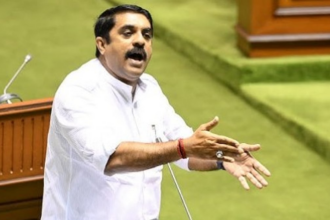
On Friday evening, the task force had a meeting chaired by Chief Minister Dr Pramod Sawant and Health Minister Vishwajit Rane.
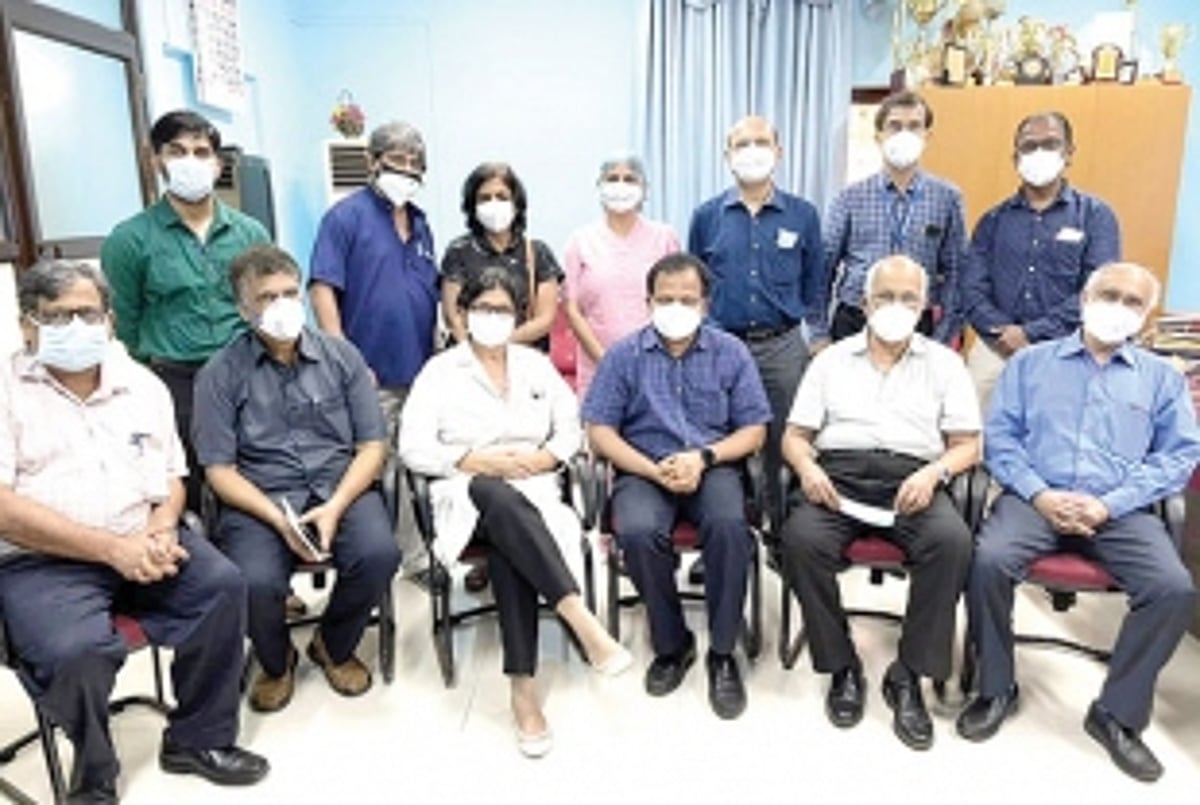
On Saturday, Rane stated that the government is looking forward to the valuable suggestions and guidance from the expert committee that includes Dr Jagdish Cacodkar, head of the Preventive and Social Medicine (PSM) department at Goa Medical College (GMC) as its Secretary; Dr Shivanand Bandekar, GMC Dean as its Chairman; Dr Jose D’Sa, Director of Directorate of Health Services (DHS) as its Vice Chairman; and other members.
On Saturday afternoon, besides Bandekar and Cacokdar, expert committee members such as Dr Mimi Silveira, Professor and Head of the Pediatrics department at GMC, and Pediatrician Dr Harshad Kamat, a private practitioner addressed media persons.
Kamat cautioned that they were looking at the worst case scenario and the experience of the second wave was also taken into account.
He added that they had examined the problems peculiar to the age group of newborns, general paediatrics age group and the adolescent age group of 12-18 years.
Cacodkar revealed that the population of children below the age of 12 is approximately 2.5 lakh while the population of those below the age of 18 is approximately 3.5 to 4 lakh.
The committee deliberated on the beds and facilities required in GMC and the two district hospitals as well as in the private sector. They recommended that one pediatric private hospital in each district be earmarked as a dedicated COVID hospital. Cacodkar added that 130-odd doctors from the Indian Academy of Pediatrics (IAP) Goa unit will be part of the State’s efforts to combat the third wave.
Regarding government hospitals, Cacodkar said there are 101 beds in Neonatal Intensive Care Units (NICU) in the State and recommended adding 10 beds in the GMC’s unit and 5 in the North Goa District Hospital immediately. Depending on the percentage of cases, the same will be scaled up. He pointed out that there are 36 Pediatric ICU (PICU) units and they have suggested that 20 per cent of the adult ICU units be converted to PICU units as and when required. Similarly, he said there are five Special Newborn Care Units (SNCU), which can be scaled up as well.
Cacodkar further stated that the committee has recommended that a uniform standard treatment protocol for mild, moderate and severe symptom patients be followed in both government and private hospitals, which will be as per the advice that has already given by the All India Institute of Medical Sciences (AIIMS) and the Union Health Ministry.
Cacodkar also announced that training programmes in South and North Goa be conducted for all doctors, general practitioners and consultants.
On a different issue, Kamat highlighted the importance of lactating mothers of the age group of 18-44 with children below the age of two, to be vaccinated as they can pass on the antibodies to their babies. Bandekar said that mothers with co-morbidities like diabetes, kidney disease and hypertension with Ischemic Heart Disease (IHD) should also be given priority as their health is vital for taking care of these young children.
Bandekar added that in case there is a shortage of vaccines, these mothers should be vaccinated first. He also said that after discussions with epidemiologists, it has been predicted that the third wave, if it at all becomes a reality, will occur in the month of September.
The doctors also stressed that this is just a prediction and not what will happen and added that it doesn’t mean only the age group below 18 will get affected, it’s just the proportion of cases in this group may be higher as compared to other age groups, which could also get infected.