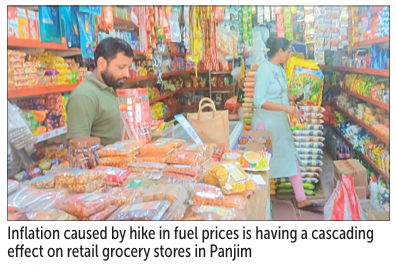
The latest increase in petrol and diesel prices — the fourth in less than two weeks — has pushed up the cost of moving goods across the sup ply chain, resulting in higher wholesale rates for essential commodities ranging from rice and edible oil to dairy products and eggs. For neighbourhood grocery stores, the impact is being felt from both ends. While procure ment costs have surged, cus tomers struggling with inflation are cutting back on purchas es, leaving retailers squeezed between rising expenses and weakening demand. “Due to multiple fuel price hikes, the rates of food grains, oil and dairy products have increased by at least 10 per cent,” said Gopa Ram of Rose & Cherry General Store. “Sales of food grains and cooking oil have fallen, customer footfall is down by nearly 20 per cent and my earnings have taken a hit. If this trend continues, things will only get worse,” Ram added.
Traders say the problem extends far beyond higher fuel bills. Every increase in transport costs is eventually reflect ed in wholesale prices, forcing retailers to stock goods at higher rates while facing resistance from consumers al ready grappling with inflation. Shivaram Pujari of Arti General Store said the decline in purchasing power is becoming increasingly visible. “Cus tomers are not coming in the numbers they used to. I am buying stock from wholesalers at higher prices, but I can not proportionately increase my margins. My profit margin has dropped from around 12 per cent to 8 per cent. People think retailers are raising prices, but we are merely passing on the costs imposed on us,” he said. The squeeze is particularly severe for small family-run stores that continue to shoulder fixed expenses such as rent, electricity and wages even as revenues decline. Posaram Dewasi of Silveria Shopping Centre pointed to the sharp jump in the prices of everyday essentials. “A one-litre bottle of edible oil that cost Rs 118 is now Rs 127, while a five-kilogram packet of basmati rice has increased from Rs 595 to Rs 650,” he said. “We are selling at the print ed price, but our earnings are shrinking while overhead costs remain the same.

If prices continue to rise, our losses will only increase.” The inflationary shock is also rippling through other small businesses. Poultry retailers report that rising fuel costs, coupled with heat-related supply pressures, have pushed egg prices sharply higher, dampening consumer demand. “The double whammy of extreme heat and fuel price in creases has pushed egg prices from Rs 65 per dozen to Rs 80 per dozen,” said Shahid Ramzan Bepari of Al-Heena Ha lal Mutton Chicken Shop. “We are already seeing customers reduce their purchases.” With each fuel hike feeding into transport and distribu tion costs, traders fear the burden will continue to trick le down to both businesses and households. For Panjim’s small retailers, many of whom operate on thin margins, the concern is no longer merely about lower profits but about how long they can absorb the escalating costs before their businesses become unsustainable.