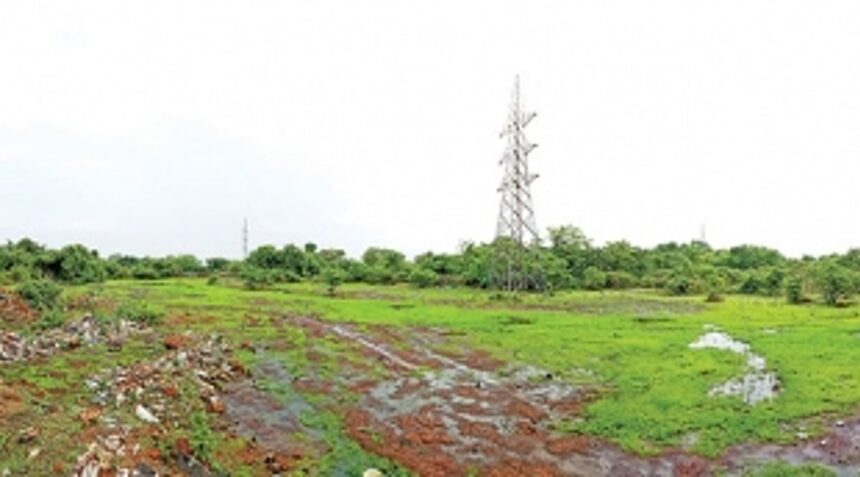
PANJIM: The proposed Integrated Solid Waste Management Plant (ISWMP) at Bainguinim, considered as the centralised facility for the State, will treat 250 tonnes of mixed waste per day (TPD).
The facility costing over Rs 240 crore would be in operation in two shifts per day, with six working hours per shift and will be functional for 320 days in a year.
The Nagpur based National Environmental Engineering Research Institute (NEERI) in its Environmental Impact Assessment (EIA) report has mentioned that the proposed facility will improve the aesthetics of the surrounding areas and improve the quality of life, in specific the improvement of health and indirectly will also create some employment to the local people.
The Corporation of the City of Panaji (CCP) had in 2009 acquired 1.71 lakh sq mtrs of land at Bainguinim to set up the ISWMP to handle the waste generated in the capital city. However, the same was caught in legal battle following an objection raised by the local village panchayat.
In 2017, the project was handed over to Goa Waste Management Corporation (GWMC) with CCP transferring the land to the waste corporation.
GWMC has proposed the facility at Bainguinim on similar lines as set up at Saligao and proposed facility for South Goa at Cacora.
“The proposed facility at Bainguinim is considered to be a Centralised Solid Waste Management Facility (CSWMF) for the State of Goa as there is a need to enhance the existing SWMP system for Regional Area and thus improve the health and having standards of its residents,” the EIA study said.
The total cost of the proposed SWMP is Rs 248.50 crores proposed to be funded by the Central government, State government, urban local body and the concessionaire under Design Build, Finance, Own and Transfer (DBFOT) basis.
The Goa State Pollution Control Board (GSPCB) will hold a public hearing on the EIA report on July 28 at 10.00am onwards at the Old Goa village panchayat hall.
Project’s purpose
The existing numbers of decentralised units are insufficient. Also finding areas in the urban local bodies for setting up of new decentralised compost units is a difficult proposition due to the fact that the land is a scarce commodity and won’t be available for setting up the required CMSWM facilities.
The present decentralised facility is completely manual in operation. Crude disposal of solid waste is adopted without any facility for disposal and resource recovery. Crude dumping of waste is happening at various locations in the outskirts of the city due to the absence of a centralised engineered MSW treatment facility.
Therefore, in order to safeguard the population from health hazards and maintain a clean and hygienic environment, it is extremely essential to implement the proposed CMSWM facility.
Development and implementation of this integrated solid waste management plan are based on the 4R environmental protection rules (Reduce, Recycle, Reuse, and Recover).
Project Design
The ISWMP is designed to process and treat 250 TPD of solid waste. The per capita waste generation for the regional area is considered as 410 gm/capita/day. The ISWMP system has been proposed for the design year 2041, for a total capacity of 250 TPD which consist of 50 TPD of non- biodegradable waste, 150 TPD of wet biodegradable waste, and 50 TPD of mixed waste. The system has provisions for MRF facility, bio-methantion system along with gas engines, in-vessel composting system, sanitary landfill, mobile vehicles, workshop, facility center for operators, having canteen, shower area and medical room, administration building, laboratory, resource center, car and vehicle parks, effluent treatment and recycle plant, container storage yard, road network, peripheral drains, groundwater monitoring wells and plant fencing complying with the Solid Waste Management Rules, 2016.
Operation at the facility
It is estimated that approximately 250 TPD of mixed solid waste (MSW) will be generated, collected and processed at the ISWMF. Accordingly, the proposed CMSWMF shall be designed to treat the mixed waste, segregated dry waste and segregated wet waste separately and independently.
The proposed facility shall be designed considering receipt of waste at the facility for 365 days per year, but effective working days as 320 days per year so as to provide sufficient downtime and maintenance of the plant.
Also, the facility shall be been designed considering the operation of the facility in two shifts per day with 6 hours of operation time which includes two hours of cleaning time in each shift i.e. effective operation time as 12 hours/day.
The facility shall have two weighbridges (one for entry and one for exit). The tipper trucks/refuse compactors will be visually inspected and if found in accordance with the treatment and operation philosophy of the plant, will be weighed and permitted into the facility.
The segregated dry waste, wet waste and mixed waste after visual inspection weighing at the weighbridge shall be delivered to the dedicated tipping floors for each type of waste respectively.
It shall be a total enclosed structure with entry/exit of garbage compactors, floor washing connections, drainage system, lighting, ventilation and odour control system.
The facility will have the automatic operation and a PLC/SCADA control from a central control station. State-of-art centralised material recovery facility for recovering recyclables out of the non-biodegradable component of city waste with provisions for screening, manual sorting on a conveyor belt, magnetic separator, bailing, and packing and storage facilities.
Electricity generated from the plant will be used to run in-house plant operations and reduce operation cost.
Sale of various recycled products, compost and RDF to provide a revenue source reducing the plant operating cost. Local manpower will be trained in operating the facilities to improve skill sets and competence.
Biodiversity recorded
A total of 36 tree species, 15 shrub species, 8 species of herbs, 1 species of climbers and 2 species of mangroves were recorded in the study area. The study area comprises of mixed vegetation with uneven-aged deciduous species. Grass was observed on open land in the study area. Herbs and shrubs are abundant only during monsoon, whereas during rest of the year when the land turns dry, the herbs get wiped away from the vicinity.
Conclusion
With this Common Municipal Solid Waste Management Facility, the entire solid waste generated in the proposed area will be scientifically treated without any environmental damage. This facility creation will not pollute the surrounding environment. The major impacts are positive for the environment as well as to the local people. It will improve the aesthetics of the surrounding areas and improve the quality of life, in specific the improvement of health. The proposed activity will also create employment for the local people.