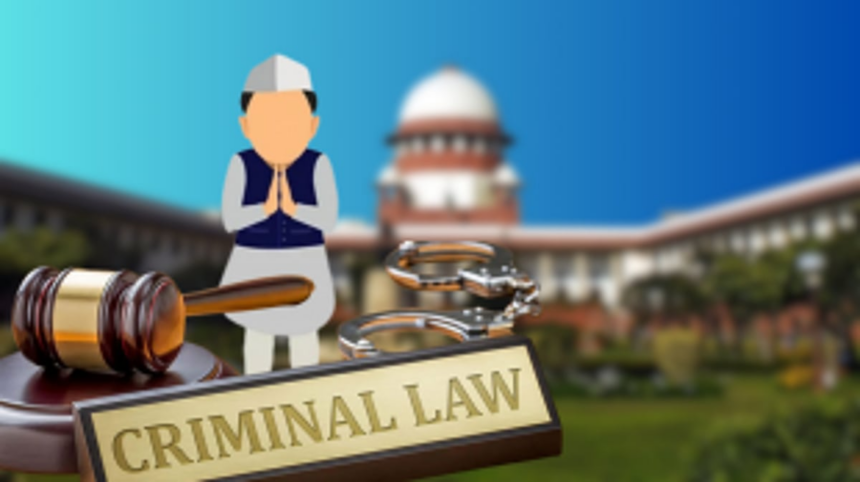
In a significant development, the Supreme Court has directed high courts to oversee the trials of Members of Parliament (MPs) and Members of Legislative Assemblies (MLAs) facing criminal charges. The Chief Justice of India, D Y Chandrachud, led the bench, which issued a series of directives to streamline the process.
Acknowledging the diverse factors influencing the expeditious disposal of such cases, the court emphasized the challenge of establishing uniform guidelines across the nation. Considering the variations from state to state, the bench entrusted high courts with the responsibility to devise methods for effective monitoring.
The court outlined seven key directions for monitoring and conducting trials. It mandated the chief justice of each high court to initiate a suo motu case titled ‘In Re designated courts for MPs, MLAs’ to oversee the expeditious resolution of these cases. The special bench handling this case has the flexibility to schedule hearings at regular intervals and may seek assistance from the advocate general or public prosecutor as needed.
The Supreme Court further delegated the responsibility to principal district and session judges to allocate cases to designated courts, prioritizing those punishable by death or life imprisonment, followed by cases with a potential imprisonment term of five years or more. The court stressed that designated courts should not adjourn cases except for compelling reasons.
Addressing cases with stay orders, the court directed high court chief justices to list them before the special bench to ensure timely decisions, including the vacation of stay orders, and facilitating the commencement and conclusion of trials.
In terms of infrastructure, the ruling mandated principal district and session judges to ensure adequate facilities for designated courts, incorporating relevant technology for efficiency. High courts were also instructed to maintain an independent tab on their websites, providing district-wise information on filed cases, pending cases, and their current stage of proceedings.
While emphasizing the high courts’ role in monitoring these cases, the Supreme Court retained the consideration of a lifetime ban on convicted MPs and MLAs from contesting elections for future deliberation. This directive marks a crucial step in ensuring the expeditious and effective resolution of criminal cases involving elected representatives.