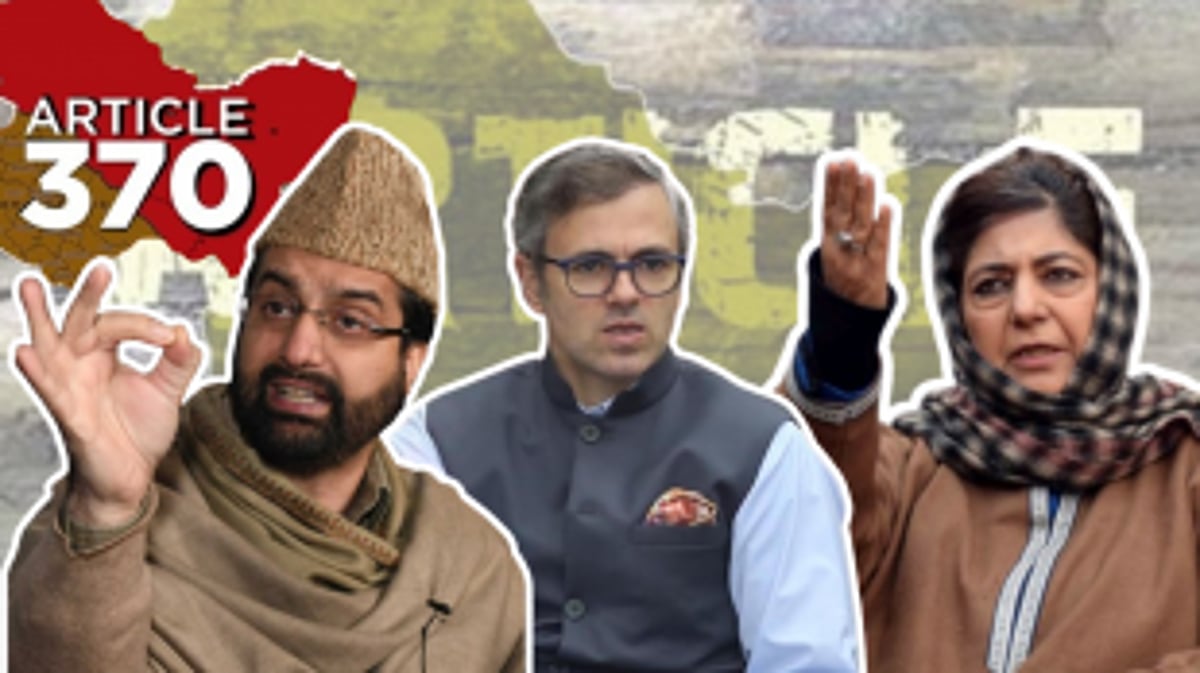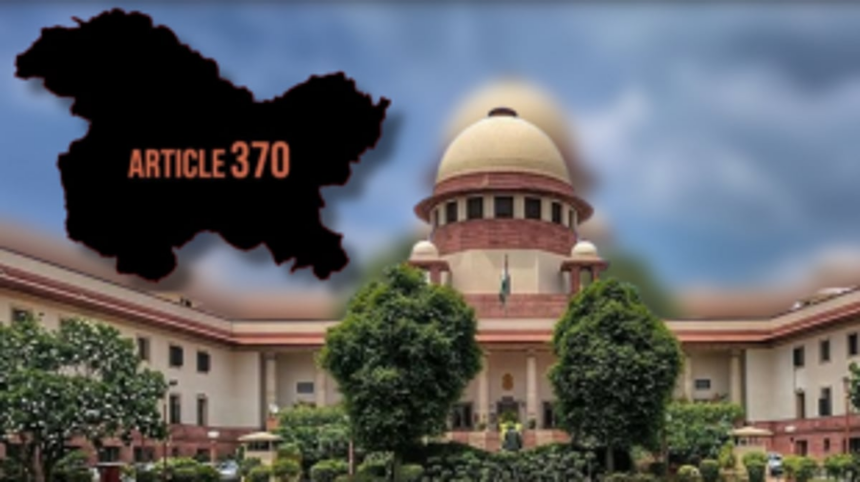
In a landmark decision, the Supreme Court of India upheld the abrogation of Article 370, which granted special status to the erstwhile state of Jammu and Kashmir. Chief Justice of India DY Chandrachud, reading the majority judgment, emphasized that Article 370 was conceived as an interim measure during war conditions and deemed it a “temporary provision.”
Chief Justice Chandrachud pointed out that a textual reading of Article 370 indicates its temporary and transitory nature, supported by the marginal note labelling it as such. The court affirmed that the President has the constitutional authority to issue orders for the abrogation of Article 370, and it cannot scrutinize the President’s decision on the existence of special circumstances under Article 370.
The court ruled that all provisions of the Indian Constitution can now be applied to Jammu and Kashmir simultaneously under Article 370(1)(d). The judgment, authored by Chief Justice Chandrachud on behalf of himself, Justice Gavai, and Justice Surya Kant, emphasized the validity of the exercise of Presidential Power in this regard. Justice Sanjiv Khanna concurred with the verdict, while Justice Sanjay Kishan Kaul, in a separate judgment, also acknowledged the President’s power to abrogate Article 370.
While affirming the abrogation, the Supreme Court directed the Election Commission to conduct elections in Jammu and Kashmir by 2024. This directive aligns with the court’s commitment to restoring democratic processes in the region.
Addressing the status of the union territory, the Supreme Court referred to the submissions of the solicitor general, stating that the status was temporary. The court, however, refrained from determining the validity of the reorganization of Jammu and Kashmir into a union territory. The reorganization of Ladakh as a Union Territory was upheld, with the court citing Article 3, which allows for the creation of a union territory from a portion of a state. The question of whether Parliament can convert a state into a union territory was left open for future consideration.
This decisive judgment provides clarity on the constitutional aspects surrounding the abrogation of Article 370, marking a significant chapter in the legal and political history of Jammu and Kashmir.