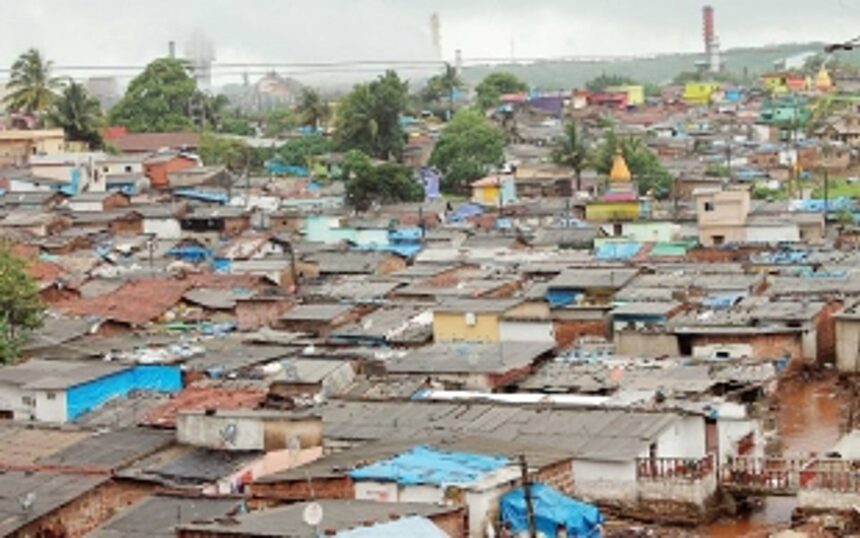
The areas are huge. The inhabitants live literally on each other’s faces. But they live by certain rules that in most cases have nothing to do with the state rules. And they have their own bosses.
Depending on where the slum is located, the inhabitants generally work either in the industrial estates or as daily wagers or involved in the transport business or in the retail business or have their own individual small businesses. The mantra – anything to survive. Sometimes this race to survive takes the denizens of these sprawling areas (the larger ones like Indranagar in Chimbel and Zuarinagar in Sancoale are spread over 2 lakh sq mts) into areas that skirt the boundaries of the law. Even the slums like the Camurlim 20-point-programme – in the news for the brutal sexual assault by three on a widow – has the same dynamics but to a smaller extent.
However, in the past couple of years, violence and crime in these areas has declined substantially, a fact brought out by both residents as well as police.
Most of these areas have a strong ghetto mentality and areas are tightly controlled by various overlords who have political patronage. The direct link is normally through the elected representatives at the grass root levels – read panchayats – who are connected to the local MLA or the MLA aspirant depending who is the better paymaster. Payday does not mean just financial payoffs but also payoffs in terms of protection or political clout.
“Panchayats give the people who come in papers that make them ‘locals’. Today people who have just come to stay in the area for four five years push papers in our face showing that they are here for 40 years,” says Ram (name changed) a resident of Indranagar complaining that today the demographics of the whole place have changed.
These overlords are especially active during elections where they work like shoulder strikers to various political aspirants. Their job is to provide the manpower and ensure that the people in their areas of influence vote for ‘x’. Manpower is supplied during the campaign, for rallies and distribution of goodies as well as keeping a check on the activities of opponents. They are the cannon fodder of political parties – but for a price.
During the non-election times, there is always a lot to do. Many of the areas have a thriving ‘real estate’ business going on. That is people who come into the state and have no place to stay or want to stay below the radar are provided accommodation. For example even the infamous Batlo is said to have stayed for some time in Indranagar.
Also there is the matka and the gambling as well as providing low level muscle power in case needed by various parties.
In areas like Zuarinagar some time back there used to be ‘baigiri’ as prostitution was locally called. But after some 2-3 murders and the demolition of Baina, this business stopped and now most from the area have stepped down to managing matka rackets or gambling dens.
The other business besides working in the industries surrounding the area is transportation.
Zuarinagar is close to three large industrial hubs – Zuari Agro, the Verna Industrial estates and the Sancoale industrial estate. People living in the slum mostly work in one of those three industrial areas or are involved in the transportation business. But many are involved in matka as well as gambling. And during election time they are in demand.
Names of the influential like Mariano and Pillai are often taken here, as well as those of politicians like Ramakant Borkar.
They say that when Mariano’s father died all the shops downed their shutters ‘willingly.’
The same is the case with Chimbel. Most of the Panjim fish vendors live in Chimbel. As do many of the motorcycle pilots. Many of them also run small business like making of decorations for festivals like Diwali or Christmas.
There used to be scrap yards in Chimbel, but now most of them have been moved out.
Here the name of Mohan is spoken of as well as Bichoo and one Alam.
However, loyalties have changed in Chimbel. Once upon a time it was Rudolf who used to control the area and ensured that his mother had clear control. He ruled with an iron hand for many years over the sprawling metropolis known as Indranagar and his rule was law. His house was the court where he held his durbar and sorted out issues and matter, handing out diktats that were enforced by his enforcers.
That hegemony was challenged when his one time ‘friend’ Atannasio Babush Monserrate entered the fray and challenged him in his own fiefdom. He did not succeed the first time, but the second time he managed to break the grip. However, Babush did one thing. Realising that the slum dwellers were better politicians than the professional politicians, he concentrated on ‘breaking’ St Cruz and Merces and succeeded.
The other big name in that assembly election was Dinar Tarcar who too managed to carve out his share. This chunk has now moved to Anil Hoble.
The slum is divided into the Muslim, Telegu, Hindu area and Catholic areas with clear divisions.
Zuarinagar has – besides Mariano – Parshuram Bigui boss of the Kannadigas and Govind boss of the Lamanis.
Initially this area used to be dominated by the boys from Baina. But when Mauvin Godinho began his moved to consolidate power, his ‘boys’ slowly took over. However, once the delimitation took place, ambition slowly rose among the various sub lords and they went their own way.
Now it is as per convenience, long time residents tell this reporter, smiling – whoever is most generous – but hastening to warn that there should not be names mentioned.
Initially when Baina was on there was a lot of ‘baigiri’ and Baina people used to collect hafta.
Then local ‘baigiri’ started, they say, adding that after two or three murders then people started getting into smaller businesses like transport and small time matka and gambling.