SHWETA KAMAT
shweta@herald-goa.com
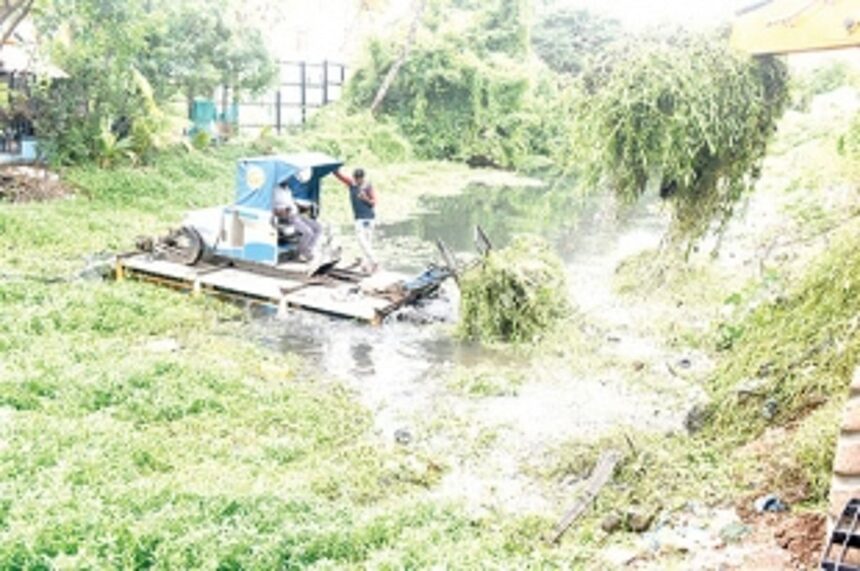
PANJIM: The blunder ridden draft Coastal Zone Management Plan (CZMP) of Tiswadi has something shocking for the people of Panjim. The Portuguese-era St Inez creek, which, even today, is talk of the town for its contamination, finds no place in the plan. The Creek, which is part of Panjim Outline Development Plan (ODP), is omitted in the CZMP.
Further, the plan is being criticised for inadequate sand dune mapping, despite dunes being nature’s first line of defence against sea. Conservation of natural ecosystems and restoration of degraded landscape, which should be the main focus of CZMP is sadly missing in the draft plan.
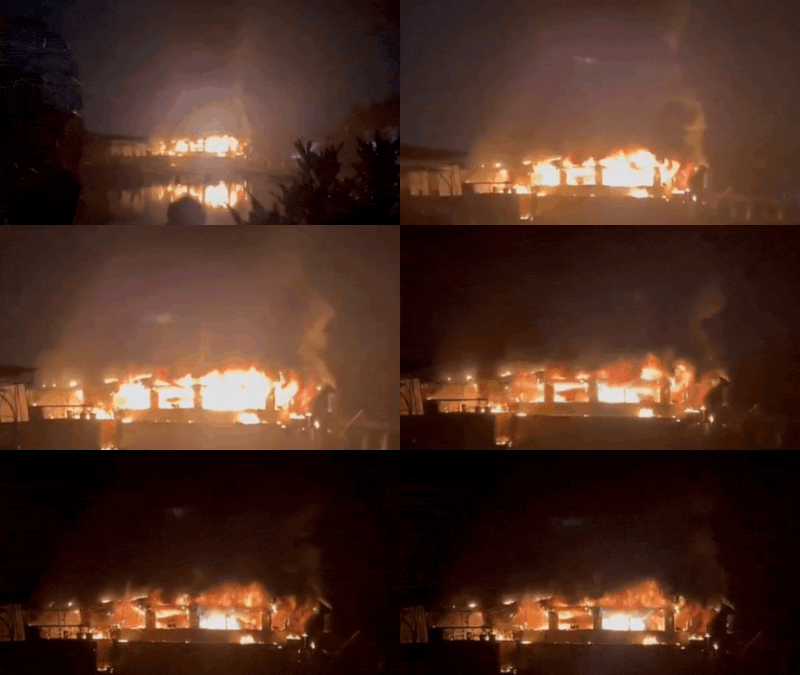
More to this, the three Star Resorts, located at Dona Paula, Miramar, which were dragged into legal battle for its very existence in the Coastal Regulation Zone (CRZ) areas, are nowhere to be seen in the plan, which itself is meant for protection and conservation of the coastal ecosystem.
Speaking to Herald, Goa Foundation Director Claude Alvares revealed that the St Inez Creek is missing on the plan. “I am shocked to see that the creek is omitted from the plan. The creek is part of ODP, which should be the base for drafting CZMP. This seems to be a joke,” he said.
Alvares said that tidal saline water body shows water influx more than 2 km from the mouth. “There had to be some conservation plan for the creek to restore it to its original position. But the creek itself is missing,” he said.
The creek, which is highly polluted having no dissolve oxygen, originates from Taleigao and passes through Camrabhat, Tamddi Mati, Tonca and continues to stumble past behind the Military Hospital, Don Bosco School and ESG complex, from where it empty’s itself out into Mandovi River.
Former scientist of National Institute of Oceanography (NIO) Dr Antonio Mascarenhas also expressed displeasure at the manner in which the Portuguese-era St Inez creek has been omitted. “There is no conservation plan for the creek, which is flowing almost 2 kms right in the heart of the city. It needs to be cleaned of unwanted water plants, top sediment removed, banks lined with natural laterite revetments or biowalls, and saline water allowed inside,” he said.
Further, Mascarenhas, who has studied the draft CZMP of the entire State in detail, states that despite Tiswadi being blessed with several unique natural ecosystems, the Chennai-based National Centre for Sustainable Coastal Management has failed to map them as per its existence.
“The Caranzalem–Miramar stretch consists of a linear low to medium sand dune belt with luxuriant vegetation, which makes it an ecologically sensitive ecosystem, hence classified as CRZ-I. The Mandovi estuary is the only saline water body of the Indian coasts to have an enclosed Miramar dune field, a city beach,” Mascarenhas said.
“Shockingly, the mapping of sand dunes of Goa done by the Chennai agency leaves much to be desired. The vegetated dune belts are inadequately marked and mapped, except for a tiny patch where dunes are mapped,” he said.
Mascarenhas, former expert member of the Goa Coastal Zone Management Authority (GCZMA), wants sand dune mapping to be revised as what is done is “gross misrepresentation, and needs to be rejected.”
The demarcation of high tide line (HTL) is yet another disputable topic. It appears that the beach berm is taken, and not the vegetation line which ought to be considered. A sandy berm is unstable and flattens easily; in comparison, dune vegetation is a stable point up to which dune vegetation advances and stabilises. The HTL mapping certainly needs a relook.
“Conservation of natural ecosystems and restoration of degraded landscape should be the main focus of CZMP; sadly, this aspect is missing. In particular, the dune belts of Goa need special attention. Conservation of frontal sand dunes is a statutory obligation. A conservation and management policy for sand dunes has to be enacted,” Mascarenhas said.
Mascarenhas also expressed deep shock at the manner in which conservation and protection of mangroves have been ignored in the plan.
Mangroves have invaded paddy fields, rendered them fallow, leading to loss of cultivable land. “Mangroves are flourishing where they should not grow, but are not growing where they should flourish. A mangrove policy for Goa is imperative,” he stated.