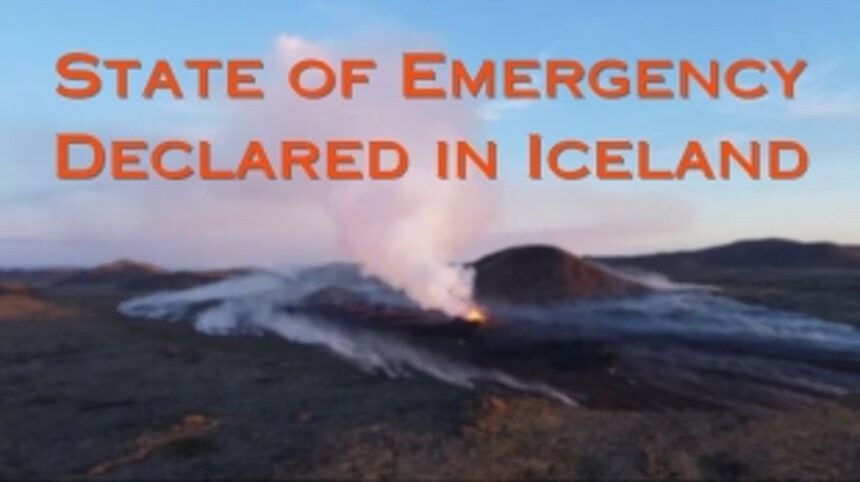
The southwestern Reykjanes peninsula in Iceland is experiencing a series of powerful earthquakes, raising concerns about a potential volcanic eruption. On November 10, the country declared a state of emergency due to intense seismic activity near Sundhnjukagigar, north of Grindavik.
The Icelandic Met Office (IMO) has warned that a volcanic eruption could occur “in several days,” with over 24,000 tremors recorded on the peninsula since late October. Grindavik, home to around 4,000 residents, is just three kilometres southwest of the earthquake epicentre and has evacuation plans in place.
Two significant earthquakes, measuring 5.2 in magnitude, were felt as far as Reykjavik, prompting the closure of a road to Grindavik due to quake damage. The IMO reported almost 800 earthquakes on Friday alone.
With magma accumulating at a depth of approximately five kilometres, concerns about a potential volcanic eruption are heightened. Emergency shelters have been opened in Grindavik, and the patrol vessel Thor has been deployed for security. Information centres have been established in three locations to assist those on the move.
As a precaution, the popular tourist destination, the Blue Lagoon, has closed, and the Svartsengi geothermal plant, supplying electricity and water to 30,000 residents, has activated contingency plans.
Iceland, with 33 active volcanic systems, frequently experiences seismic activity due to its location on the Mid-Atlantic Ridge. The Reykjanes volcanic system, dormant for eight centuries before 2021, shows increased activity, with three eruptions since then. The current situation underscores the need for vigilance and preparedness in the face of potential natural events, recalling the disruptive Eyjafjallajokull eruption in April 2010, which impacted air travel and stranded millions of travellers.