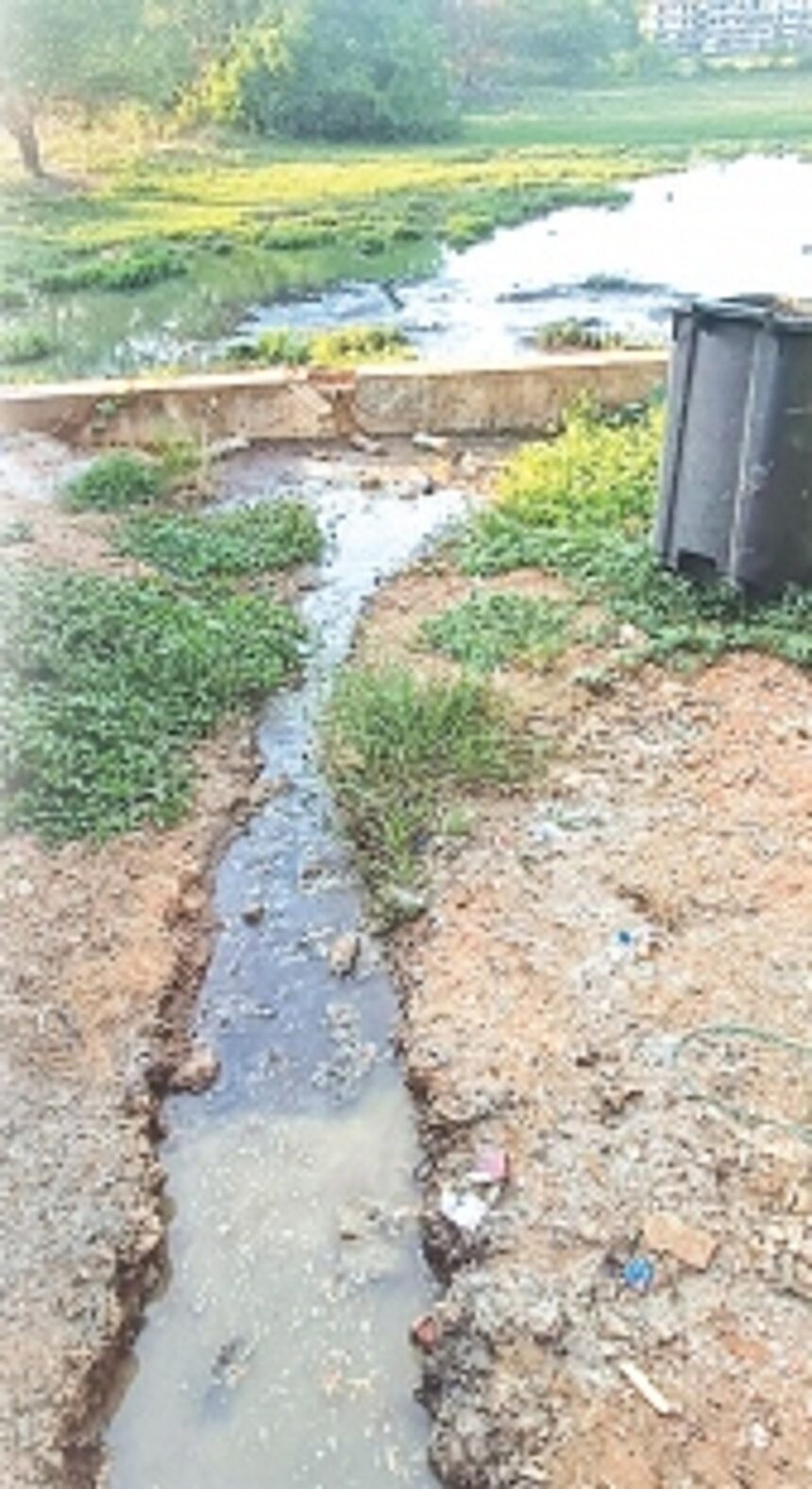
MARGAO: In a shocking move, the Sewerage Treatment Plants (STPs) located in Margao have stopped accepting raw sewage from the private tankers carrying raw sewage from public toilets, thus putting the tanker operators in Salcete taluka in a fix over disposal of this sewage.
Meanwhile, the residents fear a spurt in incidents pertaining to releasing raw sewage into the open fields or in the nullahs, as owners of night soil tankers are left with no other option
regarding disposal of raw sewage from public toilets, until the ongoing works of the sewage network is completed and becomes operational.
As per reliable sources, even the STP located in Vasco has also asked the owners of these tankers to stop coming to the plant with raw sewage, besides Shirvodem in Margao.
It is pertinent to note that on Sunday, raw sewage from septic tanks located behind Margao KTC bus stand and wastewater from the bio-methanation plant at the South Goa Planning and Development Authority (SGPDA) market, was released into the open fields. However, it was now revealed that since March 2023, two sewage treatment plants located in Shirvodem in Margao have stopped accepting raw sewage carried by the tankers operated by private owners.
Now, they are forced to take the raw sewage at Panjim STP, that too with limited numbers of trips. Recently, few night soil tankers were found releasing raw sewage into the open area in the jurisdiction of village panchayat Lotoulim, upon which a complaint was filed against the owners by alert citizens.
Speaking to O Heraldo,
Pratibha Naik, an official of Sulabh Sauchalaya, informed that the public toilets are facing serious issues as the tankers are not being allowed to bring raw sewage inside the two sewage treatment plants located at Margao and Vasco.
“We are now forced to take the raw sewage from Margao and other areas directly to Panjim STP. But, they only allow two trips per day, resulting in several septic tanks overflowing, including at Margao,” Naik said. Santan Faleiro, one of the owners of the sewage tankers in Margao, said that since March this year, they are facing a tough time in order to tackle the issue of disposing raw sewage from public toilets.
“I used to take at least four to five trips of raw sewage directly into the STP at Shirvodem in the past. Several people keep calling to take away the raw sewage from their septic tanks, but I am left with no other option but to say no,” he said.
Agreeing that sewage tankers have been asked not to bring raw sewage any more, Vivek Kudchadkar, Engineer at STP located in Shirvodem said that there is an increase in number of connections to sewage network in recent days, resulting in more raw sewage coming to the STPs.
Besides, ongoing works of the sewage network has
orced them to stop accepting the raw sewage from the night soil tankers. “Both the STPs – 6.7 MLD and 20 MLD – have been interconnected to each other. There are some parameters pertaining to the limitations in treating the raw sewage,” he said.
He is also of the opinion that the raw sewage brought inside the STP by the night soil tankers is of sewage, which had settled down in the septic tanks for a very long time and there is a high risk that the bacteria used to treat the sewage into the STP may die.
“We have asked the owners of the tankers to stop coming to STP upon the instructions of the Sewerage and Infrastructure Development Corporation, Goa,” said Kudchadkar.
He further informed that in the past nearly 30-35 trips from night soil tankers used to unload the raw sewage on a daily basis into the STP at Shirovodem. However, it is still unclear where the tanker owners should take the raw sewage from the septic tanks of public toilets.