MARGAO: The death of a dolphin found on Colva beach has sent alarm bells ringing in coastal communities and among environmentalists.
This is the latest of a string of sea creature deaths and injuries reported in the last couple of days.While Colva locals found the carcass of the dolphin on Friday morning, there have been similar incidents across the Salcete coastal belt and in North Goa too.
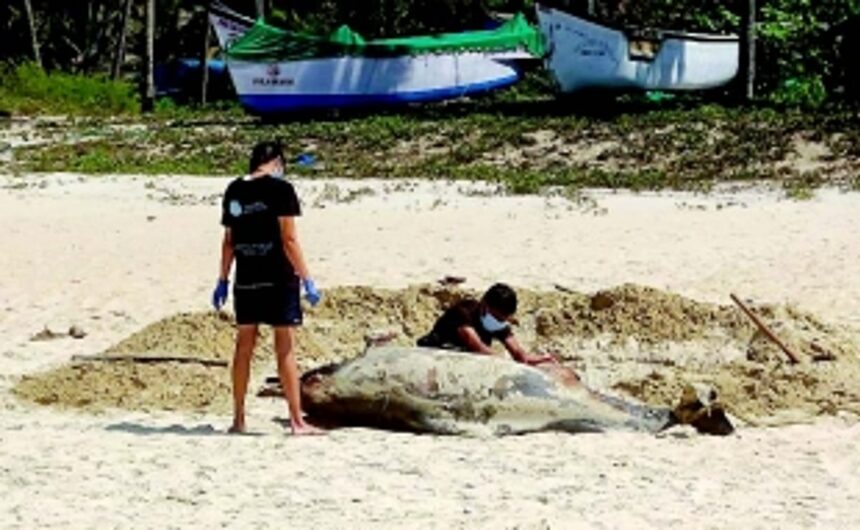
Dolphins have been found dead in Cavelossim, Baga, Varca, Zalor, Benaulim and now, at Colva.According to locals, the adult dolphin’s carcass was about 2.5 metres long and was floating in the sea. They then intimated the Forest Department officials who fished the dead marine animal out. According to officials, Reef Watch Marine Conservation carried out the post-mortem, following which the dolphin was buried on the seashore.
Environmentalists urged the Forest Department to release post-mortem reports and take immediate steps to enhance marine stranding infrastructure and monitoring.
“The irony is dolphins are Schedule I species – if four tigers had died in a week, the whole state would have been discussing it but since it’s marine animals, people aren’t aware of their protection status. Every year, we are getting more and more cases and sea birds also coming in with injuries, infections,” said one environmentalist.
They asked for updates on the promised treatment clinic, the deployment of marine forest guards, the recently purchased dedicated vehicle, and the status of the statewide rescue number or stranding coordinating cell’s functioning.
They lamented that it should go beyond citizen-driven response and lifeguards’ intervention and also demanded that data provided by citizens about such incidents should be made public.
As to the reasons behind the death of dolphins, overfishing, pollution, inadequate zoning, and the absence of a comprehensive marine conservation strategy were cited as key issues contributing to the crisis. Additionally, they pointed out that the lack of guidelines and training for dolphin watching operators exacerbates stress on the animals, as they contend with constant disturbances from tour boats chasing and getting too close to them, as well as turbulence from water sport vehicles, barges, trawlers, etc, near them.
“So, it’s a stressful environment and this coastal species have a limited depth range which is 50 feet; they don’t go beyond that. They have no choice but to live in the busy part of the coast which makes them very vulnerable,” said an environmentalist.
Giving another example, they pointed out that some dolphins had fishing nets in the gut and explained that this species are ‘near shore dwellers with high fishing pressure’ who take fish from nets, which leads to them ingesting some bits of plastic and nylon net.
“These (net) fragments lodge in the gut causing impaction which can lead to death due to starvation,” the environmentalist concluded on a despondent note.