MARCOS GONSALVES
marcos06gonsalves@gmail.com
MARGAO: Despite Water Resources Minister Subhash Shirodkar’s assurance that he would identify the discharge points and halt the release of raw sewage into Salcete’s water bodies, the lifeline of Salcete – River Sal – continues to get contaminated due to the direct release of sewage through nullahs and culverts in Margao. Speaking to Herald, several citizens of Salcete alleged that the government was not working towards protecting the lakes and creeks in the taluka, but was only keen on making money by issuing tenders for laying lines, and soon, fresh tenders for replacement or repairs of the existing sewage pipelines.
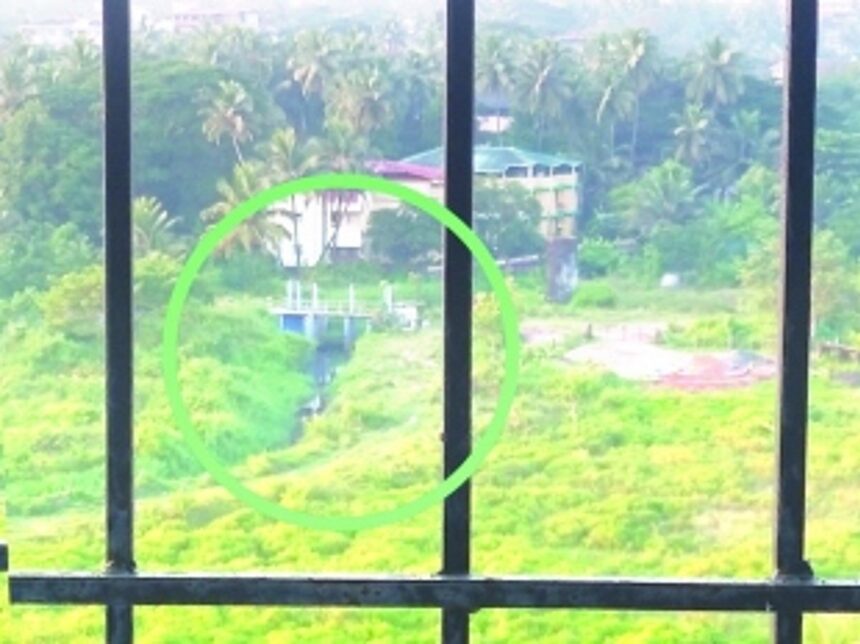
It has been revealed that sewage from the commercial town of Margao continues to flow through the nallah near Kudchadkar Hospital at Margao, which eventually flows into the Saipem Lake, and River Sal thereafter.
Citizens have pointed out that sewage also flows through the nallah close to the South Goa District Hospital and also from the nallah near the South Goa Collectorate building, directly into the river Sal, resulting in major pollution.
It may be recalled that on his recent visit to Salcete, WRD Minister Subhash Shirodkar had assured to immediately identify the points from where the sewage was being discharged directly into the river and rivulets, and to stop it.
“It is our firm belief that in Margao, the pollution of water bodies and the ground water table by open channels of sewage is unlikely to be fully contained even in the next decade,” said Savio Coutinho, former MMC Chairperson and convenor of the Shadow Council for Margao (SCM). “We can even give the relevant authorities 15 years’ time to bring in a proper sanitation system to stop the open disposal of sewage, but they will fail,” he remarked.
Coutinho said that the SCM has consistently been bringing up the shoddy work executed by the contractors of the sewerage department.
Coutinho alleged that the authorities were giving misleading submissions before the High Court, in their petition regarding the pollution of Saipem lake. “Notices are being sent to various commercial establishments and residential complexes randomly, without even ascertaining whether some of these premises are connected to the sewerage network or not,” said Coutinho.
“This gimmick is shown to the court as ‘efforts being undertaken to contain the pollution’,” he alleged.
The sewerage department on the other hand submits before the High court that sanitation connections are not availed at the places where the network is completed, but they are unwilling to admit that the works executed are substandard, which leads to frequent clogging of the lines, and overflowing of manhole chambers, he explained.