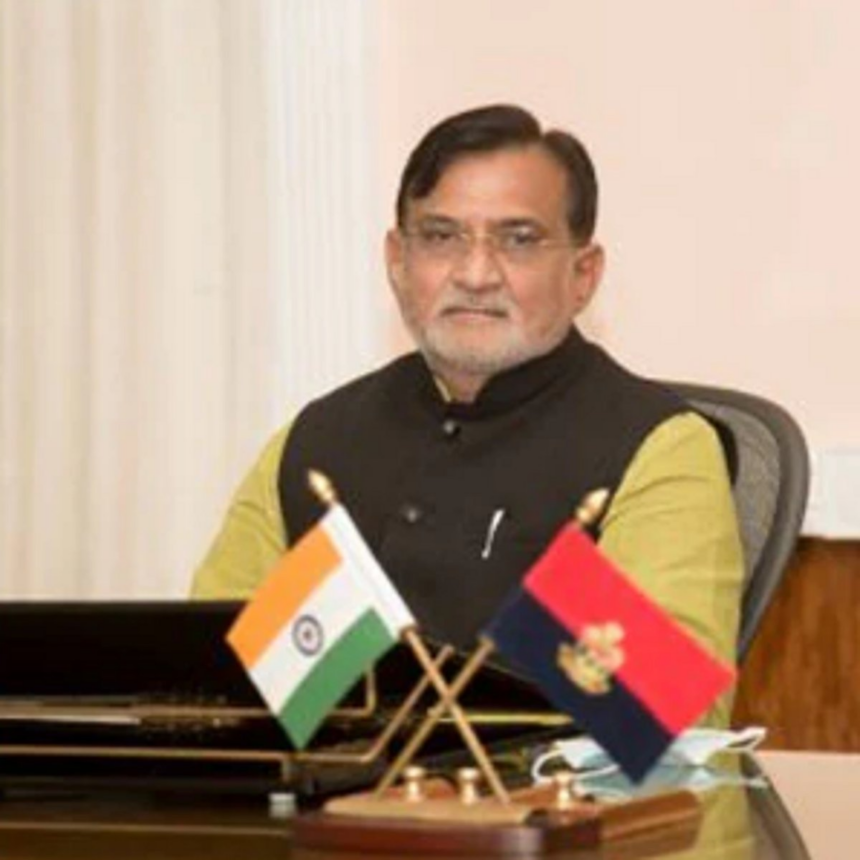
The age-old rights guaranteed to minorities and minority institutions to establish and administer educational institutions of their choice has been sought to be affected by two government actions. The first one in Gujarat with the amendments made to the Gujarat Education Act.
The second one is closer to home. The Union Territory of Daman and Diu and Dadra and Nagar Haveli (DNH) which follows the Goa, Daman and Diu School Education Act 1984 and Goa, Daman and Diu School Education Rules has drastically amended the Grant In Aid policy for primary, upper primary, secondary and Higher Secondary schools, right in the middle of the pandemic. The new rules have moved away from the smooth system of grants to aided schools including the very well-run schools of the Mission of Daman, run by the Society of Pilar headquartered in Goa and under the overall tutelage of the Archbishop of Goa, Daman and Diu.
There have been strong reactions from both the clergy and administrators. In both these Acts, senior members of Minority Institutions as well as top legal experts, affirm that these moves by Gujarat and Daman and Diu & DNH are clear violations of a key fundamental right which all Indians have since 1948, Article 30. It upholds the right of the minority community to establish and administer the educational institutions of their choice. The onus lies on one who asserts that an institution is a minority institution and not on the government. While reasonable restrictions may be imposed by the government, the word “reasonable” is important. Even during the debates in the Constituent Assembly attempts to restrict the scope of the Act only to linguistic minorities and not religious minorities were rejected, giving religious minorities the absolute right to manage the affairs of their educational institutions.
GRANTS ARE NOT A FAVOUR TO MINORITY INSTITUTIONS. IT IS THEIR CONSTITUTIONAL RIGHT
Most importantly, the government has to realise that grants are not favours. They are not barter for minority institutions to subject themselves to the un-reasonable diktats of the State disguised as amendments for the betterment of education.
The reactions have been strong both in Gujarat and in the Union Territory. And they are serious. And this cannot be allowed to become a trend in any other state especially Goa, which has had a history of struggle and victory for rights of institutions run by the Archdiocese.
“The amendment will affect the appointment of persons of our own choice to be in the staff of our own schools”
Father Stanislaus Fernandes, Apostolic Administrator of Baroda, in a letter to the Clergy and Religious Diocese has said, “The amendment to the Gujarat Education Act will affect the appointment of persons of our own choice to be in the staff of our own schools, even those that are not granted. The minority rights granted to the minorities by our Constitution have been nullified. All headmasters have to undergo a Headmasters/ teachers Aptitude test. A Centralised Committee to make the amendment, has taken away the rights of minority institutions. Minority Managements have moved the Gujarat High Court.”
Meanwhile, the Provincial Superior of the Society of Pilar, Father Hilario Fernandes has flagged serious concerns about the Grant in Aid policy of the Daman, Diu and DNH administration. This policy under the guise of improving the system of public subsidies to the private sector will now make all grants, in which these minority institutions depend upon, “Performance based grants”. These grants will now be given on points linked to quality access, skill development, infrastructure.
Now here is the issue. In remote tribal schools of this Union Territory, children are not coming during the pandemic. Many schools do not have adequate infrastructure. If grants, which should be given as per the Constitution, are now given according to points, evaluated by a Grant in Aid Committee of the Administration controlled by the Administrator Praful Patel, then many of these schools will not get adequate points. This means that these schools, in the business of providing education to the poorest of the poor in remote areas, will be either denied or given fewer grants.
Most will be aware of the national outrage at one of Praful Patel’s recent acts as the Administrator of Lakshadweep, brought about a law in such a peaceful archipelago which is draconian and reminiscent of the infamous TADA and POTA in a Muslim dominated territory.
We now need to ask. Are Praful Patel’s actions in Daman and Diu, Dadra and Nagar Haveli which will affect minority institutions justified?
Is this fair? Is this just? Isn’t this discriminatory? Schools that need all the support will now be given grants on the fulfilment of conditions that schools in remote areas will find impossible to fulfil. Father Hilario Fernandes, Provincial Superior of the Pilar Society, speaking to Herald said that four principals who are priests of four schools under his education society in Dadra and Nagar Haveli haven’t received their entire years’ salary. 11 other teachers have met the same fate. Another lot of 65 teachers got the salary of the last academic year on March 26, five days before year-end. Therefore, even without this latest amendment on grants, these institutions were already suffering.
Now the quantum of grants will be completely dependent on the will of the committee and the administrator and can be lessened, withdrawn or suspended on many pretexts and heads.
WHY DO WE IN GOA NEED TO BE CONCERNED
We have a shared history with Daman and Diu. The Education Act that is applicable in this territory has its basis in the Goa Education Act.
These actions in Gujarat and the UT are not just violative of Fundamental Rights but also Right to Education. It also tampers with the Right of Choice. And it is an outrageous attempt to change the basic tenor and temper of minority institutions that impart education and learnings based on faith which is sacred.
By putting government-appointed principals and teachers and controlling grants unfairly is the dispensation trying to trample on minority rights and their age-old service towards imparting education.
THIS CAN NEVER BE ALLOWED TO HAPPEN.