Team Herald
Raia: The farm is his altar. The soil is his connection with God. And his zeal has led to a resurrection of a beautiful kind- of more lands under cultivation, of turning fallow lands to fields of gold. Father George Quadros of Don Bosco, has what many call a magic wand.
It’s zeal actually. In four years, he has brought 140 hectares under cultivation, mainly in South Goa starting from just 4 acres on year one.
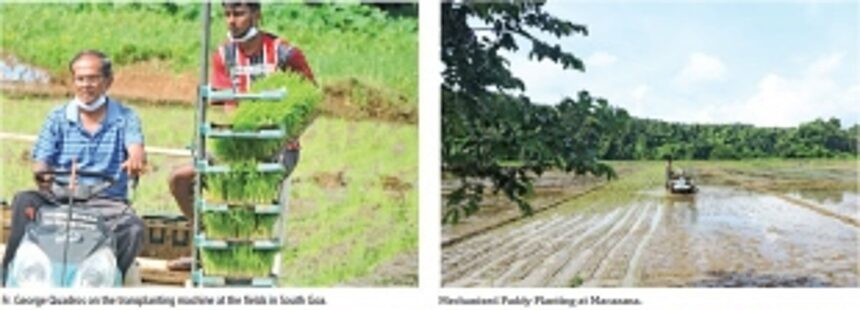
He has done so by making mechanized plantation a fine art, chiselled through education and training, a long term mission undertaken by Don Bosco.
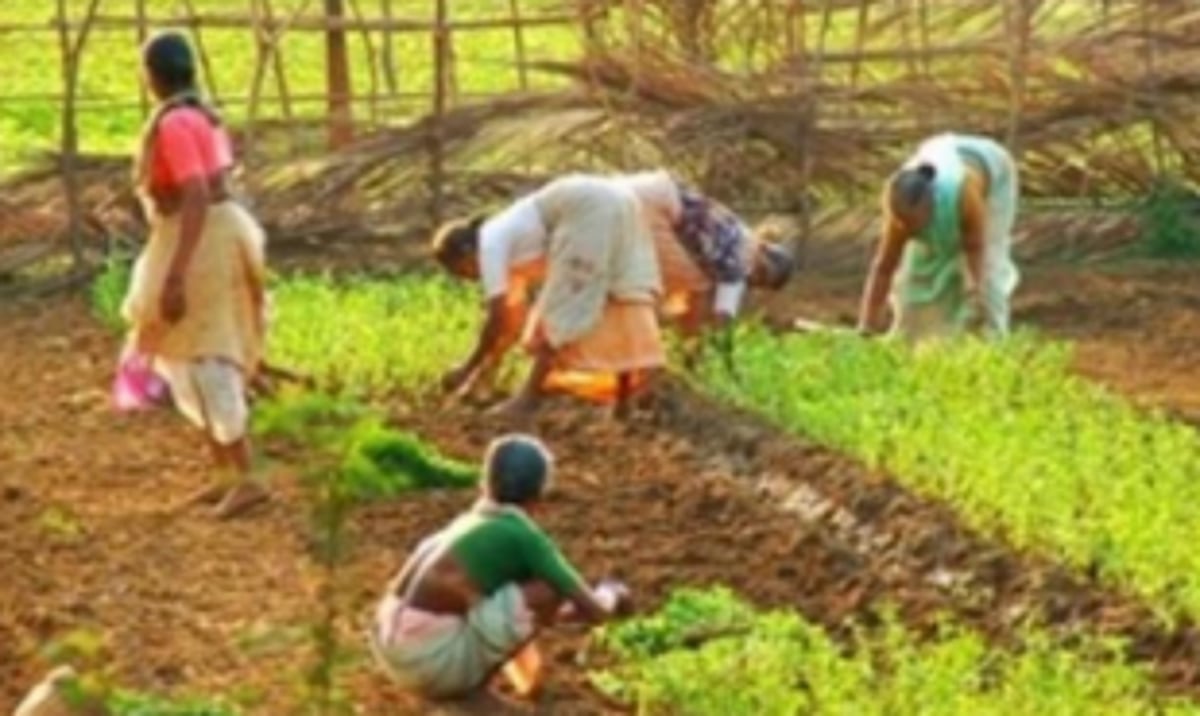
Across Salcete, Quepem and adjoining talukas the sight of Father Quadros, for long at the Don Bosco Loutolim Society and now based at the Don Bosco Engineering College, Murida in Fatorda, bent over supervising or planting paddy himself, was common.
Soon large fields of bounty had a ‘Father George’ touch- in Raia, in Maina-Curtorim, in Sulcorna and along the coastal villages of Salcete.
Calling himself as a service provider, he explains his work pattern, insisting that it’s a project undertaken by Don Bosco and he works for the institution. His modesty is clearly his raison d’être.
“I found that farming can be really revived if we embrace technology and technology is expensive. So I proposed to the Agriculture department and they decided to help by largely subsiding our basic expenses of buying machines. We then provided the service of mechanized farming, from procuring the seeds, helping select them to plant them across acres of their fields and hand-holding them till harvesting,” he said.
The farmers, in turn, pay a service cost which too is subsided by half by the Agriculture department. This service cost comes to the institution providing them finds to pay for their share of investments in machines etc and a bit of manpower.
“In reality, it costs the farmer a fraction of what he would have to pay for if he had to do it all himself,” he added.
When the mission began, Father George Quadros and his team picked 40 demo plots across Goa where they showed farmers how the farming process could improve; right from the procurement of seeds to mechanized farming techniques.
The model worked as more farmers and farming societies ‘joined the class’ as it were, keeping Father George busy literally through the season.
The entire paddy, this season has been planted and waiting for the crop to harvest. And yet Father has no time, moving onto the next phase of ensuring Goa’s farming revolution- enhancing the area under cluster farming and most importantly working in fallow land.
“My goal is to get at least ten people who will do exactly my job throughout the State so that we can cover much more,” he said.
He already has three on board, each from very interesting backgrounds, one called Neville Luis, a geologist who worked on the rigs in Australia; Stanley Fernandes, who worked for a major private sector telecom company; and Jerry Gonsalves who has served in the navy.
All these Goans have returned home and want to farm and help other farmers, taking the mission of cluster farming forward.
Luis is back from Australia and Fernandes has quit his plush job in the private telecom sector. For about a year now they have been working on Fernades’ farm of about 6000 square meters in Quitla, Aldona.
When they heard about Father Quadros and his techniques of mechanical farming they approached him and worked with him in the fields of Raia and Fatorpa.
Speaking to Herald, Fernandes said, “We had spent Rs 24,000 to farm this 6,000 square metre plot. After meeting Father Qadros and working with him, we realised how that same work could be done in Rs 6,000.”
Fernandes then approached the Agriculture Department, to allow him to follow the ‘Father George Quadros’ model and go beyond just his farm but help other farmers by doing mechanized farming on their lands; for which, he needed a small investment/subsidy from the department, in line with the existing subsidies given to Don Bosco for instance.
Perhaps not surprisingly, a bit of red-tapism has come in the way. According to Fernandes, only registered Farmers Clubs and institutions can get subsidies, which according to Fernandes, doesn’t always work.
“The other option is if the farmer has one lakh square metres and a farmer’s card, he is eligible for subsidies. Yet again someone owning one lakh square meters of land will be less in need of financial assistance than a farmer with less land.
Hence it’s all about even the Agriculture department reacting to new trends and changes and helping more people, including non-farmers to take up farming.
“Even traditional farmers are open to this. When they realise that the Rs 18,000 that they have to spend for one crop can be reduced to half, they will adapt for mechanized farming”, said Fernandes.
It’s evident that Father George has managed to start a movement. And it extends even to villages where farmers have come forward to be point people or service providers helping other farmers connect with Father Quadros for helping out in their farms. These village service providers do this pro bono.
There’s no stopping the planter priest though. ‘I will look at fallow lands. That’s the challenge”.
Very soon you see the hardworking Father, tending to fallow farms and reviving the much-needed farming spirit.