By 1985 Fr. Gabriel de Sa Prepositio de Congregação from Portugal recorded the details of the Tombs and graves which existed in the monastery and the adjacent land probably under the request of Fr. Nemesio Alzola of Happy memory, the first provincial of the Karnataka-Goa province. He found 20 tomb sites.
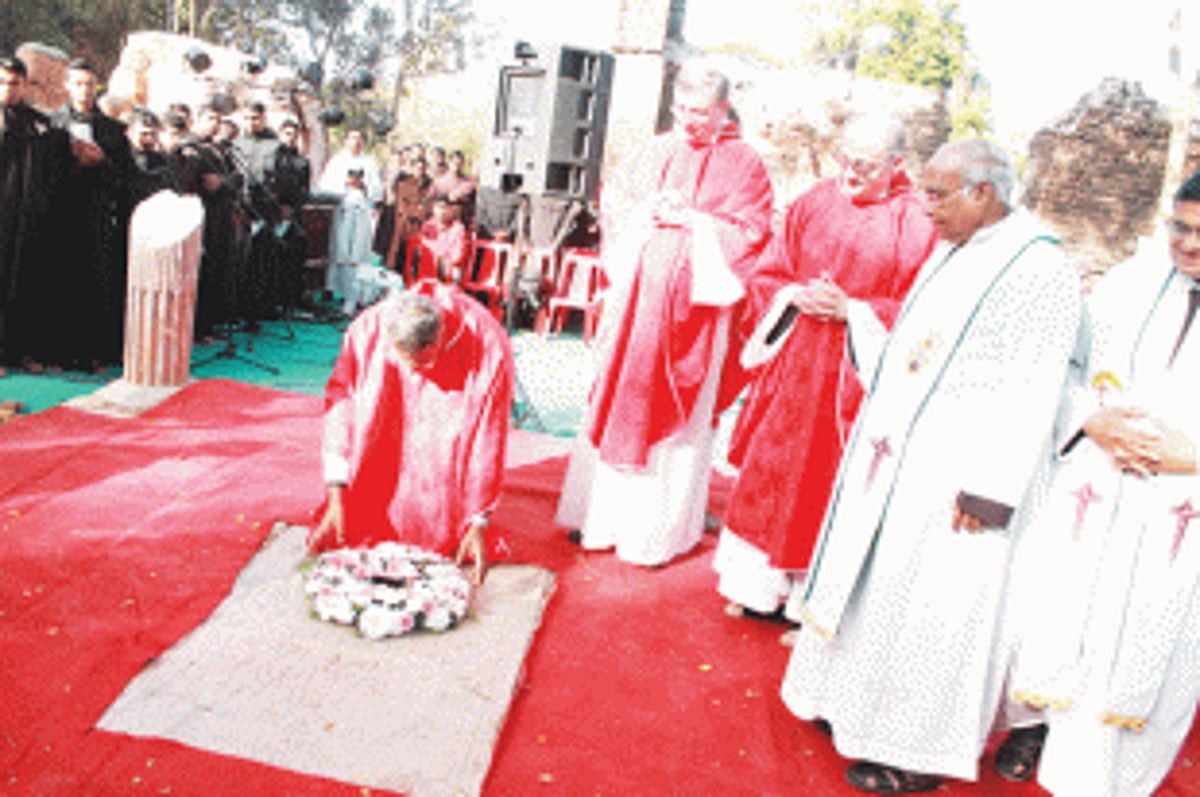
By 2019 in view of the Extraordinary Definitory under the supervision of Fr. Archibald Gonsalves the entire site of the Carmelite convent, Old Goa was cleaned and during the process three tombs in the Altar were discovered. Historian John Marshal deciphered the inscriptions and they are published in the upcoming book “First Foundation of Carmelites in India (1619-2019) Volume II”. It is significant to note that of the original 20 tombs only three are remaining. The details of the three tombs here are as follows:-
I. Tomb of the Resurrection – Language: Latin. Content: “And the dead here in resurrect, after the first ten resurrections”. Person: Unknown, possibly the remains of the Five martyrs of Persia. It refers to the ten resurrections mentioned in the scripture and proclaims the belief in resurrection.
II. Tombstone of Messieurs Bebber, the first one sent by the French East Indian Company to India, 1664 (died: 1669, Carmelite convent, Goa)- Language: French. Significance: It could rewrite the history of the presence of French in India; it is the only one evidence for the final days of Bebber, the forgotten and defamed founding figure of the French company, Surat; the presence of this tomb makes the Carmelite convent, a potential site for French-Indian relations.
III. Tombstone of the Royal scribe: Language: Portuguese. Description: In the “Via Crucis”, but near the door that leads to sacristy is the tomb of Pedro Homem Ferreira, Scribe of the chancellery of this county and that of his wife Maria de Andrade, who died on the 10th March, 1644 Tomb inscription deciphered by- Fr. Gabriel de s, Prepositio de Congregação from Portugal.