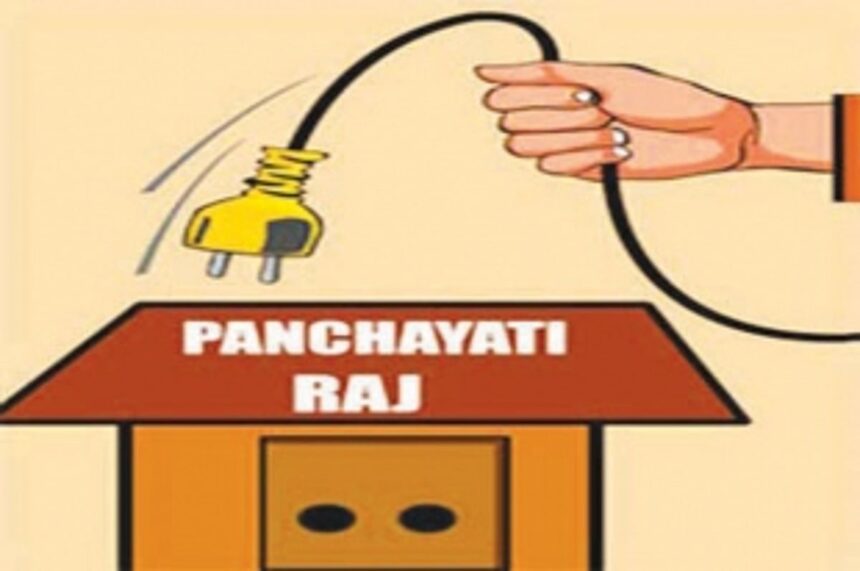
The inordinate delay in amending the Goa Panchayat Raj Act has resulted in the panchayats hoodwinking the people and working with impunity with the Cana Benaulim Panchayat not conducting one regular gram sabha for the second consecutive year and unfortunately this brazen violation of the law is unlikely to get any punitive action taken against the panchayat.
As per the Panchayat Raj Act every panchayat is supposed to have a gram sabha on any Sunday of the month of January, April, July and October. However, the law is silent on what action should be taken if the gram sabha is not held and that is the reason why they are not held regularly.
In fact Block Development Officer (BDO) Amitesh Shirwaikar said the maximum he can do is bring it to the notice of the Director of Panchayat that the gram sabha has not been held and he added other than that, he can take no action.
In fact he pointed out that last year he had already informed the Director of Panchayats that the Cana Benaulim panchayat did not have one gram sabha, but that letter remained just in the files with no action taken against the panchayat and probably that is the reason why Cana Benaulim has not held a regular gram sabha.
Agnelo Fernandes former Sarpanch of Benaulim village opined that voting out a sarpanch with a simple majority was the biggest blow to panchayati raj system as earlier a two-third majority was required to vote out a sarpanch.
“However due to political reasons this was changed to simple majority and that is when the merry go round began,” said Agnelo and lamented that presently Sarpanchas are changed just for a drop of hair.
“Earlier when two-third majority was required the panchayat members amounting to two third the strength of that panchayat had to sign the no confidence motion and that gave it some sanctity instead of what is happening at present,” he said.
Another issue raised up by him is the inspection of illegal structures in panchayat areas by the Sarpanch and Secretary.
“In municipal council areas only the Chief Officer does the inspection then why in panchayat areas, the sarpanch has to be a part to it?” he asked and pointed out that in many cases inspection by sarpanchas have been challenged in court.
He lamented that the sarpanch becomes an easy target for the person who has undertaken illegal construction and hence said it was not fair that the sarpanch is exposed to this hazard, particularly when in municipal areas the elected represented is exempted from it.
He also regretted that there have been instances in the past where the deputy sarpanch has ruled the roost as the female person has not been elected as sarpanch because there was no one willing to propose the name and said such practices should stop.
He pointed out that one village having a big island had a deputy sarpanch ruling for a long time, as nobody was willing to propose the name of a female as the sarpanch of the village and said such discrimination should stop immediately.
Besides he said when the lady sarpanch goes for inspection very often she is abused and ridiculed which is unbecoming of a civilised society, and hence advocated that the inspection should strictly be an official affair without involving the elected members.
Meanwhile Nelly Rodrigues who has been a Zilla Panchayat member since it was constituted lamented that even necessary powers have not been given to them and pointed out how they have to struggle to get funds for works in zilla panchayats.
“We have been constantly asking for more powers to the Zilla Panchayat so that powers can devolve to the grassroot but nobody seems to be hearing us and we are just screaming in the wild,” she said and asserted that unless powers are devolved to the Zilla Panchayat nothing will change in the State.
In fact South Goa Zilla Parishad Chairperson Navnath Naik speaks the same language as Nelly about powers not given to them. “People have expectations from us which unfortunately we cannot fulfil because we have now powers to do those works and hence people are getting disgusted with us,” he said.
In fact at every Zilla Panchayat meeting this matter is discussed heatedly and some of the younger ZP members like Moreno Rebello are ventilating their frustrations and how desperate they are can be gauged with the way they behave at the meetings.
What is noteworthy is that some senior ZP members like Maria da Luz are resigned to their fate and just prodding along to complete their term and do whatever little work they can get done.
The ZP members are sandwiched between two giants. The village panchayats on one hand and the MLA on the other. The MLAs fear that ZP members will be powerful if they are given the powers they are supposed to get under the act and that is why for so many years now the powers have not been devolved.
In fact the problem with the panchayati raj system in Goa started when the act was promulgated and Goa opted for a Zilla panchayat instead of the Block panchayat that was also an option available and was the system followed earlier when they had the Block Development Committee.
The lack of will by the present elected representatives to work towards making the Goa Panchayati Raj Act stronger has also been lamented by many.
Be that as it may, the fact remains that Goa has missed the bus on Goa Panchayati Raj Act and unless corrective measures are taken now, the future appears bleak and powers to the grassroots will just remain a pipe dream.