The ‘Pejeche Fest’ took place last Sunday at Siridao Chapel, following the tradition of being celebrated on the first Sunday after Easter. It marks the beginning of a season where the Catholic Church observes various saints’ feasts.
Following the Easter celebrations, the festivities kick off with the Pejeche Fest. After the mass dedicated to the feast, there is a procession carrying the statue of Our Lady of Annunciation through the village.
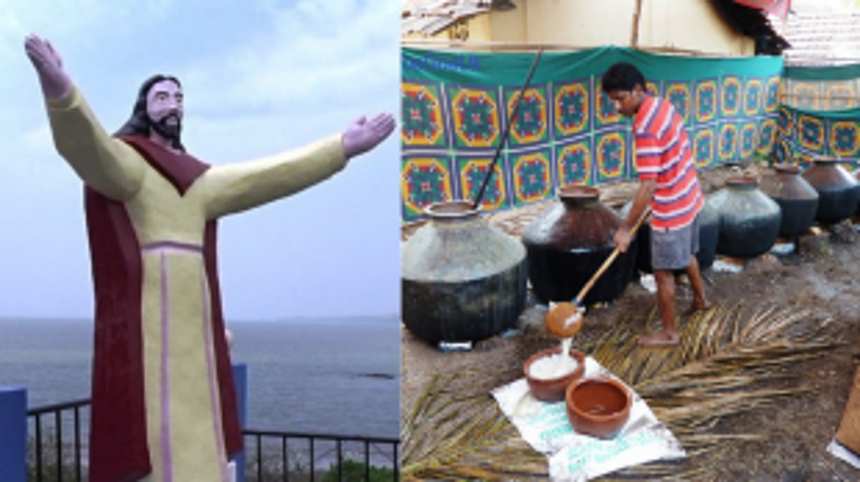
Subsequently, people line up beneath the chapel to receive kanji, a dish traditionally cooked in seven large copper pots by married women. These seven vessels are believed to be associated with the Sanskrit tale of the seven sisters. Pilgrims from all over Goa come to this feast to make vows also called ‘Angvon’ or after fulfillment of vows like, “Saiba maka borem kor. Hanv tujea paiam kodde ieon pez jevtam.” (People make vows. Lord, please cure me. I will come to your feet and eat kanji or Pez)
Initially, kanji is served at the Xim (village boundary) for the souls of the deceased before being distributed to the people. Traditionally, it was presented in traditional Goan bowls called Maltuli. Additionally, another notable feature of this feast is the performance at the Manddar, a small stage set by the villagers.