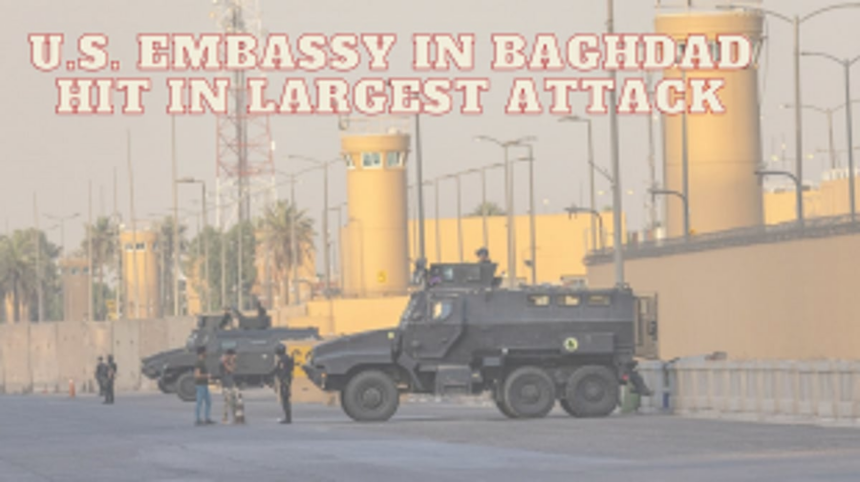
In a significant escalation, the U.S. Embassy in Baghdad was struck by approximately seven mortars in what appears to be the largest attack of its kind in recent memory. Concurrently, U.S. forces in Iraq and Syria faced multiple rocket and drone attacks, marking the most recorded assaults against U.S. forces in the region in a single day since mid-October. The attacks intensified following Iran-aligned militias targeting U.S. assets in response to Washington’s support for Israel during the conflict with Hamas in Gaza.
U.S. Defense Secretary Lloyd Austin condemned the attacks during a call with Iraq’s Prime Minister, singling out Iran-aligned groups Kataib Hezbollah and Harakat Hezbollah al Nujaba. Austin emphasized the U.S. right to respond decisively against these groups. The embassy attack, the first in over a year, suggests a broader range of targets, raising concerns of an expanding regional conflict.
No group claimed responsibility, but past attacks were attributed to Iran-aligned militias operating under the banner of the Islamic Resistance in Iraq. The attacks caused no injuries, with the embassy sustaining minor damage. The State Department urged Iraqi security forces to investigate and apprehend the perpetrators, emphasizing the non-negotiable right to self-defense. Iraqi Prime Minister Sudani vowed to pursue the “unruly, lawless groups,” labeling their actions as terrorism and a threat to Iraq’s stability and reputation.