TEAM HERALD
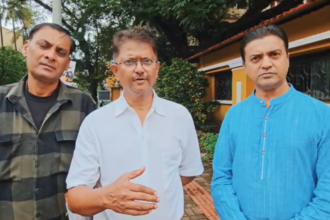
PANJIM: The government should use the money it gains from the auction of the unaccounted ore, to buy off the bank NPAs of the truck and barge owners, Goa Foundation’s Claude Alvares told a small gathering at the Casa da Moeda festival.
Addressing a packed audience at the old Mint House, Claude said that of the total estimated 15 million metric tons ore lying at ports, jetties and other places, around 4 million tons are unclaimed ore, which means the government can confiscate, sell and earn money for it.
“This would mean the state government will get a windfall of around Rs 1200 crore. The loan liability of all the truckers and barge owners combined works out to Rs 1,000 crore. The government should buy the mortgages of the trucks and barges at 50% discount rate, which most banks are willing to sell. This would give it Rs 600 crore worth assets overnight,” he said. “When mining resumes on the scale recommended, the trucks and barges will be re-employed,” he added.
He pointed out how the major investments in the mining industry have been made by the truck and barge owners, while the profits have been raked in by the mine owners.
Citing figures he acquired from the mine owners own submissions before the Indian Bureau of Mines (IBM), Claude pointed out that the owners have made an investment of only Rs 620 crore. In contrast the truck and barge owners have made investments of Rs 2400 crore. Whereas when it came to profits, the mine owners made a total of Rs 11,000 crore in just one year 2010-2011, he said.
The same year Sesa Goa alone made a profit of Rs 4,222 crore which is larger than what the government collected from the entire state through its various taxes and income.
Claude also hit out at the government spending the money it earns through the sale of natural resources recklessly. “If you are a sensible person will you sell your family jewellery and heirlooms and monetize it so you have a good life. Instead it is handed from generation to generation,” Claude said.
Hence he said, the Goa Foundation had suggested to the SC Committee that in the new scheme of mining, the State of Goa should maximize its capture of the value (royalty) of the ore extracted to 50% (at presently in Goa it is 0.9%.)
Several countries outside India were successfully implementing such intergenerational equity proposals.
The Norway Government Pension Fund is a creation from the sale of its petroleum reserves. Today this fund estimated at $800 billion+ for a population of only 5 million.
Similarly, the Alaska (USA) Permanent Fund and the Alberta (Canada) Heritage Trust Fund were established to manage revenues from the sale of oil and natural gas. They run into billions of dollars.
However, in the case of Nauru, sale of guano (phosphate fertiliser/birds droppings) led to the creation of assets of $ 2 billion for a population of 6,100. However, the fund’s managers squandered the capital, leading the islanders eventually without either phosphate or fund. For the past two years, after getting revenue from mining of Rs.900 crores, the State of Goa has only followed the Nauru example.
Claude has suggested that the sale of ore should be collected in a similar fund and the interest used schemes like the DSSS or housewife allowance which will support the state for generations to come.
“The State must invest a sum equal to the value of the ore extracted in productive assets to compensate depletion/exhaustion of the natural asset over time and not dissipate mining revenues in consumption. The performance of these assets and investments must be monitored and reported on an annual basis to the Goan public,” Claude said.
In 2010-2011, Sesa Goa alone made a profit of Rs 4,222 crore which is larger than what the government collected from the entire state through its various taxes and income