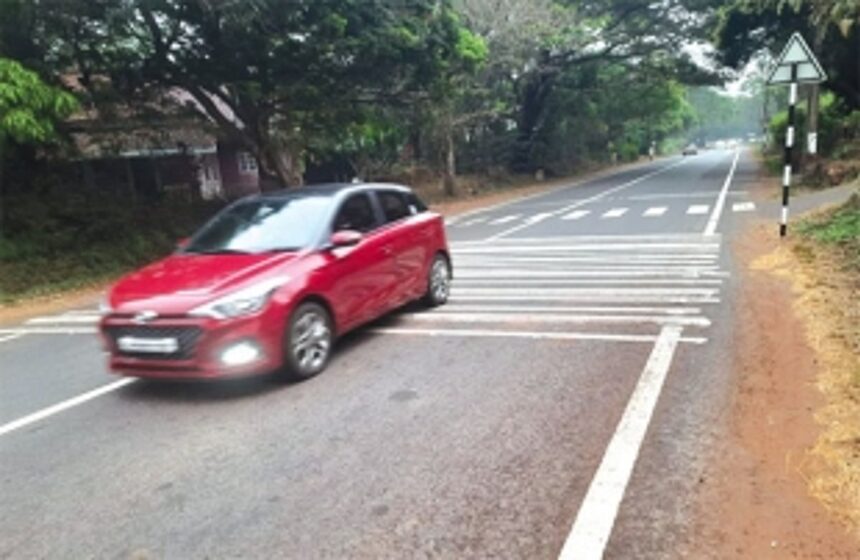
MARGAO: Irked by the loud noise of vehicles thumping and rattling over a set of rumblers in the village, the residents of Dandeavaddo, Chinchinim, have sought relief from the noise pollution, which they claim is beyond permissible limits.
With no signboards to alert motorists about the upcoming rumblers, and no reflective lights on them either, vehicles speed dangerously over them, causing a deafening din, complain locals.
The existing gradual rumblers were recently replaced with six strips each, with raised rumbles in four places instead of two, like earlier. Zebra crossings are also in place, to the relief of pedestrians. It has solved one problem at the accident-prone site but added another unexpected problem of noise pollution, say residents. “Across a radius of 50 to 100 meres around the rumblers, the noise of tyres hitting them blasts like thunder, rattling windows of the residential houses. We are forced to put up with these vibrations and noise throughout the day,” said Nelson Lopes, a local resident.
“The noise is especially unbearable in the nights, as heavy vehicles ply down this road. Senior citizens with heart conditions and hypertension are affected by the noise; it disturbs our normal sleep patterns and aggravates health conditions,” added Lopes. The residents of the area, who held an agitation against the noise-generating rumblers last week, urge the police to check the decibel levels of noise they are subject to on a daily basis. “The government is strictly enforcing the 10 pm deadline for music; this issue should also be dealt with the same yardstick,” said Lopes. “No cautionary sign boards, which are mandated to be installed at a distance of 25 metres on either side, have been put up here,” he pointed out. Cameras must be installed instead, to nab and fine speeding drivers, say the locals. Road safety organisations have suggested doing away with such rumblers on the National Highway, limiting them to internal roads, as they can cause spine injuries, spondylitis and are also a danger to pregnant women, said the residents.