Team Herald
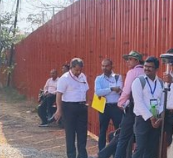
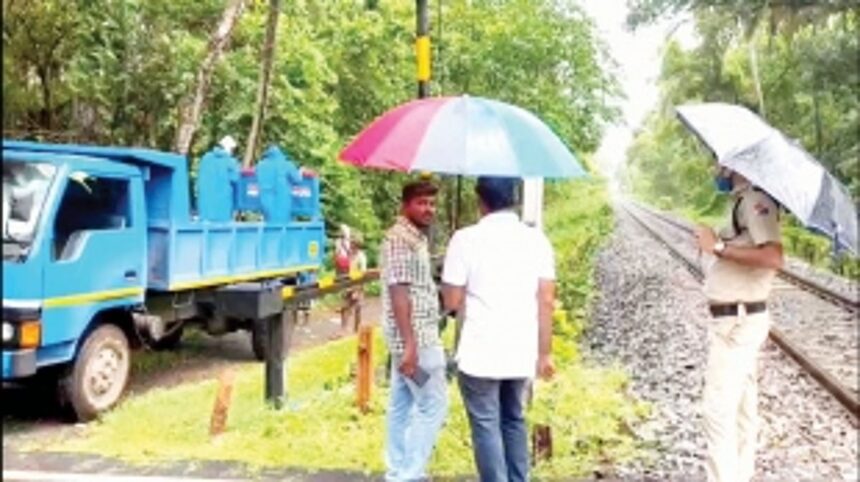
MARGAO: Locals from Velsao along with Goencho Ekvott (GE) stopped the installation of barricades parallel to the existing single railway track near Velsao level crossing by Rail Vikas Nigam Limited (RVNL) contractor. There was tension in the village after a Hyderabad-based civil contractor was carrying out the double tracking work for South Western Railway (SWR).
In presence of police, the work was stopped after GE produced court documents substantiating that the matter is subjudice in the High Court. Reportedly, the Velsao-Pale-Issorcim village panchayat has challenged the work development work on the second railway track has been undertaken without its approval or license as required under the Goa Panchayat Raj Act, 1994. Incidentally, when the locals intimated the contractor and railway staff they denied of any is no such case.
After GE intervened into the matter and said the matter is subjudice the contractor loaded back the poles of the barricade into their truck.
Speaking to Herald after the incident, GE said they will ensure that the rights of the villagers are protected. “Our legal team is already assisting us in the matter across Goa. Locals also pointed out that this is not the first time the Railways has tried to carry out work like this and that it is only when the locals rush to the site and bring documents that the work is stopped,” said GE founder Orville Dourado Rodrigues.
“This is the traditional ‘Right Of Way’ kept by our ancestors for the village community. This land was never sold nor gifted to the then British Company in the 1890s, rather the then Railway Authority based at the Mormugao Port was allowed to lay the single railway tracks to facilitate the transportation of essential commodities from the Port and later on transportation of passengers,” said Rodrigues.
“Today what we see here is rampant coal transportation, almost 10-12 rakes, in a 24 hour period, most at night when the villagers are supposed to be asleep, spewing fugitive hazardous coal dust all along the way which today have even percolated to our underground water sources. Now the railway authorities want to further create ghettos, further dividing our once pristine villages, thus depriving the villagers living alongside the railway tracks the only access to their residences,” added Dourado.