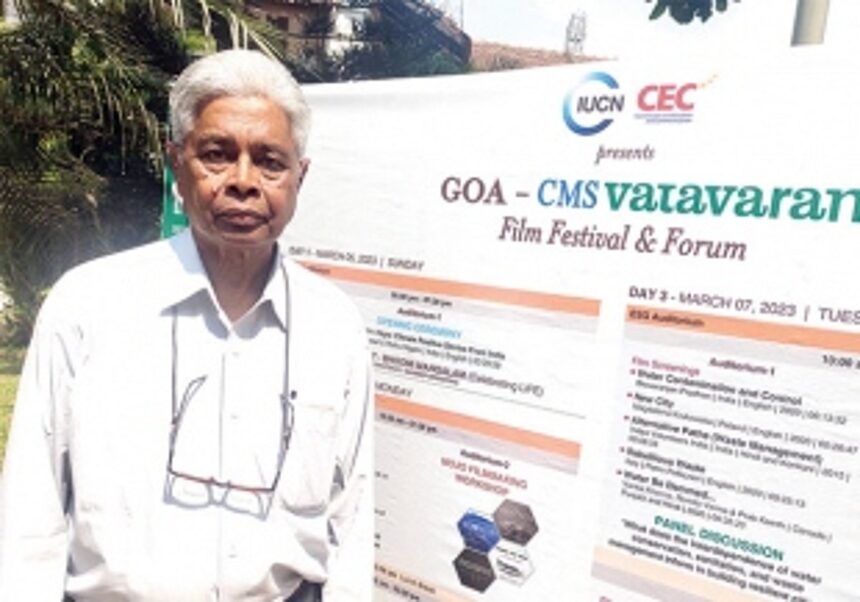
PANJIM: Even though the turtle nesting period clashes with the peak tourism season in Goa and poses a threat to this marine species, the issue can be resolved by starting turtle-based tourism in the State wherein tourists could be made part of the conservation process, Executive Trustee of Wildlife Trust of India, B C Choudhury said here on Monday.
“Tourists could be taken to the turtle nesting sites in groups. The eggs could be collected by these groups and taken to a hatchery, who will place them. If the hatchlings come out, videos can be made of tourists releasing them into the sea. It becomes an experience of a lifetime to do something. In Odisha, tourists are welcomes to see mass turtle nesting sites,” Choudhury told O Heraldo on the sidelines of three-day ‘Goa – CMS Vatavaran Festival and Forum on LiFE 2023’.
Choudhury said that the hoteliers could charge a premium for providing the experience. Forest and Tourism Departments could together chalk out a plan for the same and share it with the hoteliers near the beaches having nesting sites.
“This is already being practiced in Bundaberg region in Queensland, Australia. Almost 98 per cent of the houses there cater to tourists. For four months, the tourists go the Bundaberg hatchery, collect the eggs, plant them in a hatchery and have the experience of a lifetime,” the veteran ecologist said, who is a member of the Wildlife Advisory Board of seven different States.
Since the turtle nesting happens in Goa’s beaches only for three months, the government has to chalk out a participatory model wherein all the stakeholders, mainly government and the shack owners, should sit down and prepare a 12-month working plan on the dos and don’ts of the commercial activities that will be undertaken on the beaches.
“There is already an ‘Olive Ridley Turtle Nesting Beach and Habitat management Plan’ made by Centre for Environment Education (CEE) and GCZMA, which suggests participatory management. Unless the people are made partners in the decision making process. Until there is proper public participation, conservation plans won’t succeed. I am going to suggest newer plans to the government,” he said.