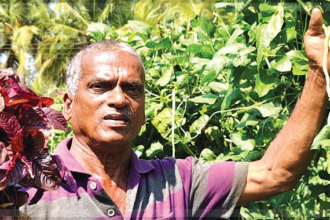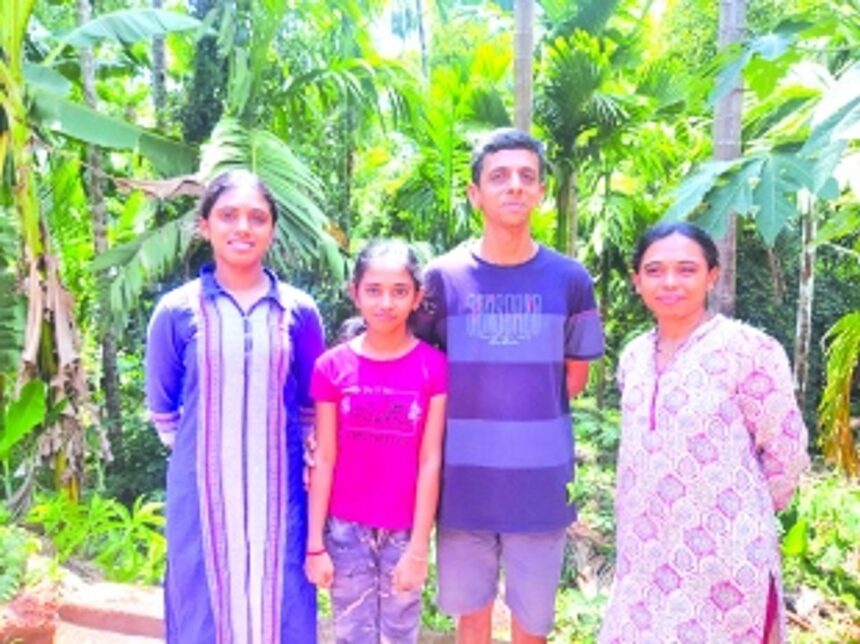
SANGUEM: In the lush green heartland of Netravali village three decades ago, a young and talented farmer-to-be, Chinmay Tanshikar, embarked on a journey that would reshape the agricultural landscape of his community. Inspired by his early introduction to farming and armed with a commerce degree, Chinmay chose to follow his passion for agriculture, becoming a progressive force in the field.
Born into a family of agriculturists, Chinmay had the advantage of abundant land at his disposal. The farm, previously dedicated to coconut, cashew, and betel nut plantations, was about to witness a transformation
like no other. Driven by a desire to elevate farming to new heights, he wholeheartedly embraced the world of spice farming.
Taking over the reins from his father, Chinmay breathed new life into the ancestral farm, now known as Tanshikar Spice Farm. Today, the farm stands as a sanctuary for a variety of spices and cash crops, boasting an impressive collection that includes nutmeg, vanilla, cloves, cardamom, cinnamon, honey, and kokum, alongside
the existing cashew, coconut, and betel nut crops.
Chinmay, now 48 years old, took charge of the farm in 1996, quickly establishing himself as one of Goa’s most prominent producers of nutmeg and honey. His farm is home to 60 colonies of bees, buzzing merrily among the blossoms, diligently producing 80 kilograms of honey each season. Furthermore, Chinmay proudly oversees the cultivation of 1,000 kilograms of nutmeg annually, the highest yield in the entire State.
What sets Chinmay’s farm apart is his unwavering commitment to organic practices. All the products cultivated on the farm are free from pesticides, ensuring the preservation of nature’s delicate balance. Visitors to the farm are welcomed with a refreshing glass of kokum juice, a delight for the taste buds.
The sprawling farm is a sight to behold, with countless nutmeg trees standing tall and proud, adorning the landscape with their vibrant foliage. Yet, amidst the abundance, lies the most challenging endeavour—vanilla plantation. Chinmay reveals that unlike other crops, vanilla seedlings require meticulous artificial pollination during the flowering stage. With dedication,
he personally tends to each delicate blossom, ensuring the success of his vanilla harvest.
In a departure from conventional farming practices, Chinmay and his daughters, Rekha and Mira, accompanied by his wife Gauri, take on the task of processing bananas and jackfruits into an array of delectable delights. From fried chips to papad, and flour, they meticulously craft these products for sale in both the wholesale and retail markets. As for the farm’s bountiful cashew crop, the seeds are locally fried and packaged under the Farms’ brand name.
Every spice produced on the farm is packaged with great care, ready to be savoured by visitors and distributed within the local market. Amidst his bustling schedule, Chinmay warmly welcomes visitors and passionately shares the intricacies of spice production and the art of extracting pure honey.
With no regrets about dedicating his prime years to agriculture, Chinmay offers a piece of advice to aspiring young farmers. He urges them to approach farming with unwavering dedication. “While agriculture may not yield instant profits like other ventures, patience and perseverance are the key ingredients for success,” he says, reminding us that farming is a labour of love that requires years of hard work before the rewards are reaped.
Beyond the realm of agricultural plantations, Chinmay’s ingenuity extends to the creation of plates, cups, and spoons made from the leaves of betel nut trees on the farm. These eco-friendly products have garnered high demand in the market, showcasing Chinmay’s innovative approach to sustainable living.