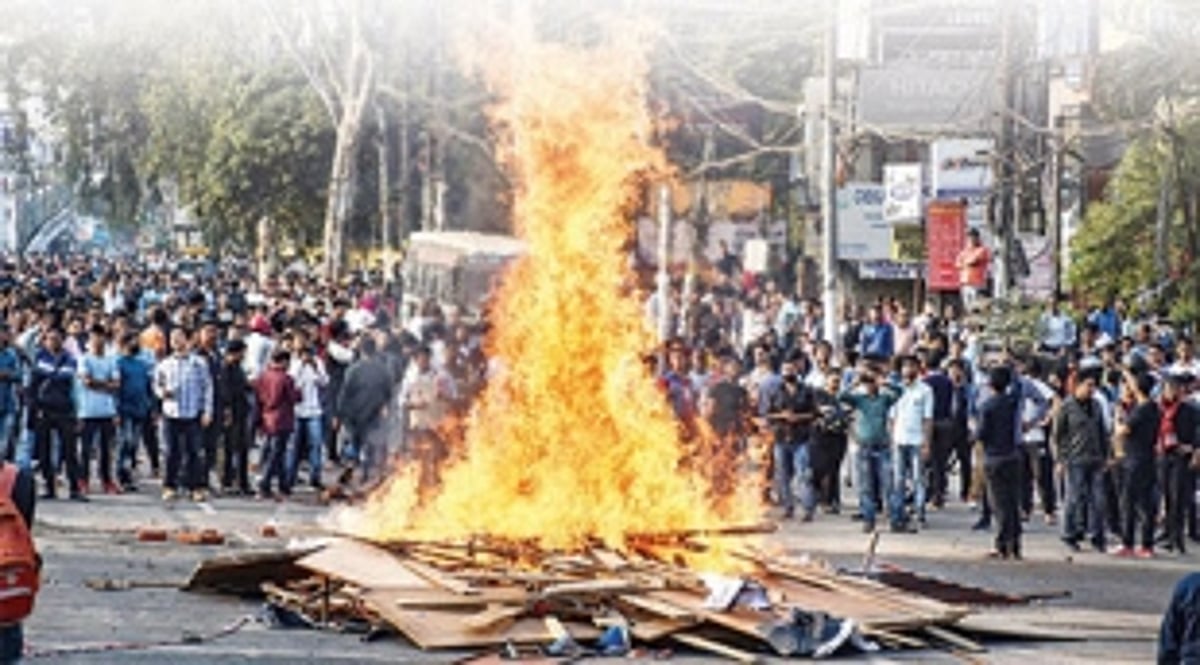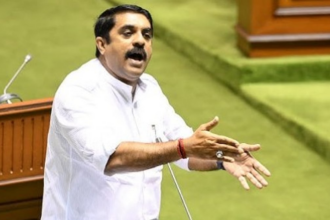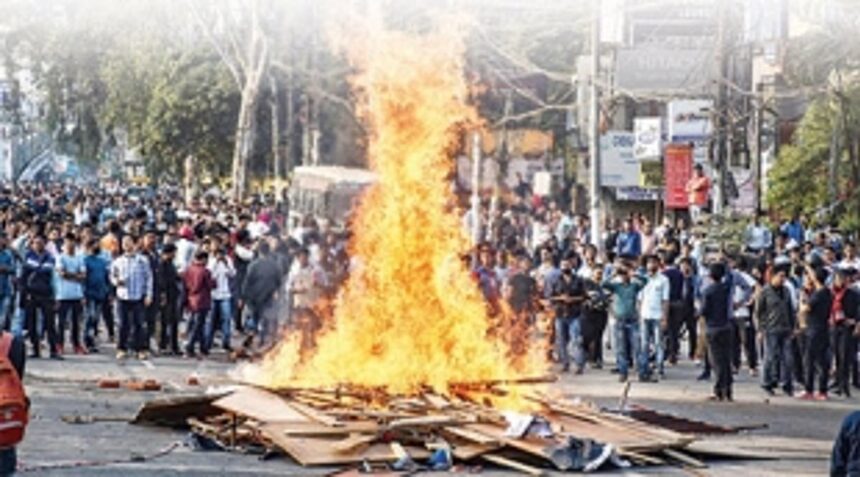
Protests in the Northeast turned violent, while in New Delhi the Rajya Sabha debated the Citizenship (Amendment) Bill (CAB), in a House that was already divided on which way it was going to vote. The outcome of the vote, was fairly certain, and that certainity transpred when the Bill was passed, getting the nod of both houses of Parliament.
The provisions of the bill have evoked strong feelings. Intellectuals, writers, artists have written to the government seeking it withdrawal, and in Goa at least a section of the intelligensia feels the same.
Prabhakar Timble, former State Election Commissioner and educationist, says, “CAB and NRC (National Register of Citizens) is a pervert game of rewriting the progressive national agenda of livelihood, economic growth and social equity by superimposing citizenship and nationalism as key drivers of the nation’s security and prosperity. Both these are destined to put an already peaceful, secular, growing nation and its harmonious society on fire to serve the communal, undemocratic and unconstitutional agenda of the right-wing forces, sought to be justified by raising the bogey of religious persecution and nationalism.”
The Bill seeks to grant Indian citizenship to the six non-Muslim communities – Hindu, Buddhist, Christian, Parsi, Jain and Sikh – of illegal immigrants from the neighbouring countries of Pakistan, Bangladesh and Afghanistan.
Dr Victor Ferrao, Professor at the Patriarchal Seminary, Rachol, endorses Timble’s view. “It appears to me that the Citizen Amendment Bill, while making religion as its basis, manifests that now we take hate as the basis of making and interpreting laws in our country. We as a nation are now on a downslide, away from the tolerant ethos of our civilization,” Ferrao says.
Writer Hema Nayak, a Sahitya Akademi award winner, says she is disturbed over the controversy that erupted over the Bill and fears there could be serious consequences in the future. She says, “There should not be any differentiation and division among people of the country over faith and beliefs. There should not be any difference between the majority and minority. There should be a proper debate among scholars and advocates on CAB. I don’t know what is the hidden agenda behind the bill. We must follow the Constitution and promote secularism. We are socially united as citizens of the country and there shouldn’t be any cracks to this belief. We shouldn’t create problems for the future generations.”
The bill and its contents are, however, no surprise. It was a poll promise, and in its earlier form had been passed in January this year by the Lok Sabha, and was referred to a Joint Parliamentary Committee, but lapsed as it was not introduced in the Rajya Sabha.
Giving a very different perspective, Dr Maria Aurora Couto, writer and Padma Shri awardee said, “I witnessed the insecurities of my fellow Goans between 1962 and 1965, irrespective of religion, caste or class, most of whom welcomed Liberation. There were changes in language, systems of administration and new rulers who controlled Goan politicians and still do. As a grandmother I’ve shared the grief and fears of young Muslim mothers raising children, of teachers who have to deal with a classroom of kids already indoctrinated within the new ethos of othering. I can only imagine the tragic situation in Kashmir and cannot believe that we as proud citizens of India, can allow the heavy tread of the CAB to kill the soul of India and legalise bigotry and prejudice.”
Timble sums up when he says, “CAB brings in religion as the dominant criteria in citizenship, and relegates Muslims to the position of ‘unwanted’ citizens. This provides a vicarious pleasure to the right-wing brigade and would appease the proponents of Hindu Rashtra that the Muslim minority is taught a lesson. With NRC for the entire country, despite the disaster in Assam, the threat is for all to prove and confirm citizenship. It’s added insecurity for the Muslim community, who are already having a difficult life. India would have been a shining example to the world, if it was a bill irrespective of the criteria of religion and belief attempting to provide citizenship status to refugees.”
Commenting on the Bill, writer and Sahitya akademi award winner Damodar Mauzo says, “CAB is a disastrous step towards making India a Hindu state. It is sheer betrayal of the Constitution that threatens the very fundamental rights of the people. This act will lead to discrimination on the basis of faith that can be termed as the second partition. As it is, some sections of the people of India are sensing security and fear. After mooting the idea of NRC, people are apprehensive that CAB will further the sense of unbelonging. Goans who have opted for the Portuguese citizenship should also be wary of this development as the leaders at the dispensation may even bring this issue of exclusion in the ambit of CAB. We, as the secular and liberal class, have to remain vigilant.”
By late evening the bill had been passed by the Rajya Sabha, even as protests in Assam turned violent, and there were more protests across the country.