Belgaum, Hubli, Kudgi, Solapur, Bijapur, Gulbarga, Vijayanagara and Raichur, according to the 2016 Sagarmala report for coastal upgradation.
While the coal berths used by Jindal and Vedanta cater mainly to their own plants, records show that Adani will mainly import coal for the new players. With 770 kg of coal required to manufacture one tonne of steel, the answer to why these routes are being used is simple: it makes economic sense for the companies and for the port itself.
Take the road route, for instance, used by Adani to carry 20 per cent of its coal. Coal transporters say that for every tonne imported, the carriage fare works out to Rs 850 for the 308-km journey from Mormugao to Koppal in Karnataka, where 28 factories receive coal from Adani Mormugao Port Terminal Ltd. Transporters say the comparative cost is Rs 1,500 from Mangalore Port, over 400 km south of Koppal; and, Rs 1,200 from Andhra’s Krishnapatnam, over 500 km east.
That is why experts advise better regulation than a shutdown. “The economy of Goa revolves around mining. When the mining ban was in place, everybody lost jobs, it hit the state’s GDP. Coal is a different matter; in this case, coal coming in is for industries outside. Still, the solution is not to ban any economic activity. The government has to ensure that the state has the infrastructure to contain the pollution caused, and corporates are allowed to import only after various measures are put in place,” says Peter F X D’Lima, board member and former director of the Goa Institute of Management.
‘Rules broken, limits crossed’
Vedanta did not respond to queries seeking comment. A spokesperson for JSW says the group “maintains high standards of environmental compliance”. A spokesperson for the Adani group says the company takes “utmost care to preserve the environment and comply with all applicable rules and regulations”.
In July, the Goa State Pollution Control Board (GSPCB) issued show-cause notices to Mormugao Port Trust, JSW’s South West Port Ltd (Berths No 5A and 6A), and Adani Mormugao Port Terminal Pvt Ltd (Berth No.7) for allegedly violating pollution norms listed in the consent awarded to operate coal. The board also initiated the process to conduct a Proportionate Source Apportionment Study for Air Quality in Vasco through IIT Bombay and asked the corporates to “jointly/severally contribute periodically toward the expenses incurred…”
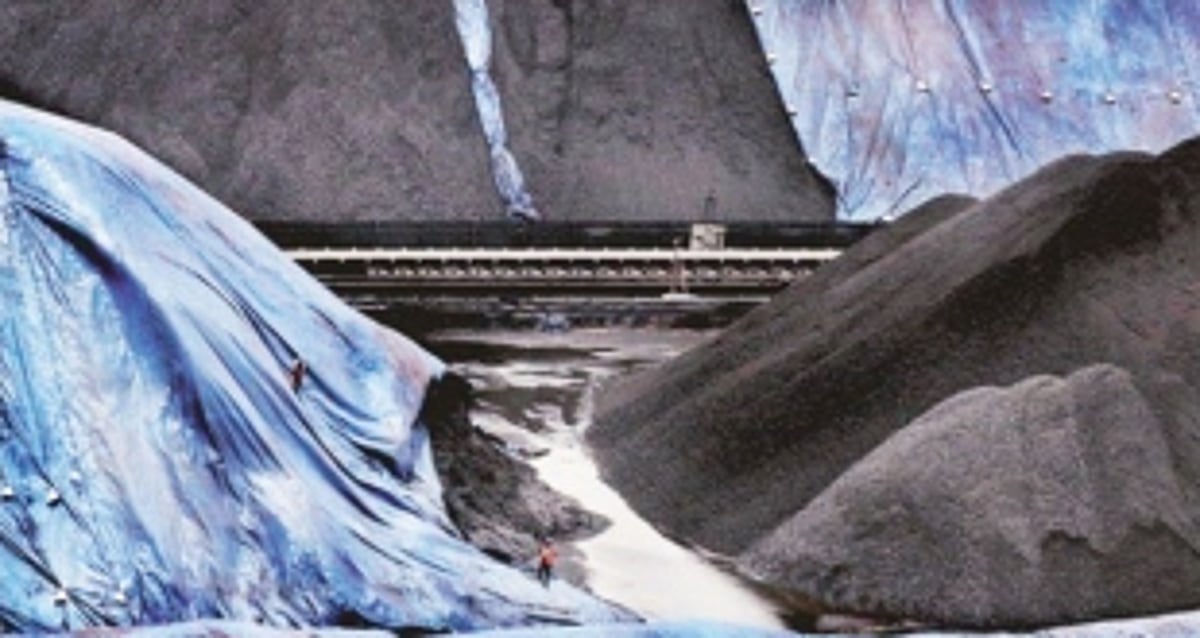
Along with the notice, the GSPCB listed a number of directions: coal stacks not more than 5m high, continuous use of water sprinklers, coal stacks and trucks covered with tarpaulin at all times. The two corporates were further asked why the consent to operate coal, which was issued by the GSPCB, should not be revoked since they were operating their unit in violation of the provision of the Air (Prevention and Control of Pollution) Act, 1981. The 2015-16 annual report of the GSPCB states that “as per their Ambient Air Quality Monitoring of Mormugao Port Trust, the PM10 reading exceeded the permissible limits on 14 out of 24 readings”.
The Goa government, meanwhile, informed the State Assembly during this monsoon session that it was planning to initiate criminal proceedings against South West Port Ltd for having violated pollution norms.
Official records also show that coal in excess of what’s been permitted is being handled at the port. For instance, they show, the JSW Group has been exceeding its import capacity since 2012, getting 10.11 million tonnes in 2016-2017 alone, against an awarded consent of 5.48 million tonnes. This year, the GSPCB wrote to South West Port Ltd to state that it was reducing its permitted capacity by 25 per cent, to 4.125 million tonnes annually.
A report prepared by the port itself admits: “The consent to operate was exceeded from the year 2011-12 onward and the PPP operator has not obtained permission from GSPCB for enhancing the limits. It is understood that South West Port Limited has submitted a proposal to MoEF under an amnesty scheme and (this) is under consideration.”