I am being served a three-course-meal in a beautiful, bucolic setting within a well restored old Goan home. My maitre d announces the menu – a Melon Carpaccio Salad, Mezze Platter, Herbed Chicken with Zucchini Noodles and Bread Pudding for dessert! I am more than pleasantly surprised only because this isn’t some popular restaurant that has tourists throng to it but it is in fact a centre for autistic and special needs children – The Owl House in Aldona. For Srutesh Kerkar, who makes sure I am being served with a smile, this is a major achievement to be able to get service right and also ably assist in the kitchen under the mentorship of Chef Christopher Saleem Agha Bee (Chris) who runs a top rated restaurant in Assagao.
While this is an ingenious fundraiser concept for the centre, more importantly it’s been a shot in the arm for social skills training, with the aim towards employability and income generation. “Professional Skills Training is an integral part of our services,” explains Renuka Figueiredo, psychologist at the centre. She continues, “In Goa, the hospitality industry is big and we also have so many ‘posros’ (shops). Having Ecoposro (the zero waste store) at our centre was our first attempt in upskilling where some of our students were taught to handle the store – stocking, verbalising and communicating the various products on offer to managing cash.” Pria Sule, one of the founders The Owl House also adds, “This is a larger initiative to also get the community involved. We are always looking for mentors who can guide these students in different areas. Our purpose is to expose them to various vocations, give them a shot at everything and once we see them showing interest or potential in a particular field, we try and customise their learning further.”
Chef Chris has been part of the mentor programme for the last six months, consistently working on 8 recipes that were repeated for proficiency and also included plating these dishes. Turning up at the centre every Thursday and Friday, his dedication is as commendable as the childrens’. Renuka explains, “Cooking can be fun and food is naturally reinforcing to everyone, including these kids. When they come in, there is a set routine in place from washing their hands, putting on an apron, setting up the space, washing the ingredients, whisking, mixing, plating etc and each student is evaluated on memory recall, use of implements like knives and whisks, their clean up routine and the recording of what they’ve learnt. We also reinforce this learning at home as part of the Home Programme where they practise what they’ve been taught, instilling a greater feeling of independence and confidence.”
It isn’t difficult to realise that from the basic sensorial aspect of dealing with a variety of ingredients to overcoming motor challenges, following directions and developing social skills through cooking and sharing a meal – the benefits in the process is awe inspiring. “Chef Chris has been a fabulous mentor. He has a way to include them all, get them to be attentive and establish an independent relationship with each of them,” Renuka shares further.
With a few successful pop up lunches executed to good reviews, The Owl House intends to hold more every week for approximately 20 people. They have now notched it up a step further, by exposing these students to spaces out of their comfort zone. Recently, some of the students carried out dinner service at a nearby restaurant in Moira. Pragmatic about the possibility of challenging situations that could arise, Pria says, “There have been some instances of nervousness but mentors and partners are sensitised to what could go wrong and are committed to staying focused on the progress.” She pertinently adds, “The more we repeatedly do certain tasks, the students only get better at handling them.”
The progress that some of these students have made is remarkable. Students like Srutesh and Eusebio make a percentage of the sales that they manage for Ecoposro at the centre. Says Pria proudly, “We’ve overheard Eusebio talk about buying a tiatr ticket or a pair of shoes with his own money.” For 37-year-old Eusebio, who has only recently learnt to count, this journey is an example of how an enabling environment coupled with opportunity can make a significant impact. Renuka adds, “At Owl House, our focus is more on education than therapy or therapy through education. Mainstream education is also lacking in life skills and to us, this aspect is critical. Besides, the value that we see in peer-to-peer learning is so underestimated and under-researched.”
With 11 mentors on board, the centre has 12 full time students and a total of 43 students, some of whom drop by for scheduled activities. Professionals from various fields have joined hands in visiting the centre and teaching these children. “We introduced pottery with Nimmy Joshi, from the point of view of a tactile experience, which has now turned into these students making functional objects that are now on sale at the centre,” adds Pria.
FC Goa Foundation holds a programme on life skills at the centre once a week. Amreen Sheikh hand holds these students in creating handicrafts exploring tie and dye, printing and products made from epoxy resin. Conservation group, Wild Otters conducts nature trails and ecology based simple modules. For Srutesh, who has the rare Williams Syndrome, a class in martial arts helps for better spatial balance. “Srutesh has also started his Instagram page to find out and reach out to more people having the same condition,” shares Pria.
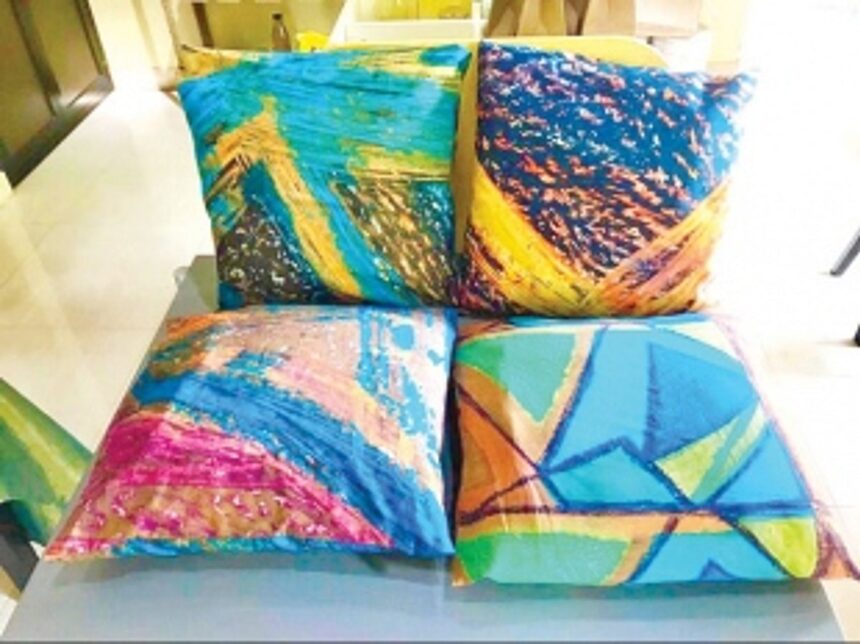
“Our choice of mentors and activities are really led by the students and their needs,” adds Pria. For Shane, whose digital prints of his drawing are used on cushion covers and sold at the centre to upcycled tables, made by the students with assistance from the teachers and handmade ceramics on display; these students and their parents have a lot to be proud about. Pria shares, “I also want an established curriculum around gardening and growing your own food. Eusebio, who has grown on a farm, knows a lot about plants and can also identify problems with crops. He lacks verbalisation skills but we are confident that with the right support, he could thrive in this area.”
The best advocacy is to witness change in action and at The Owl House, where challenges are met head on, despair shared, hopes raised and extraordinary moments created, it’s no wonder that this house will always be a welcoming second home for these special kids.