It was during the COVID pandemic when Goa realized it potential and dependence on agriculture. Over the years it had taken a back seat but when the supplies of vegetables, food grains, meat and poultry products got restricted during the lockdown as it was being majorly supplied by our neighbouring States of Karnataka and Maharashtra, Goan farmers woke up to the call for producing their own product and thus being less dependent of other states.
Agriculture Department Director Nevil Alphonso informed Herald that, “We import lot of vegetables from out of state. In fact, some vegetables which cannot be grown here in Goa in large quantities like onions, tomato, potatoes has to be imported. Same way vegetables like ladyfingers, chillies, beans, cucumber which can easily be grown in Goa but we are still importing it from Karnataka. ”
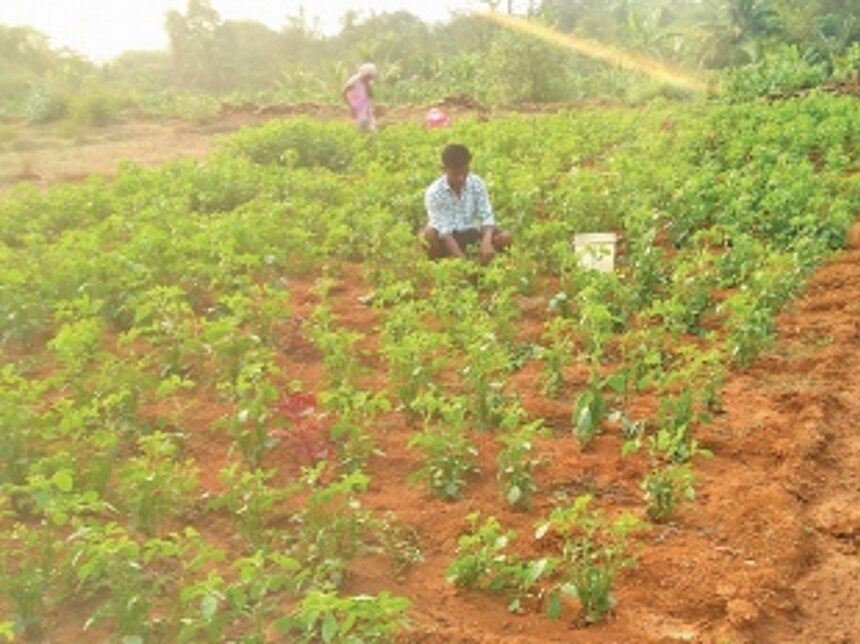
He further added that most of the vegetables come from Karnataka. “It was around 90 per cent but now it has reduced to around 75-80 per cent after pandemic. Lot of people went into vegetable cultivation during the pandemic and in the last two years. Cultivation was happening before as well however post-COVID there is at least 20-25 per cent increase.”
Director of Agriculture Nevil Alphonso touch upon what Goa lags. “Then to incentivise the farmers, we are not only giving subsidy on imports including fertilizers, machinery, we give them 50 per cent subsidy on hiring of machinery, customs as all farmers cannot afford to buy the machinery. What we find in our field is that we are good producers, not poor, we get good yield in Goa, our farmers are also hardworking but the thing is we lack in processing and marketing our produce. We have got 8,030 hectares under vegetable cultivation out of which Kharif crop is cultivated 2,926 and Rabi is 5,104 hectares.”
However, to solve this issue of weak processing and marketing, the Department of Agriculture in collaboration with NABARD recently, has come up with Farmers’ Producers Organisation (FPO) for the first time in the state. North Goa Farmers Production Orgainsation has already been started. “We are doing through NABARD which is the implementing agency for this. They have already allotted the work for five FPOs. In all 12 FPOs will be formed, one in each Taluka. FPO will cultivate and their mandate is to cultivate, segregate and do the processing. They will help the farmers and will support them.”
When asked why there is a delay in the passing the benefits in terms of subsidy to the farmers, the Director of Agriculture replied, “See, your paddy is mechanized right from planting to harvesting, planting is done by transplanter. Yes, it takes a long time because in machinery support, we have got two schemes, one is State sector scheme and the other is Center sector scheme. Central funds should also come in time. Central sector takes time because of administrative procedures of Government of India. We have to send a file to finance as finance approval is required.”
He narrated that the intention is that the farmers should get a good price. Unless and until farmer gets the remunerative price, they will not go in for vegetable cultivation or for that matter any cultivation. “In fact and we have selected around 25-30 vegetables. On purchase of machinery also, we give them huge subsidy in various categories. In addition to this, we them assured price which was there for the last 2-3 years. However, from the start of this year, the government has changed the assured price and that is 150 per cent of the cost of cultivation. Nowhere in the country is assured prices are given on this basis,” said the Director of Agriculture.
Inspired by Father George Quadros popularly called as ‘Paddyman of Goa’ of the Don Bosco Salesian Province (Goa) in November 2020, before working for several well-known airline companies for over ten years, 41-year old Kenneth Lopes, in the middle of pandemic as airlines were not operational so came back to home in Goa and was at home with virtually no work to do. He took up agriculture. “The COVID pandemic has demonstrated that agriculture is the backbone of the economy. With mechanised farming, more people were drawn to farming with even the youth joining in farming and people opting to cultivate their fields which were in disuse for so many years in the past,” he said. Kenneth Lopes is a partner in Goencho Xetkar and organization of farmers formed during the pandemic.
Stanley Fernandes from Nerul who took up farming seriously during the pandemic said that, “After the COVID pandemic a lot of individual took farming and got a bountiful harvest as well. Mechanical farming can be extremely lucrative and time saving, if professionals and highly educated individuals like us at Goencho Xetkar can take up farming the possibilities are immense and the future is in good hands.”
“The pandemic taught us the importance of having food and the fear of going hungry. It felt ironic that although mother earth provides yet so many fields lie fallow. The inner conscience was propelled into doing something to make Goa green,” Neville Luis, Partner in Goencho Xetkar said.
“The Goencho Xetkar team made it possible for us to cultivate our fields effortlessly. They took the initiative and helped us throughout from getting the tractor to transplanting and even organising the harvester for us. We not only saved money but also got a bountiful harvest,” said a farmer Sebastiao Fernandes from Merces.
The Agriculture Director agreed that we have got around 29 hectares of paddy in Goa. “We are getting good yield as well of 32,667 hectares under paddy, whereas Kharif is around 2,440 and Rabi season is 9,237. This is our statistics of paddy in Goa. For Kharif we have got a lot of area and we are getting an average yield of 4,009 kg per hectare, majorly Jaya, Jyoti and plus karzat is also there being grown now. Rice is around 2,673 kg per hectare, but it not being done widely. However, awareness is being created and many farmers are going for transplanting.”
He also added that the Department is asking self-help groups to buy Kubota, the transplanting machine for paddy. “At present, we only have tractors. We are motivating private players to come into the partnership (PPP) because with government there are many difficulties and they may come at times, many complaints are there. So we have made a scheme, where we ask a private person or a group of farmers itself, we give them subsidy to buy this machine at 50 per cent subsidy.”