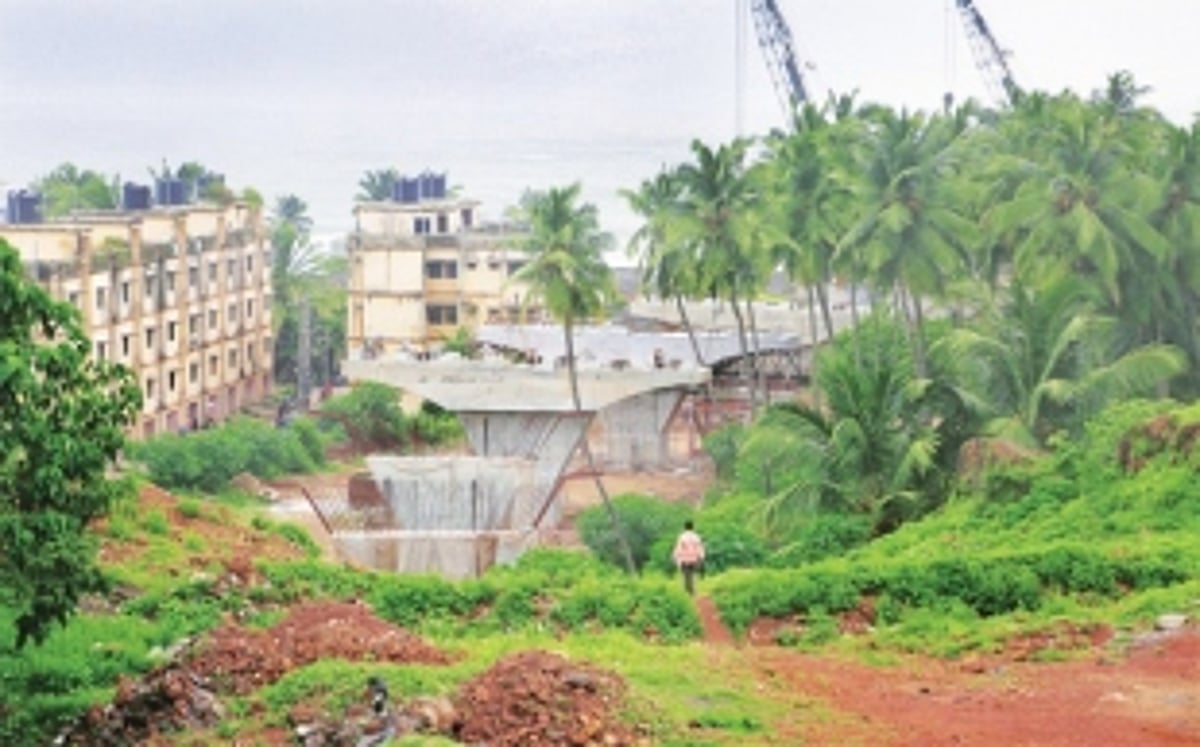
Seen from a distance, they resemble a fish bone ― concrete structures that rise above the beach and climb a hillock, their heights calculated “at one metre above the highest anticipated water calamity level” and designed to “dodge the tallest tsunami”.
These constitute the frame of the second coal evacuation route over road that is coming up in Goa, a 24.5-km stretch ― two strips of 18 km and 6.5 km, respectively ― that will skirt heavily populated areas, including Vasco town and at least six panchayats, while slashing the travel time from the port to the Western Ghats by at least an hour.
Transport of coal, at the rate of 25 tonnes per minute, by rail and road, as an ongoing investigation by The Indian Express has revealed, has left in its wake environmental damage across Goa. Much more coal is on the way ― an estimated 51 million tonnes every year by 2030 ― and this new route being built is a grim testament to the challenges that lie ahead. As a four-lane super carriageway that will link Mormugao port to NH17 ― Maharashtra to Kerala ― before it joins up with NH4A that leads to steel factories in Karnataka.
With Goa allocating Rs 184.05 crore in 2017-2018 for the second stretch of this expansion, called the “missing link”, officials at the state’s Public Works Department (PWD) describe the project as a “development commitment to the people of Goa” to “unclog the growing traffic density”.
Officials and transporters say the existing 124.5-km road route from the port to the Karnataka border is “long, not cost-effective and has a lot more potential of litigation” for any further expansion. The new route, records show, can support “a convoy of 28-tonne coal trucks” while slicing through three hillocks, a forest, levelling wetlands and paddy fields, even pushing back a village.
The Indian Express tracked this new trail on the ground to find that in the enthusiasm behind construction, several official red flags, records show, have been ignored ― from warnings about unstable cliffsides to the risk to fragile forests.