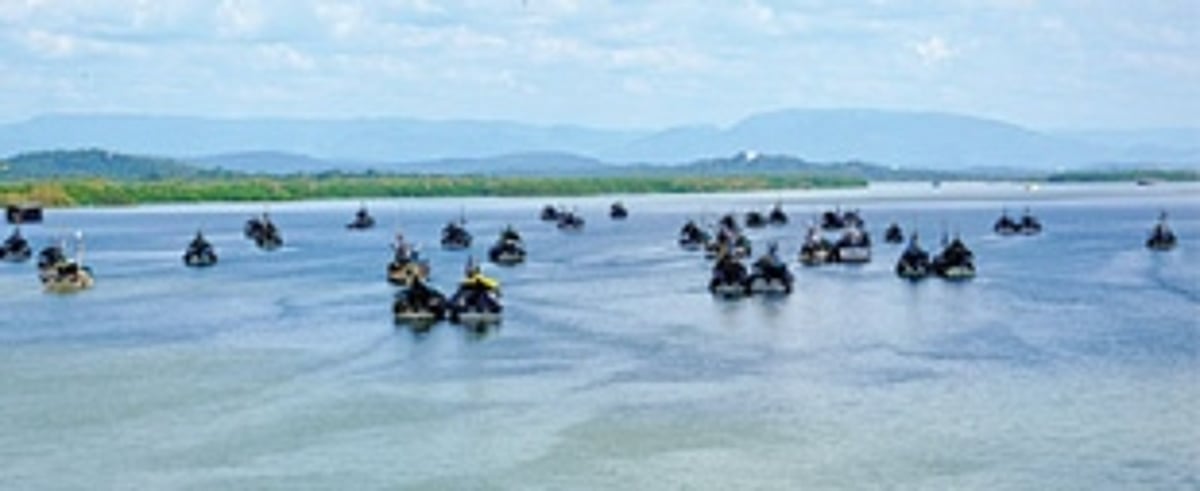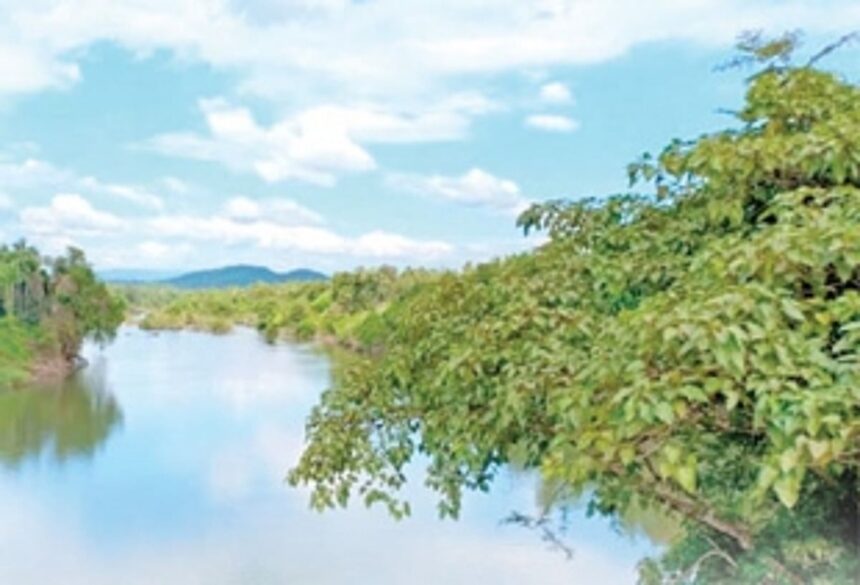
uch of the last few months have gone with wide and detailed coverage of the Mhadei water dispute between Karnataka and Goa. This piece is largely non-legal and sheds a light on alternative remedies on averting the dispute. The Mahadayi or Mhadei is 111-kms long, originating from the Western Ghats in Karnataka’s Belgavi district. The river is supported by a number of streams to form its main body that flows westward into Goa, finally flowing into the Arabian Sea at Panjim, Goa
Origins of disputes
Karnataka and Goa have been at loggerheads over the sharing of the Mhadei waters for over three decades. The issue is in flux and takes a political cloak and colour more than often. The dispute originally gained prominence in the 1980s, when Karnataka decided to build dams, canals and barrages to route the river’s water to its water-starved Malaprabha basin towards its districts of Bagalkot, Gadal, Dharwad and Belgavi. Realising the potential disastrous consequences, Goa approached the Supreme Court, in 2006 and succeeded in getting the Mahadayi Water Disputes Tribunal set up in 2010, which pronounced its order in August 2018. Subsequently, the order was challenged before the Supreme Court and the matter is sub-judice.
The basic argument of Goa, and rightly so, centres around the fact that Goa and Goans, depend on the natural path/flow of the river and any diversion of water would have a disastrous impact on Goa’s eco system and water needs (Mhadei is one of the few sweet-water sources in the State). Karnataka, however, counters this view, by making illogical, hyper-assumptive and non-evidenced claims of the Mhadei, stating that the river drains into the sea and therefore its waters would be better utilised, by diverting it into the deficit basin of Malprabha, that has in fact dried due to the State’s (Karnataka) water mismanagement by promoting inter-alia, water intensive crop production and over canalling. Also, don’t most rivers by the coast drain into the sea anyway?
A solution?
Agri-economic stimulus
It is a fact that the people living in the northern districts of Karnataka are suffering continuous economic hardship (agri-distress) due to the water scarcity in the districts. Let’s not make a mistake; the situation has a lot to do with natural and anthropogenic activities and nothing to do with the activities of the State of Goa. Also, it is a fact that farmers in the region have been growing cash crops that need high water intensity leading to the depletion of natural aquifers. The situation is further degraded by virtue of Karnataka failing in its duty of water management, allowing over exploitation of the naturally occurring aquifers in the region. It is therefore incumbent upon the State of Karnataka to remedy the existing agrarian crises by implementing economic tools such as crop insurance, subsidies, loan wavers, MSP, rain water harvesting, infrastructure etc. Along with trying to shift the Kannadiga farmers of this region to grow crops that are less water intensive, with gains that match up to water intensive crops (there are many).
(Disclaimer: It is this writer’s firm belief that the natural course of a river, or any water body, ought not to be tampered with, lest the vengeance and wrath of Mother Nature, which differentiates between no States and boundaries, casts its fury)
Cooperative water
management frame work
As per the United Nations Water and Sanitisation Organisation, nearly “263 trans-bounding lakes and river basins cover almost half the earth’s surface. 145 states have territory in these basins, and 30 countries lie entirely within them. There are approximately 300 trans-boundary aquifers, helping to serve the two billion people who depend on groundwater. Cooperation is essential, especially in areas vulnerable to the impact of climate change and where water is already scarce. Wetlands around lakes and floodplains that straddle national boundaries provide essential ecosystem service to the surrounding populations, such as food provision, barriers against flooding and the natural processing of pollutions”.
Trans-boundary water management directly impacts aspects within and beyond a State’s border, therefore providing for a bilateral co-operative framework with data exchange and implementing tools, encompassing shared aspects of agriculture, industry, navigation and water supply. Hence, water sharing management co-operation at Supra National or State levels can boost management of shared water with mutual planning. Its benefits spread wide while keeping mutual trust, economic and social prosperity of both parties in mind. Non co-operation on the other hand, even for noble projects, can have a negative reaction. For example: The Mhadei dispute; where building a dam to tackle water scarcity in one state without cooperation, could drastically reduce a river’s flow downstream in another region.
Conclusion
Facts and figures speak for themselves and it is a fact that out of the eight disputes (Godavari, Krishna, Narmada, Ravi & Beas, Cauvery, Vansadhara and Mahadayi) only three (Godavari Water Dispute, Krishna Water Dispute and Narmada Water Dispute) have ended with an award, the implementation of which is questionable. The other five are yet to meet their logical conclusion. It is therefore unnecessary, myopic and utter political theatre to singularly hold liable the present day government that was not even party to the origins of the dispute. Ergo, the childish continuation of the political mud slinging, leads to nothing but mudding the crystal clean water (metaphorically) of mother Mhadei, that yearns for a trans-boundary cooperative water management frame work that is equitable to both sides, while keeping the original course of the river untouched
(Wilbur Menezes is a
constitutional and criminal lawyer at the Bombay High Court at Goa)