One of the hottest areas in artificial intelligence is Facial Recognition technology. Users of the Facial Recognition algorithm can scan a crowd, say at a Cricket match in Eden Gardens, and within seconds locate the person they are looking for. The algorithm looks for patterns in a face that are specific to the person, that give the photo a unique signature when compared against the billions of photographs in the archives of firms such as Google, Facebook and IBM, and then confirms identity. Facial recognition algorithms are used by the police to track down criminals. CCTV cameras provide the photographs. The FBI is using this technology to identify members of the mob that had stormed the Capitol in Washington on 6 January 2021.
Facial Recognition algorithms, however, have biases, blind spots. These are a replication of the blind spots and prejudices of the algorithm’s developers. Timnit Gebru, a leading computer scientist, who was recently dismissed by Google on controversial grounds, has shown that the racial bias of the algorithms led police to wrongly prosecute African American men for crimes they did not commit. To counter such biases Joy Buolamwini of MIT Media Labhas started a movement called the ‘Algorithmic Justice league’. Exposing the biases of such facial recognition algorithms is, therefore, the primary duty of all good citizens.
In the second week of January I think I saw the face of tyranny in Goa. It was not a man in a military uniform with a moustache and a baton under his arm, a Zia-ul Haq look-alike, but it was an event that has been normalized. I had experienced such events twice before in December in Goa but had not recognized them as tyranny. The biases they embody has become the new normal of our public life. It was only when it happened again in January that I saw it for what it was, the demonstration of illegitimate authority, the display of haughty power that has no place in our democratic order. It was, in constitutional parlance, an ‘unreasonable restriction’. As a citizenry, however, we have come to accept it. There was no protest, no objection from the usually alert press, no agitation from civil society, or from democracy watchers, or even from the courts. Maybe my algorithm has got it wrong so let me elaborate on my claim and place the facts in the public domain.
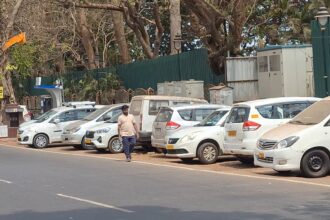
This recent case was the visit of the Vice-President of India (VP), Mr M Venkaiah Naidu, for the inaugural event of Goa’s Legislator day celebration. His attendance was a legitimate public duty but it was accompanied by a display of State power that can only be described as arrogant and unnecessary. The road on which he travelled was sealed off from users with policemen blocking every side road till his motorcade passed. If you were on foot you could not cross the road. If you were on a bike you were stopped many meters before the road. If you were in a car and came too close to the main road you were asked to reverse and go back many meters from the junction. There were armed cops with carbines. They gave orders with enthusiasm being more loyal to their bosses than to the Constitution. Trained to obey orders they kept the public at bay. Normal life had to be stopped. These orders were conveyed by ‘superiors’ in passing police vehicles. There were more than 23 police cars in the motorcade, with 5 policemen and one holding a red flag in each, before the VP, the car with the jamming equipment, and the ambulance, passed. The State’s power was on display. The citizens were reduced to bystanders. This it seemed was for our good. Under his breath someone in the waiting crowd murmured, ‘VIPs should not visit Goa’.
We have come to regard such inconvenience as normal. After all we must ensure the protection of our constitutional authorities from terrorists and other evil men. No question about that. But does this also include protection from legitimate protesters like those of the ‘Save Mollem movement’, or those opposing the transport of coal through population dense areas, or those who want to protest against the farm laws? The police think it does. The government believes it does. The public think it is acceptable.
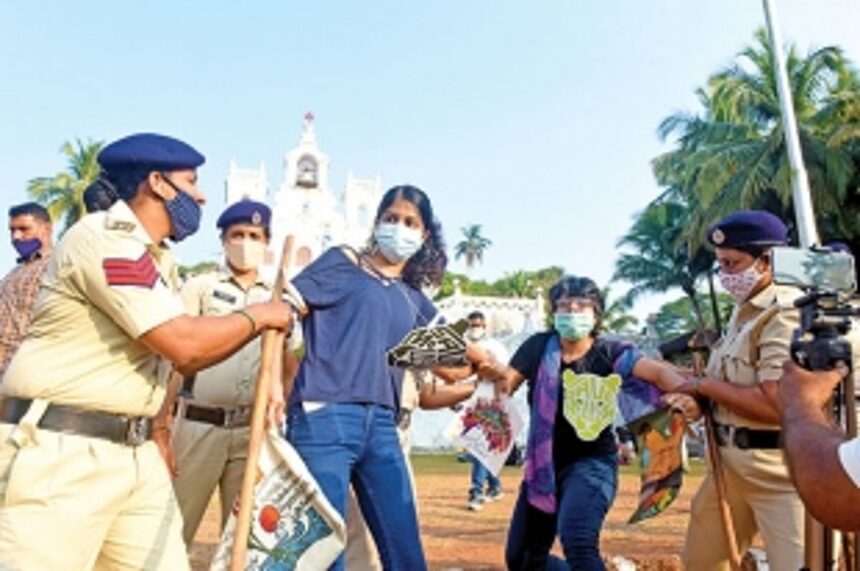
I saw the protesters of the Save Mollem project, who in Gandhian fashion were demonstrating against the project, being dragged into waiting police buses at the Panjim Square on Goa’s Liberation day. This was seen as normal by the bystanders. After all, States love to drag protesters and put them in police vans. It is the State’s right. We see it on TV happening in places like Belarus and China. I should have seen it as a marker of the normalized state of a diminished democracy. But I did not. My democracy algorithm did not recognize this deficit. I had become innured to this demonstration of State power.
This blindness had occurred earlier when the President came to celebrate Goa’s Liberation day. Roads were again blocked for our Liberation. The same arrogant police force, I had described earlier, were on the roads. The President had even Goa Commandos deployed along the route. Of course, he must be protected. Our Liberation movement was to replace Salazar, and his Casimiro Monteiro, by a legitimate President, who draws his authority from the Constitution, and a commando force, that takes its orders from the home secretary. If these gentlemen think it is kosher in a democracy to cause such inconveniences to the public then why should I object? But I wonder how Boris Johnson went cycling 7 Km away from 10 Downing Street in the heart of London. Were the roads blocked? Maybe he is not under Z plus security. Or maybe they have progressed beyond the ‘danda’ method of colonialism and instead use electronic technologies of protection.
I do not mind inconvenience. But I believe the methods used by the Goa State are more than just an inconvenience. It is encroachment. When inconvenience becomes encroachment, then democracy yields to tyranny. Encroachment is a gradual process. I discovered that this transformation, from inconvenience to encroachment, had occurred when, on the recent occasion of the VP’s visit an elderly woman who had climbed the slope where my car was parked waiting for the motorcade to pass, was stopped. Was she going to the market or was it to the pharmacy, or perhaps she was on her way home. She had to stand in the sun and wait. The Legislator’s Day had passed and the official visit had become a personal visit. Still hundreds of policemen were deployed to block the VP from his people. She grumbled. I grumbled. She asked how long she had to wait. No answer. She was tired. We questioned the cops who told us that they were only obeying orders. I asked to see the orders. They said it was oral orders. I then realised that the whole State machinery, from the Chief Secretary to the constable on the street, were showing their loyalty to the king. For them it is a small inconvenience. For constitutional democracy, however, it is a big encroachment. That is when the veil of deception dropped. I think I saw the face of tyranny. My facial recognition algorithm was working again.
(Peter Ronald deSouza is the DD Kosambi Visiting Professor at Goa University. He has recently edited with Rukmini Bhaya Nair, a book ‘Keywords for India’, Bloomsbury, UK, 2020. Views are personal)