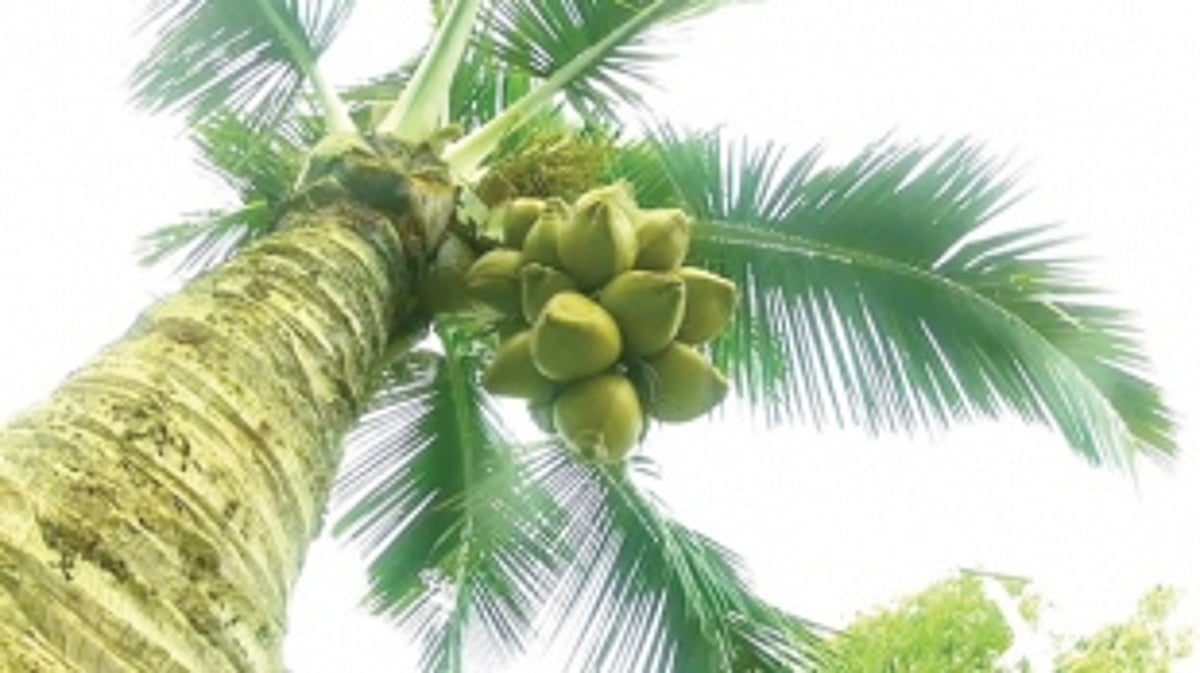
Coconut trees in Goa are not yielding to their full potential as they are not scientifically planted and most often are too close to each other and those who want to change to the prescribed mode of plantations are handicapped by the red tape involved in getting permission to cut a coconut tree.
Around 25,818 hectares of land in Goa is under coconut plantation of which 8,925 hectares is in North Goa and 16,883 hectares is in South Goa. Unfortunately, around 80 per cent of these plantations do not have the coconut trees planted scientifically.
While the prescribed distance between two coconut trees is 8 metres, most plantations have coconut trees planted as close as 5 metres and in some cases even 4 metres due to which the tree cannot give its maximum yield as it is forced to fight for survival.
The Benaulim variety of coconut tree is supposed to be the best as it is disease resistant, its coconut tastes good, it is the richest source of oil having nearly 73 per cent extract content and it yields a good number of nuts in a year. The tree starts yielding at the age of about 7 years and can yield till it is 80 !
Many farmers realizing that their plantations are too compact and willing to change are handicapped by the procedure involved in cutting a coconut tree which is simplified now but due to become complex shortly if the coconut tree is re-introduced in the forest tree category.
Presently, a farmer can directly get permission to cut a coconut tree from the agriculture department, however, the Zonal Agriculture Officer is authorized to permit cutting of only 2 coconut trees while the Director of Agriculture can permit cutting of 10 coconut trees and for cutting more than 10 trees, the government’s permission is required. However, in all cases there is a pre-requisite with the farmer undertaking to plant the same number of coconut saplings proposed to be cut.
However, this will change if the coconut is re-classified as a forest tree as then permission from the Forest Department will be required before even approaching the agriculture department. Getting NOC from the Forest Department is troublesome as the officer has to be brought for the inspection by the farmer only when the concerned officer is free.
The inordinate delay caused by the Forest Department in processing the application has resulted in most people bypassing it and resorting to illegal means to cut their coconut trees.
Although the government is giving a support price for sale of coconuts, the economics do not really work out as the labour required in maintaining a coconut tree is not available in Goa at the moment. Though the government through the Horticulture Corporation has trained quite a number of pluckers of which around 40 are commercially available in the State, there are various other problems.
For example, there aren’t enough people to climb the coconut tree to treat it for illness as were available in the past due to which many coconut trees succumb to diseases like stem bleeding which used to be so easily treated in the past.