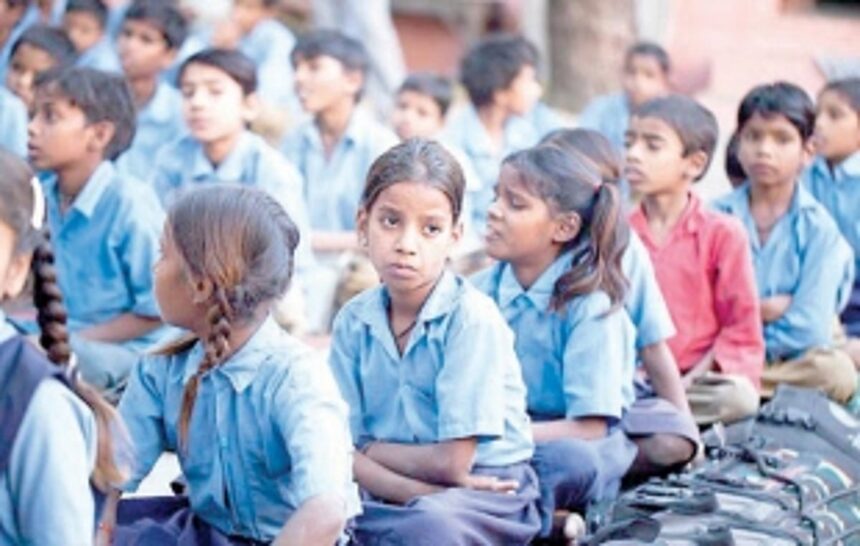
Fund cuts, a learning crisis, poor assessment practices and a shortage of teachers — these factors are weakening India’s demographic dividend, the growth potential a country enjoys when its population has a high share of those in the working age (15 to 64 years).
With a median age of 27.9 years, India has one of the world’s youngest population, with 66 per cent of its 1.3 billion people in the working age of 15 to 64 years.
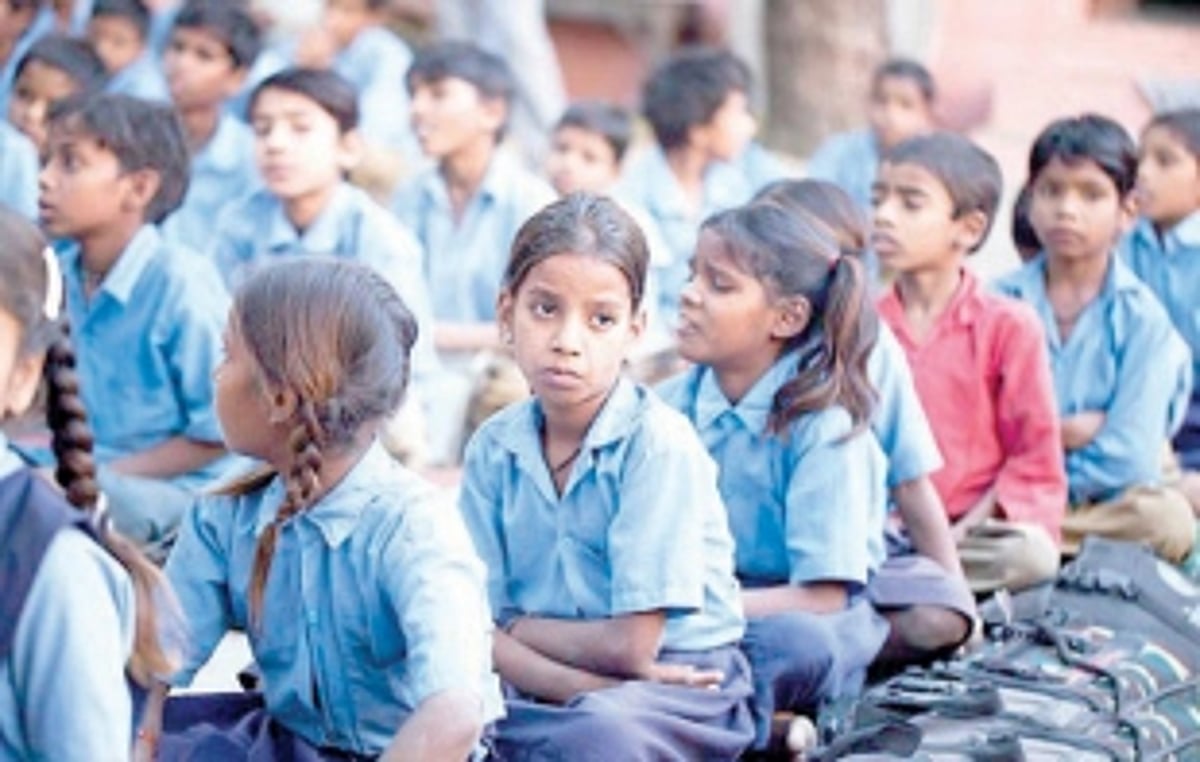
India’s school examinations focused on recall of very specific rote-learnt knowledge and actively discouraged higher-order skills, with some material being worse than in Nigeria and Uganda, revealed a December 2017 study of assessment materials by Research On Improving Systems Of Education, a multi-country education research programme based in Oxford, UK.
Education allocation down to 0.62 per cent
The Narendra Modi government has been reducing spending on education (budget estimates): It has fallen from 1 per cent of the country’s income in the government’s first budget in 2014-15 to 0.62 per cent in 2017-18. Its share in the budget has been slashed from 6.15 per cent to 3.7 per cent.
Allocation to Sarva Shiksha Abhiyan–the national programme for universal elementary education–as a share of total allocation was 33 per cent in 2015-16, 31 per cent in 2016-17 and 29 per cent in 2017-18, shows an analysis by New Delhi-based think tank Centre for Policy Research (CPR).
Per-student allocation (based on the 2015 enrolment) to the programme increased by 17 per cent in 2016-17–to Rs 6,350 from Rs 5,424 in 2015-16–as government school enrolment fell by 2 per cent between 2014 and 2015, the CPR analysis said. The allocation remains far below the estimate made by the human resource development ministry, with the Centre releasing Rs 22,500 crore in 2016-17 against a demand of Rs 55,000 crore.
Funds released as share of approved budget on Rashtriya Madhyamik Shiksha Abhiyan–an integrated national programme for secondary schools–had decreased from 78 per cent in 2015-16 to 54 per cent in 2016-17 (till December 5, 2017), showed an analysis of the programme by the CPR. Consequently, expenditure as a proportion of funds available rose from 74% in 2015-16 to 94 per cent in 2016-17 and 78 per cent till November 30, 2017.
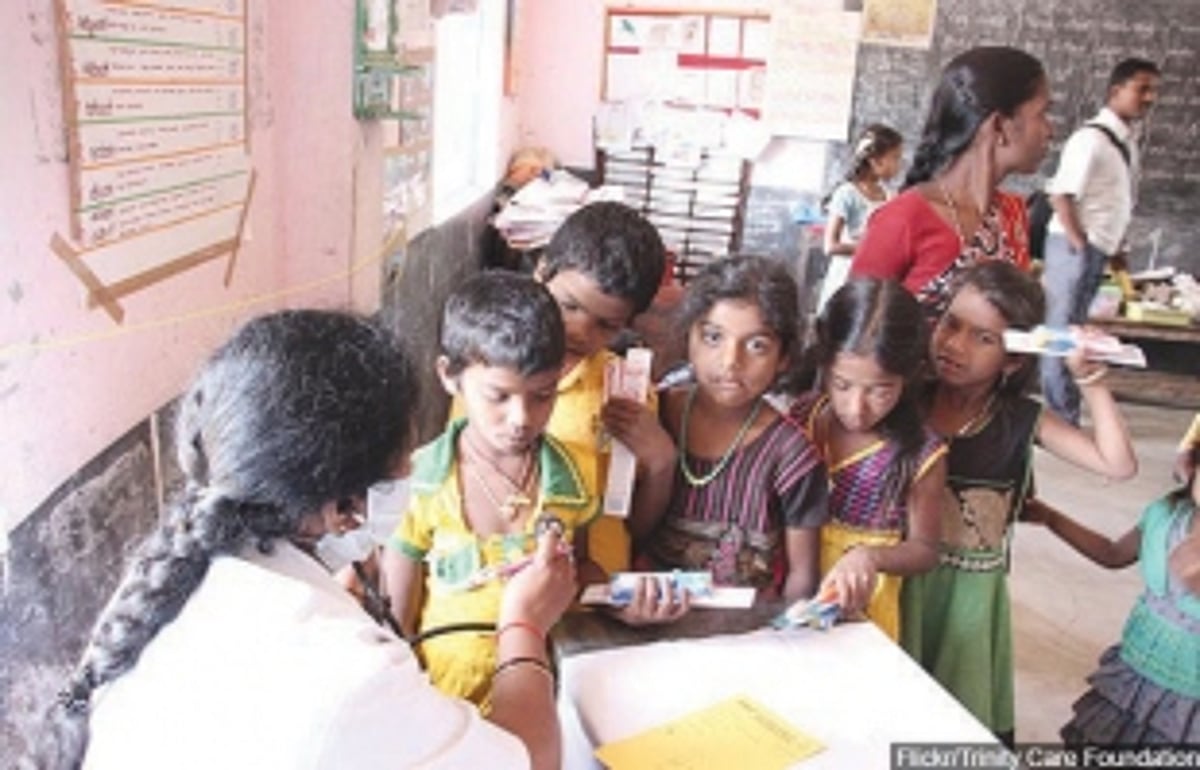
Of the 6 million teaching positions in government schools nationwide, about 900,000 elementary school teaching positions and 100,000 in secondary school–put together, 1 million–were vacant, IndiaSpend reported on December 12, 2016.
“India will account for more than half of the increase in Asia’s workforce in the coming decade,” Anis Chakravarty, lead economist at global consultancy Deloitte India, said on September 18, 2017. “With the invasion of machines and improvement in robotics, India needs to pay special attention to skilling and reskilling its workforce with a focus on the changing nature of today’s jobs.”