By Ranjan Solomon
Chief Minister Laxmikant Parsekar has upped the communal ante in Goa. Through mere conjecture, he has added two and two together, got twenty two, and muddied the communal waters.
After failing to live up to the BJP-led government’s promise that there will be legislation enacted to make English the Medium of Instruction, he tries to turn the tables on the Church. He accuses the Church of instigating the protests against the government by FORCE. Fr Zeferino D’Souza, Secretary, Goa Diocesan Society of Education (DSE) has issued a clarification. DSE did not instigate the protests. It remains an independent decision of FORCE. It is parents who have risen in protest having lost trust in the government’s intent to act firmly and quickly.
Chief Minister Parsekar further complicates matters by rejecting the methods used by FORCE in their agitation. There is a simple principle here. The people have the right to protest and employ means that attract attention and support for their actions. The government does not legislate what kind of protests they will countenance. When a government drags its feet for some four years, and fails to meet its promises, the public have every right to shake it from its slumber and insolence. Appeals have fallen on deaf ears. Harsher methods were the logical alternatives that FORCE could choose from. ‘Rasta Roko’ has brought the government to attention. It is threatened. Parsekar displays his intolerance. He says that this is no way to protest. Did he mean that FORCE should submit a menu of protest-types from which he would order the one he likes most? The agitation has been judged as one of the most creative and successful protests. For its own good, the government should discern the signs emerging from this protest.
The Chief Minister has no legs to stand on in warning citizens on the merits of this or that kind of protest. The same methods now being used by FORCE were used by the then Leader of the Opposition Manohar Parrikar back in 2011. Then, it was BBSM which blocked the national highway at Porvorim. The current Chief Minister Laxmikant Parsekar, and other members of the present cabinet were part of that agitation. Several BBSM supporters including Opposition Leader Manohar Parrikar, sat on the road at O’Coqueiro junction at around 9 am, blocking Panjim, Mapusa and Saligao bound vehicular traffic. If the agitational methods of FORCE are disagreeable methods why did he join it? Double talk, you may say.
They had then condemned the State Government for its decision offering grants to English Primary schools. It begs the question: Where does the government really stand? There are doubts and these must be cleared by transparent decision making.
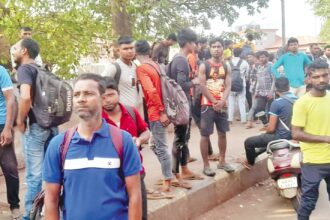
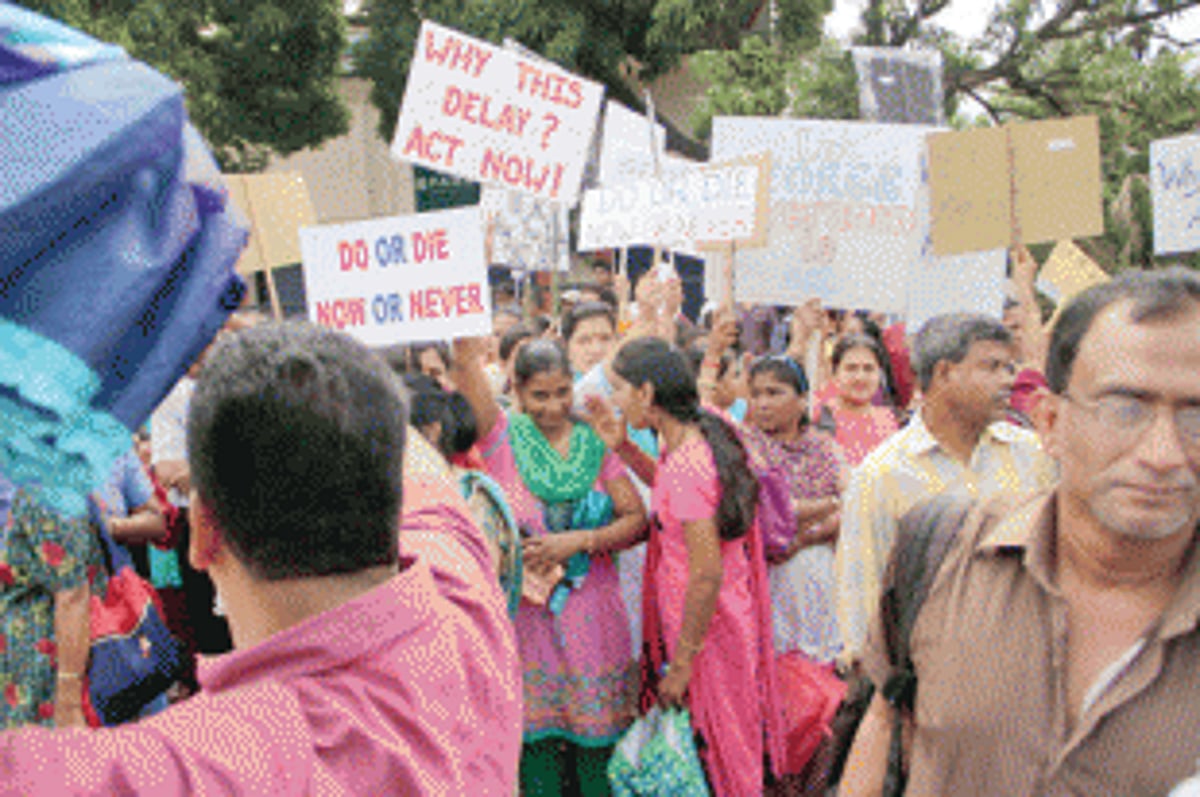
To communalize the protest is to pull wool over its eyes. It will only render the government partially aware. Or, may be, not all! Anyone who went to the Azad Maidan would have seen a mass of people cutting across religious lines. The protestors were all parents of school going children – not rented crowds as political parties tend to have – who want quality education for their children, and in a language that qualifies to enter a globalized world. Will strong language, accusations, and veiled threats impede FORCE? Political force will fail to stop FORCE.
Those who have spoken in favour of the government, and against the Church, include people who have a vested interest in English education served in private economic enterprises masquerading as educational institutions. They tacitly add a class dimension to the issue. The underlying strategy seems to be to create a small class of English-speaking youth who will then take front stage in the world of economics, business, and politics. This is about the elite versus the non-elite. People see through this and the government is numbed by its opiate variety of politics to know that the people what its real agenda is.
In the way the government has handled the issue, it has already lost credibility. It has sown the seeds of discord and division. And this is done brazenly. A senior BJP leader has suggested that Hindu-run educational institutions must engage the churches in a competition with Catholic schools and offer English education. Surely, a recipe for growing communal apprehensions! What the Catholic MLAs are able to do to influence the situation is a sordid story of betrayal and duplicity. Rather than offer lame excuses on behalf of the government, they should have functioned to pressure the government to do the just and meaningful thing. Now – not in some future assembly session. The public need results – not opiate.
(Ranjan Solomon is Consultant to the Centre for Responsible Tourism)