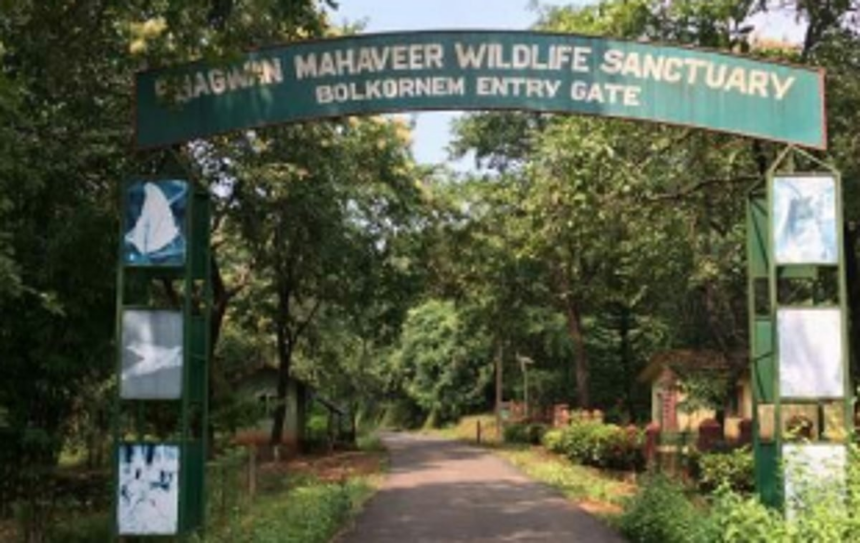
Direct sightings and camera trapping by Forest Department has revealed the presence of Schedule-I & Schedule-II species such as the tiger (Panthera Tigris), ‘dhole’ (Cuon Alpinus), mouse deer (‘Moschiola Indica’), ‘gaur’ (Bos Gaurus), and Indian Pangolin (Manis Crassicaudata). Other rare and vulnerable species (IUCN Red List) such as small-clawed otters (Aonyx Cinereus) and four-horned antelope (Tetracerus Quadricornis) are also found in the project area. In addition, the protected area is also home to more than 721 plant species, 235 bird species, 219 butterfly species, 80 odonate species, 70 mammal species, 75 ant species, 45 reptile species, 44 fish species, 43 fungi species, 27 amphibian species, 24 orchid species, and 18 species of lichens.
Two dragonfly species (Idionyx Gomantakensis and Cyclogomphus Flavoannulatus), which are endemic to the Western Ghats were described to science from here. In fact, the type locality of Idionyx Gomantakensis is adjacent to the railway track, which is proposed to be expanded.
It has been recorded from few locations elsewhere in the Western Ghats, and this is the only location in Goa where it has been known from, so far, close to the proposed railway tracks.
This protected area is the only other site in India where the reclusive ant Parasyscia Indica, is found and these sites are from where the LILO transmission is proposed. Many arboreal species such as Slender Loris (Loris Lydekkerianus) and Indian Giant flying squirrel (Petaurista Philippensis) are present and they require canopy connectivity.
Tree cavity nesting birds such as hornbills such as the Great Hornbill (Buceros Bicornis) which is classified as Vulnerable and Malabar Pied Hornbill (Anthracoceros Coronatus), which is classified as ‘Near Threatened’, are also found here. In addition there are 18 bird species that are endemic to the Western Ghats and seven bird species that are of high conservation concern found here (according to the State of India’s Birds, 2020).
Rare and endemic amphibian species such as the Malabar Tree Toad (Pedostibes Tuberculosus) are also found in this protected area. This protected area is our pride and home to all Goa’s state symbols: the State tree (Terminalia Tomentosa), the State animal (Gaur, Bos Gaurus) and the State bird (Flame-throated Bulbul, Pycnonotus Gularis).
The rivers and forest streams also provide water to a large human population in the district of North Goa.
Importantly this area harbours many ‘Critically Endangered’ (Arisaema Sivadasanii; Aspidopterys Canarensis and Glyphochloa Veldkampii); Endangered (Amorphophallus Commutatus var. Anmodensis; Begonia trichocarpa; Discospermum sphaerocarpum; Habernaria multicaudata; 2 Strobilanthus Ciliata and Wiesneria Triandra); and Vulnerable (Nilgirianthus Ciliatus, Dacaschistia Trilobata, Eranthemum Capense var. Concanensis, Oberonia Brachyphylla and Paracaryopsis Coelestina) plant species.
In addition, 127 endemic plant species occur in this area. Besides the flora and fauna, these forests have fresh water streams that feed the main rivers including Goa’s lifeline, river Mandovi. This river is a major source of potable water and provides irrigation facilities, produces biotic and mineral resources and aids in travel of people and goods to different parts of the State.