Mormugao Municipality
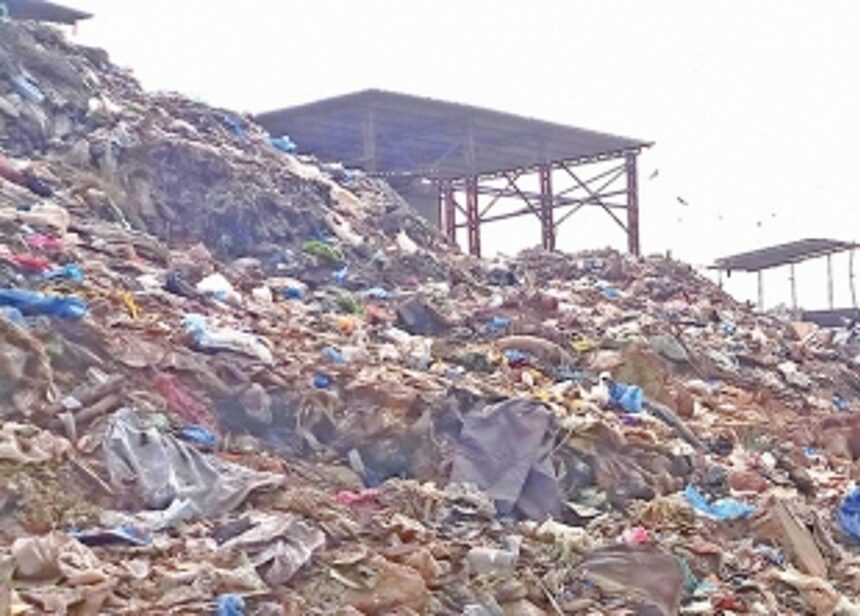
Mormugao municipal area has struggled a lot in combating the garbage issue from its jurisdiction area and the legacy waste of 1.2 lakh tonnes of mixed waste. Last year, there were efforts to introduce
enzymes to shrink and remove the foul odour from the waste dumps. Further 10 baling machines with a capacity to bale 2 tonnes of solid waste was also used. Then, there was a bio-gas plant having a capacity of 5 tonnes to treat the wet waste.
However, with solutions not working out as planned, the Minister for Waste Management, Michael Lobo, along with Mormugao MLA Milind Naik, Vasco MLA Carlos Almeida and Mormugao Municipal Council (MMC) Chairperson Nandadeep Raut held an inspection recently. Naik spoke about using bio-mining from the recently set up plant, to treat the mixed waste and then use the power generated from the residual. The plant contains a fully mechanized automatic system. The main objective of exploring modern technology is to ensure the waste at Headland Sada is cleared before the monsoons. Naik added that he had seen a similar plant of higher capacity working successfully in Pune. Naik added that the plant will be functional in two shifts, day and night. “We will see the functioning of this plant and if it works efficiently then we might introduce two more machines in this plant for mixed waste treatment in the near future” Naik added.
Chicalim
Chicalim village panchayat carries out door-to-door dry garbage collection. However, looking at the long -term future, Panchayat Minister Mauvin Godinho recently announced that Chicalim will be the first panchayat to have its own garbage treatment plant with plant with Material Recovery facility (MRF), catalytic converter to handle wet waste. He added that the tender for the mini garbage treatment plant that could produce power out of wet waste will be tendered soon using the funds from the Airport Authority of India under Corporate Social Responsibility (CSR).
Bogmalo-Chicolna
Being a tourist destination, Bogmalo-Chicolna is keen on solving its garbage problems. Laxman Kavlekar, a panch member informed that their panchayat is carrying out door-to-door garbage collection on a weekly basis. Here too, the Panchayat Minister promised the bio-waste digester, which is the process of being set up. The panchayat believes that once this is functional, the issue of managing waste will be solved as right now they did not have a place to treat the same. The garbage collected is being handed over to an agency based in Verna, which looks after the disposal of waste, they added.
Velsao-Pale-Issorcim
Velsao-Pale-Issorcim panchayat is also battling to deal with its garbage woes. Garbage can be found littered on the beach and on the road side. Sources stated that there are plans to build a solid waste treatment plant at Issorcim. Efforts to contact the panchayat secretary and Sarpanch to find out more details were in vain.
Cansaulim-Arossim-Cuelim
The Sarpanch of Cansaulim- Arrosim- Cuelim, Marta Saldanha, stated that the door-to-door garbage collection is being carried out in every ward on a daily basis, which is then sent to the solid treatment plant in Saligao. She added that while the panchayat doesn’t
have a solid waste treatment plant of their own but added that efforts are being made to find out space for setting up the same in the panchayat area.
She also pointed out that the Panchayat Minister had recently stated that coastal villages will receive Rs 7 lakh funds to set up their waste treatment plants. She added that so far they have received Rs 2.70 lakhs.
Verna
At the recent gram sabha in Verna, locals had strongly opposed the proposed mega solid waste treatment plant of higher capacity, which would treat waste from South Goa at the Verna-Loutolim plateau.
Concerns were raised about how this project can lead to the contamination of ground water, water bodies, fields, air pollution and how it will affect low-lying areas adversely.
Locals believe that it would be better to treat the garbage generated in their village alone, with a smaller capacity garbage treatment plant.
On a different note, regarding door-to-door collection, Sarpanch Laurina Fernandes said that they haven’t started it yet but that by April it should commence in full swing. She added that house tax along with garbage tax will also be imposed on the houses. She however, added that the panchayat collects dry waste on a weekly basis. She also lamented that they face garbage related problems in areas where migrants are prominently staying. She also reasoned that the panchayat requires adequate funds and assured that the panchayat will collect wet and dry waste from some areas where it is necessary. She further added that they have bought a baling machine and that a MRF shed will be built once they receive funds.
Quelossim
The newly-formed Quelossim village panchayat body stated that they are collected dry waste twice a week,.
Sources from the panchayat said that this garbage is then kept in a cage like structure near the panchayat ghar, from where it is handed over to an agency from Verna, which further takes it to the Saligao waste treatment plant. Regarding wet waste, sources added that the panchayat doesn’t have a facility to
treat wet waste and therefore, people should utilise wet waste in their fields, gardens as manure or feed to their domestic animals. Quelossim panchayat also doesn’t have their solid waste treatment plant.
Sancoale
The issue of garbage management rocked the recent Sancoale gram sabha. Locals demanded that the panchayat takes stringent action on those who dump garbage in the open, blind spots and those who fail to segregate garbage and give it to the garbage collector.
At the meeting it was decided to also act against flats and houses that have been as rent to tenants to ensure that those occupants segregate their waste and give it to the garbage collector, failing which, they would be given a warning and a fine. If they do not comply, then the matter would be taken with higher authorities asking that stringent action be taken against them.
The panchayat also decided to implement the garbage sentinel scheme where fines would be imposed on the violators.
On another issue, the panchayat said that as they don’t have a dedicated dumping site, they depend on a
a contractor, who carries out door-to-door garbage collection and takes care of its disposal outside Sancoale. The panchayat added that once the village has its own dedicated site, the panchayat would collect and dispose of the village’s garbage.
Cortalim
Cortalim village panchayat collects dry as well as wet waste regularly. Panchayat secretary stated that 1.5 metric tonnes of wet waste is generated on a monthly basis and one tonne of dry waste, from the Cortalim constituency, which is collected by the panchayat. He added that the panchayat charges per house Rs 50 per month for garbage collection, for shops Rs 100 and for restaurants Rs 500. The waste collected is then sent to the Solid Waste Treatment Plant in Saligao through an agency in Verna.
He added that the panchayat is also planning to set up a special plant for wet waste treatment from which, manure can be made. For this, a budget of Rs 40 lakh has been kept. He also informed that the MRF shed will be put up at the cost of Rs 23 lakh.
Nagoa
Nagoa panchayat collects dry waste on a weekly basis.
The panchayat secretary Sachin Naik stated that they collect 400 kg of dry waste per week and 1,600 kg per month, which is handed over to an agency in Verna for disposal. He also said that wet garbage is disposed by the locals themselves by feeding domestic animals or as a form of manure for their fields and gardens.
Naik also revealed that Nagaoa panchayat is planning to set up its garbage treatment plant wherein dry and wet waste will be treated and manure produced from this will be sold.
He added that a budget of Rs 50 lakh has been kept for the same and that a 23 lakh MRF facility is likely to come up through the 14th Finance Commission grant.
Dabolim Airport Area
The Airport Authority of India (AAI) through its Corporate Social Responsibility (CSR) plan, approved funds of 15 crores to set up a 10 tonnne capacity biodigester plant, four Materials Recovery Facility (MRF) sheds besides bailing machines, forklifts and dustbins in order to curb the menace of garbage in the designated areas under the flying path of Dabolim airport. The plant, which is expected to come up at Chicalim, is expected to treat the garbage collected from the nearby villages such as Bogmaol etc
Sources further informed that besides biodigesters, four MRF sheds likely to be will be put up at Chicalim, Chicolna-Bogmalo, Sancoale and also at Dabolim airport. “Besides, every MRF sheds will be given baling machines, forklifts and dustbins”, added Panchayat Minister Godinho.
Sources added that the Chicalim Panchayat, Goa Waste Management Corporation (GWMC) and AAI are expected to sign tri-party MoU for this project. Sources added that AAI will see the maintenance and operation cost of this facility for five years.
Government Initiatives
Recently on February 20, a newly set up solid waste treatment plant functioning on the bio-mining technology was inaugurated by Minister for Waste Management Micheal Lobo. The plant, which will be run by the Goa Waste Management Corporation (GWMC) will treat and clear 1,000 metric tonnes of legacy stacked mixed waste daily.
Lobo said that the objective to form GWMC was to bring four solid waste treatment plants of higher capacity in Goa and to clear all the waste stacked as well as generated in the state.
He further said that from these plants one plant will incinerate the dry non-biodegradable waste and from that a power has to be produced from it. “Cacora SWTP work is in progress; the environment impact assessment of Verna and Bainguinim plants has been completed; and we are going to ask for an expression of interest. For Verna plant, we are going to give order for Environment Impact Assessment and already few companies have come forward in this regard,” he added.
Lobo added that the existing waste is 1.5 lakh cubic metres. And to treat this waste this new machinery has been set up. The waste which will come from RDA wing will be sent to a cement factory in Karnataka.
“To transport RDF (Refuse derived fuel) waste from Goa to Karnataka is very expensive, therefore, we want that RDF waste should be treated in Goa and from that electricity can be generated. To show this technology few months back some journalists were also taken to Norway and Sweden and we have studied the technology and efforts are in pipeline to replicate this foreign technology in Goa,” Lobo explained.