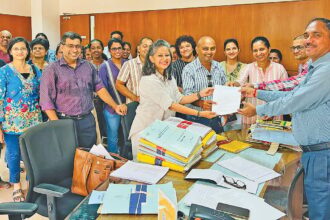
T&L which has its base in Barcelona specialises in the tourism and leisure sector. The consultancy is costing the state quite a tidy sum: Rs 4.98 crore for the preparation, “including a detailed implementation plan”. The consultants are to begin the exercise anytime soon, and have to deliver the plan within nine months. “Liquidated damages are specified in case of delay by the consultant in completing the project within the stipulated timeframe,” a government spokesperson told this newspaper.
The master plan will “set a framework for deciding which tourism products to focus on and recommend where in Goa to set them
up. A key aim is to identify the ‘right type of tourist’ for Goa and develop a strategy to attract
such tourists while ensuring sustainability,” tourism director Nikhil Desai says. Hotelier Ralph De Souza has spent virtually
a lifetime in the tourism industry here, starting out small when the sector was just finding its feet in the late 80s. He owns seven tourism properties (including hotels) today. Did a master plan for tourism 25 years after
the explosion of the industry make any
sense, given that most of the damage inflicted
was irreversible, I asked him.
De Souza conceded that such a plan
should have come much, much earlier. But
with the government seriously prospecting
the idea of forging into the hinterland—the
heart of village Goa—professional advice on
how to proceed further afield is crucial, he
believes. Going into fragile, eco-sensitive
zones without a plan would be far more disastrous.
All tourism-dependent countries function
with a tourism board—Mauritius, Maldives,
Singapore, for example—or a regional
board—on the lines of Italy and Spain—as
a regulatory body. These professionally-run
bodies address and protect local concerns
from the otherwise destructive footprint of
what can prove a highly fickle industry. Goa’s
tourism trade on the other hand has mushroomed
entirely demand oriented.
“As a regulatory authority, the government
has completely failed,” De Souza says. And
how pathetically can be construed from its
floundering initial years when tourism was
overseen by the government’s department
of information. It later became an adjunct
of that department which was redesignated
department of information and tourism.
Promoted eventually to an independent
portfolio, not much has changed with its bureaucracy.
“They are still pushing files,” De
Souza laments of an office that holds the reins
of one of the most crucial economic activities
in the state. (Official data claims turnover
from the industry is currently at Rs 9,000
crore or 18 per cent of GDP.) Hotels and
restaurants are required to acquire licences
year on year. So tardy is the procedure that
the renewal certificates for the previous year
have not been issued, even when the process
for renewal for the next year has begun. Only
the pollution control board clearances currently
have a two-year validity.
This is the second tourism master plan for
Goa. The first one, produced by another consultant
in 2001 for which the government
shelled out a few lakhs of rupees at the time,
was buried without much ado among other
mouldering government files. “The key differentiator”
between the new plan and the
previous one is that this one “is focused on
implementation”, an official says. “To ensure
that the consultant is responsible for converting
the master plan into executed
tourism products/activities, they will be responsible
for implementation support,” the
government says, but it also obfuscates its
intent with the rider “the government will
decide on retaining the consultant for implementation
support at the beginning of
the implementation period”.
In the light of recent revelations in the legislative
assembly that we’ve spent over Rs
13 crore in two years to send our so-qualified
ministers and MLAs to promote Goa
abroad, some numbers crunching would be
in order. From 2009 to 2013, official statistics
claim domestic tourist arrivals have been
on the north-bound trajectory, shooting up
from 2.12 million to 2.20m (2010) to 2.22m
(2011) to 2.33m (2012) to the all time high
of 2.62m in 2013.
Foreign arrivals inched up from 3.76 lakh
in 2009 to 4.41 lakh (2010), 4.45 lakh
(2011), 4.50 lakh (2012) to its current peak
4.92 lakh last year. Given that hotels are required
to maintain the Form 2 data for foreign
guests, these figures would be tough to
fudge. But domestic arrival data is at best
highly unreliable and at worst “fictitious”,
tourism professionals believe, granted that
even those who make regular trips across
borders to pick up supplies from Belgaum
and elsewhere help to pad up the official
tally.
What’s of particular interest though is how
foreign arrivals have gone up only marginally
over the years. They went up by just 4800-
odd in 2010 (from 4.41 lakh to 4.45 lakh),
4500 or so in 2011. The figure went up by
41,792 last year, but international events
had also driven up the numbers of foreign
tourists in 2009 when 64,000 more travelled
here compared to the year before. But in the
global travel scenario, these figures are negligible,
hardly justifying the state government’s
huge spend on foreign promos when
the returns have been so meagre, those in
the business say.
“We’ve been hovering between 4 lakh to
5 lakh foreign arrivals for years. What do
these extravagant tours achieve?” a tourism
player argues. We’re probably investing Rs
1 lakh for every new foreign tourist we attract,
and that tourist in any case does not
spend more than Rs 50,000 in Goa, he points
out. Many of these jaunts in the past have
included accountants and clerks from the
tourism department.
So where exactly are we headed with an
industry that will soon spread its tentacles
well into the interiors? One can imagine the
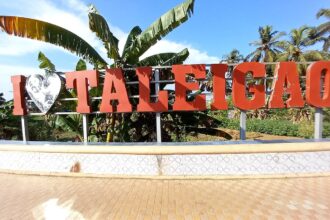
consequences of replicating Candolim in Talaulim.
A masterplan at this stage can at best
arrest a complete invasion into regions yet
unexplored. For most of the tourist coast hit
by the Baga syndrome, the damage is now
irreversible.