Panchayat elections in Goa started much before the Assembly elections. Assembly elections were held in Goa in 1963 whereas Panchayat were first held on October 24, 1962. In those days, there were wards demarcated in the villages, but the candidates contesting for polls were not ward-wise. If there were seven wards in a village and nine candidates, then the top seven candidates, who polled most votes, were declared elected and the counting took place in the Panchayat itself. The counting continued overnight and the results got declared the next day.
Over the years, many changes have taken place in the Panchayati Raj system. It is believed that after 73rd Amendment, the grassroots democracy in the country and State has strengthened. Is it a reality or a myth? Where is the Panchayati Raj system in Goa standing after 60 years?
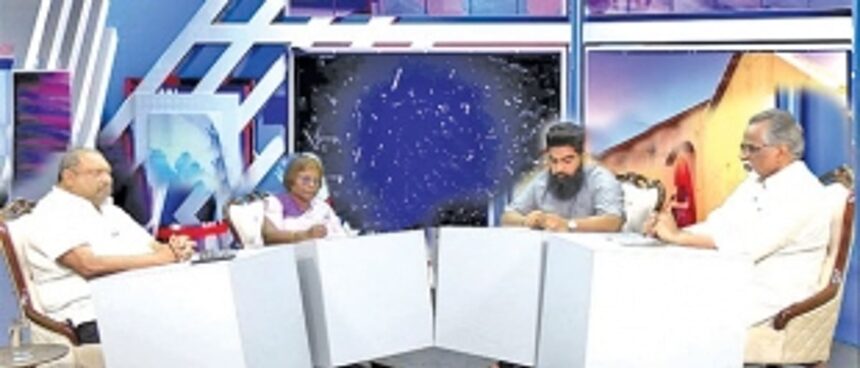
“Mahatma Gandhi had said that India lies in the villages and Panchayati Raj also deals with villages. Today there is hue and cry across Goa that the State is getting destroyed. The eco-sensitive areas are getting destroyed. Eighty per cent of these areas are controlled by the Panchayats. Now, there is a philosophical idea that the political parties should not interfere. But that is not the reality,” said TrajanoD’Mello, ex-Sarpanch ofGuirim.
“In 1972, when I was a panch, at that time Panchayats were different. We would go to the houses and give whatever certificates were required. Now there’s too much of interference from government departments and they have made a mess of everything. Panchayats have also allowed it to happen.So, destruction started in the Panchayat areas and there is no control of Panchayats over it,” D’Mello said.

Ex-Sarpanch VP Moira, Vigilia De Sa said that there is a lot of difference in the era before the 73rd constitutional amendment and after it.
“I have experienced functioning of Panchayats pre and post the 73rd Constitutional Amendment. There is a vast difference between its functioning from then and now. We don’t see ethics in the functioning of the Panchayatsnow. Although after the 73rd Constitutional Amendment the Panchayats should have got more powers, that hasn’t happened,” De Sa said.
According to her, the Panchayats haven’t got the due respect, they don’t have financial autonomy.
“We have to understand one thing that if I as a citizen today have my rights, it flows from the Constitution of India. If the Panchayats have to get their rights, it comes from the same Constitution.It looks as though today nobody is bothered about following what the Constitution doesand what is to be done,” she said.
One has to address this basic issue first. Do the Panchayats get the rights that they’re supposed to get?
“Then the Gram Sabha, the Panchas, these are constitutional entities and each of them have to function by the rules and procedureslaid down.Even the Gram Sabhasare being used by certain people to get something passed. Is that empowering the Gram Sabha members?These are the questions which we have tothink about. We have to come on the same page and find out answers to these questions,” she said.
Kalanand Mani, Secretary Peaceful Society, said that the minimum expectation from 73rd Amendment was that the Gram Sabha will be empowered. But that has not happened anywhere in this country.
“The power has to flow from bottom to top. But it is actually flowing from top to bottom. Delhi (Centre) is not ready to reduce its power, similarly the State is not ready to sacrifice its power.And so villages and the ZillaPanchayats are caught between this power struggle. Instead of performing the role of a body of local self-government, the Panchayat is reduced to act as an agency of the State government and therefore the whole issue of grassroot democracy is in great risk,” Mani said.
However, unlike other States like Maharashtra, Tamil Nadu, or Karnataka, in Goa one has to struggle to find one ideal village where the Gram Sabha has the ability to decide what the village should be or what it needs.
“Goa is losing the space and the chance to become the model State for Panchayati Raj, considering its small size. It was possible to have an ideal village Panchayat system in Goa. But because the political system is so turbulent, it has become very unreliable and has no respect in the mind of people,” he said, adding, “therefore Panchayat is also affected because of the polluted political atmosphere”.
According to him,Panchayat has become now a ladder to climb up and become MLA or minister.
“I don’t see any panch having the interest to strengthen the Gram Sabhaand make sure that there is a good participation from their ward in the Gram Sabha. I haven’tseen a sarpanch or a panch in the last 10-15 years who has really worked hard to see that they know the village, they know the law, or at least they wish to know the law,” the noted Gandhian said.
Ex-Sarpanch ofAquemBaixo,SiddheshBhagat said that before every Panchayat election, the government always speaks about empowering the Panchayats. But in all these years, nothing has changed.
“Panchayats are acting as the agency of political parties. Nowadays, MLAsor ministers put up Panchasto see the demographics and assess how they can win the elections. They consider Panchayat elections as preliminary round for Assembly elections. There are always ruling and opposition members in the Panchayat, who spoil the Gram Sabhameetings,” he said.
If there is any developmental work happening, and if the other party belongs to the MLA from the Opposition, he or she tries to the stop the work. So there is no actual developmental work taking place. Whenever there is a Gram Sabha, there is a havoc created and developmental work remains on hold.
“There is no people-friendly Panchayat. For any development work to happen in a village, the file has to move to the Sapranch, then the Block Development Officer (BDO), then will go for estimates to the PWD engineer. Then it comes back to the BDO. For constructing something as basic as drainage, approvals take minimum six months. However, if the panch members are from the ruling party, then files move faster. But if you are from the Opposition, the file is put on hold,” Bhagat said.
He said that the Panchas and Sarpanchas are tools to reach the people. Panchayats were supposed to be a powerful body. But today many decisions are taking place bypassing the Panchayat.
“From the 90s till date nothing has changed. In the coming years, I don’t think even the Panchayats will exist. So, self-governance is gone. What we say Su-raj(Swaraj) is gone. Good self-governance is also going down. The importance of Panchayats is going down. Today we are celebrating 60 years of Panchayati Raj. Another 40 years later it will be 100 years. But we will still continue to talk about empowerment,” he said.
TrajanoD’Mellosaid that all political parties are controlling Panchayats without accountability or responsibility. The situation can be changed only by making the Panchayat election candidates contest on political party tickets, which is not happening currently.
“One thing is a fact that the Panchayati Raj hasn’t helped the poor. The beauty of Goa is in the villages. This is being destroyed. Who has destroyed it? The problem is you can’t fight against this system. Those who have tried have become extinct from the political scene. Those who have toed the line have flourished,” he said.
SiddheshBhagat, however, said that not all Panchas are responsible for the destruction of Goa’s ecology.
“There are some cases where Panchas have opposed so many things like land fillings, double-tracking for coal transportation, amongst host of other such issues. Be it decisions like the Regional Plan or railway double-tracking, these were not passed by the Panchayats. These were decided at the government-level. These were imposed from outside and were asked to implement them,” he said.
He said that it is unfair to hold Panchayats responsible for everything.
“Whenever there is a major controversy, the political leaders and the people accuse Panchas and Sarpanchas of wrongdoing. Basically, the main issue today is that the elected panchas and the sarpanchas need to know their duties first. Today training is required to be able to function as Panchayat members efficiently and effectively,” he said.
D’Mello said that rules and training sounds good but it won’t in practice, because there’s no morality.
Goa is heading towards complete urbanisation. Bardez, Tiswadi, Salcete and Mormugao are already urbanised. Those which are remaining include Sattari, Pernem, Sanguem and Quepem and some others in the hinterland areas. The day is not far when Goa will become a metropolitan region. What would be the role of Panchayats then? How will they survive the urbanisation?
Kalanand Mani said that entire Goa is in the hands of land sharks, which includes the Panchayat areas.
“That is why areas like Porvorim or Taleigao or any other Panchayatdon’t want a municipality. Question also arises what municipalities have done for the welfare of Goa or welfare of their own areas? The role is almost the same. Collect house tax, collect garbage.Whether the Panchayats, municipalities or the State government, none of these institutions are working towards the welfare of the people,” Mani said.
“See where the population of Goa has reached in just 60 years of the Panchayati Raj era and this problem is neither discussed at the Gram Sabhas or in the Assembly. Are we discussing about issues like what is the carrying capacity of a village Panchayat,or what is the carrying capacity of the Panjim city?What is the carrying capacity of the State?We are not discussing this at all,” he pointed out.
He questioned the entire concept of development. “What exactly means development… for what, for whom, and at what cost? Goa as a culture and as a community has disappearedin the whirlpool of development.Therefore,Panchayatshave a bigger role to think about their villages.The State government has a bigger role to think about theState, while the municipalities have to think about their respective towns. Today, you can’t walk in thePanjim city in the morning or in the evening,” the Gandhian pointed out.
Vigilia De Sasaid questioned whether the so-called development that is happening in the villages, is first approved by the Panchayat.
“The construction plans go to the Town and Country Planning department first. They give the technical clearance for it and once those plans are submitted in the Panchayat, they are asked to issue the construction licence within 30 days. So how can we say that the Panchayats have destroyed the villagers? Does the government, which approved these plans, have anyidea about the carrying capacity of the water available? Multi-dwelling construction plans have been approved alongside roads with only 3m width. Who is going to look into all these things?” De Sa questioned.
“Are we expecting the citizens to run to court every time there are such decisions taken? Unless the powers which are envisaged in the 73rd Constitutional Amendment to plan the village, plan for social justice, human development of the villages and concretisation, as given in the 11th Schedule of the Constitution, which is replicated as Schedule 1 of the Goa Panchayati Raj Act, are implemented in the true spirit, we will never have holistic development,” the former Sarpanch of Moira said.
In this country there are legislations, which seem very good on paper, but aren’t implemented in their true spirit. The Panchayati Raj Act seems to be one such law. Even after 60 years, the quest for self-governance as envisaged by our country’s founding fathers remains an elusive dream.