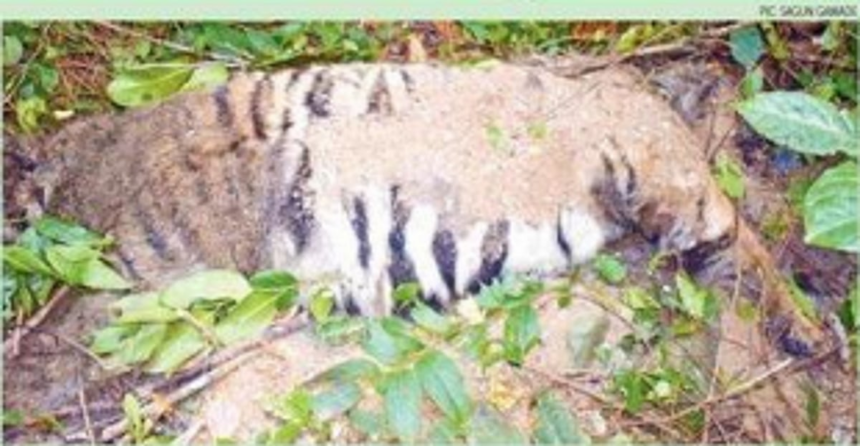
While many, especially those residing in the wildlife sanctuaries are worried over their rights, the fact is that the declaration of Goa’s protected areas as ‘Tiger Reserves’ will play a pivotal role in protecting, preserving and conserving the State’s wildlife. More so, the law also ensures that the rights of the people remain intact.
As per 2014 notification of the Union Ministry of Environment, Forest and Climate Change (MoEF&CC), the people, residing in eco-sensitive zone of tiger reserve, continue to enjoy all rights, wherein they are allowed to undertake agriculture, horticulture and even eco-tourism works.
While there are a series of apprehensions in the minds of people residing in these areas, the Government as well as environmentalist claim that the move will have no impact on developments undertaken by the local communities but yes, will certainly restrain them from undertaking illegal activities like poaching and commercial activities.
However, the declaration will have castigating impact on 12 iron ore mining leases- which are non-operational for being in wildlife zone- as the chances of getting environment clearances (EC) from MoEF&CC will stand almost diminished.
Goa has six wildlife sanctuaries –Mhadei, Mahaveer, Netravali, Molem, Cotigao and Bondla. The Mhadei WLS has 29 villages with a total population of over 2250, while another 1,500 population is residing in Netravali protected areas. Over 1,000 odd people reside in Cotigao WLS and all are tribal communities.
During the recent tiger killing case- which was part of revenge- the Chief Minister Dr Pramod Sawant had directed rehabilitation of the people from the wildlife sanctuary.
“Under the law, government can rehabilitate the people, residing in the sanctuary, only if they are ready to. Off late there have been lot of conflicts between these locals and the forest officials over the issue of encroachment of wildlife areas or imposition of certain restrictions,” a senior forest official said.
Recently, last month, the villagers of Caranzol in Sattari, had clashed with forest officials, during a inspection of an area where illegal felling of trees was reported in the forest area, which falls within the Mhadei WLS. The forest officials had to fire in air to get the crowd dispersed following tense situation.
“We are following the law, as per which there are already do’s and don’ts specified for the people residing in the sanctuary. Everyone has to follow the law to protect wildlife and wild animals. Destruction of their habitat by human, will obviously lead to man-animal conflicts and the recent tiger death was part of it,” an official added.
Activities like agriculture, horticulture, eco-tourism, or any other primary occupations, which is livelihood of the people residing in such areas, are allowed. The rehabilitation of the people also can be done under the Wildlife Protection Act 1972.
Environmentalist Rajendra Kerkar, who has been at the forefront to get Mhadei WLS a tiger reserve tag, explains that declaration will have no impact on the rights of the inhabitants in the protected sites. “The law itself gives the inhabitants all the protection,” he said.
However, Kerkar said that the inhabitants would have no rights on illegally encroached forest areas. “There are many influential land encroachers, who have encroached upon tracks of land in the protected areas. They are afraid that they will lose out and hence are instrumental in galvanising resistance and misinforming villagers,” he said.
The green expert also claims that the tiger reserve will help in bringing in Central fund towards the maintenance and protection of the forest, amelioration of the habitat and more importantly for eco-development of the people living in the buffer areas of the reserve.