Since 1st March in general and 22nd March in particular, India has gone under turbulent times due to the COVID-19 pandemic. Since the last four months successive lockdowns were announced by the Central government and implemented by the State government.
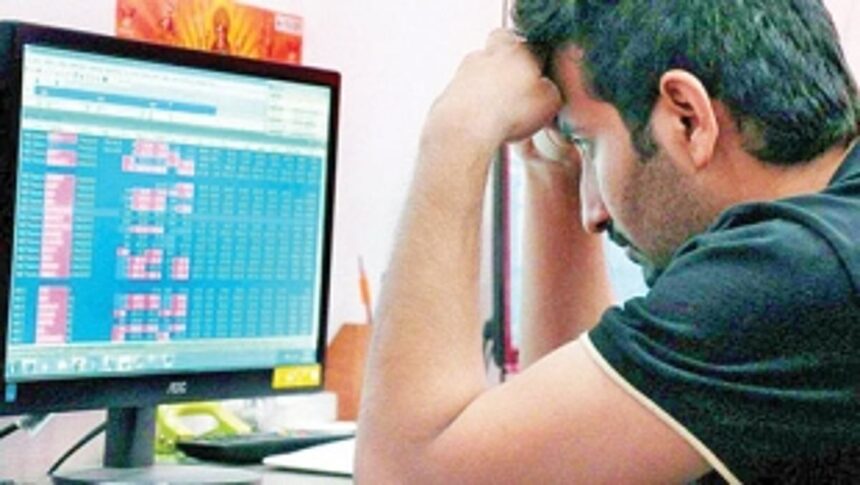
In Goa particularly commercial activities were either suspended or were going under severe disruption. However not so with the stock and shares markets of the country which were operative in full swing.
During the pandemic, the stock market was fully operational in Mumbai. The Depositories, Intermediaries and Subsidiaries in Goa kept their doors closed for genuine customers and used their portfolios to misuse funds through the electronic system and computer operators to manipulate surreptitious dealings, in which shareholders were kept in the dark about the trade dealings and entries posted against the customer’s interest. It is high time the Vigilance and Securities and Exchange Board of India (SEBI) expose how the employees of the brokers take Power of Attorney from clients to buy and sell shares in their absence and manipulate their account. Present Goan investors are lethargic.
Our forefathers were enterprising and invested in shares in physical form which were tedious to handle as there was a lot of manpower and paper work involved in trading of shares in physical form as well as lot of expenses were incurred with various formalities and legal procedures.
Sometimes the share certificates used to get lost in transit with postal offices. Also, dividend warrants were lost and the money involved used to go back to the companies which in turn used to go to the Government after seven years without any incentive to the original shareholders which made investing risky, expensive and lengthy. Hence 0.5% brokerage was justified and reasonable during that period when the share registry was maintained in the Bombay Stock Exchange and the National Stock Exchange. For example, one MRF share is worth more than 60,000 and the depository earns around Rs 300 to 400 per share traded. Often shares are traded in multiples and hence over a day several lakhs of rupees were earned by sitting in the comforts of an air-conditioned office.
Now, the trading in physical form of shares has been banned. All shares in physical form have to be converted into Demat form in order to be traded online.
Shares are now traded at the click of the button by operators and hence the brokerage should be 0.1% or below. In the days gone by, many senior Goans were actively involved in the stock market which was done in the physical form.
I know some Goan customers from abroad, NRIs buying shares worth 30 to 40 lakhs of rupees over the telephone. As Goans living abroad, seafarers, migrants holding Portuguese passports are often duped it is high time the NRI Commissioner be besieged of this issue and take steps to protect the interests of Goan shareholders, local as well as those abroad from the Intermediators of the stock markets.
Sometimes the original shareholders die and their shares are sold using forged signatures. When signatures differ they get them rectified using their influence with authorities and get it in the names of those pledging the shares. Karvy Dtock brokers had pledged some shares and duped people. Brokers use arrogance to prevent their clientele from knowing the exact rates at which the shares are sold or bought on the spot.
Shares fluctuate according to the economy and disasters that affect the country as well as some happening which affect other countries.
Goans are advised to wake up and find the ways of pledging their ancestors’ shares legally and get these dematted to enable them to sell the shares at its peak level.
Sadly, Goans are up and about in their attempts in selling Goa rather than being involved in trading shares and stocks in the open market. It is therefore not surprising that recent reports suggest that more people are suffering from depression, loneliness, anxiety, etc, because of lack of innovative, creative and dynamic mindsets among our people.
In Goa there are at least 15 franchisees of stock and brokerages along with their subsidiaries involved in trading of stocks and shares employing about 300 people scattered in the major cities and towns which service around 6,000-8,000 clients.
Share prices vary up to Rs 200 intra-day. For example, Dr Reddy’s share during a particular day was Rs 2,600 but on speculation of a particular drug it shot up by about Rs 1,000 to Rs 3,000. On 1st March it was Rs 4,600 and in February it was 3,500, and now it is 4,100.
As of today, hardly any Goans bought this share. During the lockdown period, they were drunk, dancing and merry-making. Since the lockdown over a period of three months have shown enterprising shareholders to buy shares at a discounted rate due to the uncertainties of the pandemic the stock markets which were trading at 12,000 points in early March dropped to around 8,000 points by March end and early April.
The shares of Britannia which traded at 3,400 in early March fell to as low as 2,100 in the month of April.
Those who bought the shares in multiples were able to earn lakhs of rupees as the same are trading today at Rs 2,900. So, it would be in the interest of Goan youth who are presently into drug deals and also part of the land mafia buying and selling Goa consider to also enhance their lives and livelihoods and keep themselves busy in creatively using their money to empower themselves financially.
During the present three months of lockdown it may be recalled that 15 to 20 lakh crores were lost which has been taken by foreign investors and was a good time for local investors. They should have taken advantage in investing in companies of repute like Hindustan Unilever, Pfizer, Dr Reddy’s, Godrej and Tata group of Companies by judiciously studying the views of experts in the field. Since this lockdown over a period of three months, has allowed enterprising shareholders to buy shares at discounted rates due to the uncertainties of the COVID-19 pandemic.
This is relevant in trading in shares because today depositing in banks is both uneconomical and risky so it would be in the interest of Goan youth. Goans should take interest in stocks and shares instead of keeping money to stagnate in the banks. They could have availed this opportunity as banks have been defrauded by people like Nirav Modi and Vijay Mallya. The youth of Goa should empower themselves financially and promote the concept of ‘Atma Nirbhar Bharat’.