A former sex worker trafficked into prostitution in the then notorious red-light area Baina has revealed what life is like for young girls and women working from the cubicles.
Way back in the late 90s, Julie (name changed) was lured by a man who she thought would be her life partner, at her native village in Andhra Pradesh. She was promised a respectable job with a decent salary in Goa to support her poverty-stricken family. She agreed to travel to the coastal State not realising what his true intentions were.
She was sold to a pimp at Baina only to be forced into prostitution.
While she was barely paid for the illicit profession, which thrived in the then infamous part of Vasco, major share was taken away by her pimp who would decide her customers. “The brothel keeper decided who would be my customer, total number of customers each day, whether or not the client would use a condom, etc. It was a horrifying experience of life,” she recalled as she narrated the ordeal to Herald.
After years of being forced into sex trade, Julie found the courage to bare her heart out to NGO Anyay Rahit Zindagi (ARZ) that has its members working all through the State to rescue and rehabilitate victims of prostitution. “In the initial days, I kept my daughter at a children’s centre and pick her in the evening, which is when ARZ members began interacting with me. I explained to them the entire story and they promised to rescue me,” she said.
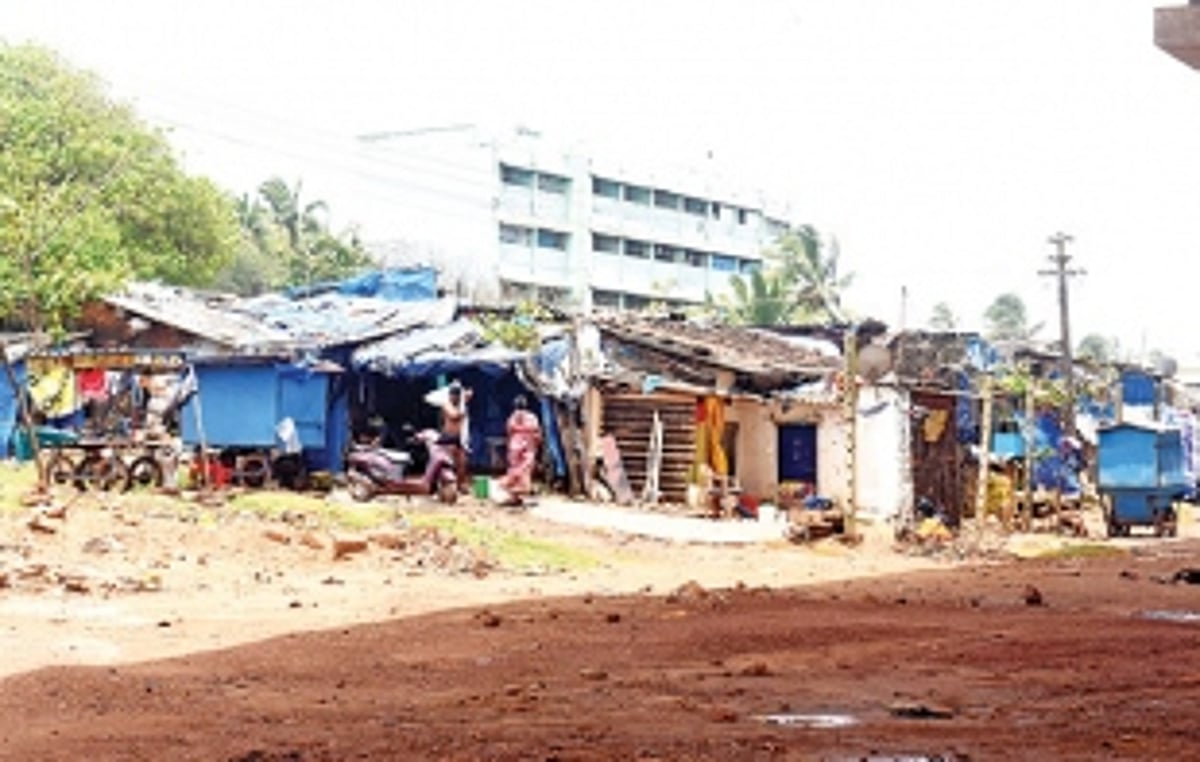
ARZ Director Arun Pandey said they reached out to Julie through her daughter who explained the exploitation her mother endured every day. “We began counselling her, encouraging her to quit the profession. As we launched our laundry at our rehabilitation centre, we enrolled Julie at our centre,” he said. This is the story of 2009, almost five years after the government bulldozed through the cubicals at Baina.
Between the demolition and her employment at ARZ’s Swift Wash, Julie’s life was still in shambles. With the red-light being completely demolished, forcing the victims of sex trade to scatter to different parts of the State and some shifting to another state, Julie recalled on how she worked as domestic help at a few houses or picked garbage to survive.
Ten years down the line, Julie is happy working with the NGO and living with her daughter and son-in-law. “ARZ helped me to live a good and respectable life in true sense. They got me a job in its laundry, funded my child’s education and got her married too. I am happily living with my daughter and her husband,” she said. Julie did not hesitate to mention how her family distanced from her when she was in need.
“I may not earn as I would while in sex trade, but whatever income I get through my present job, I manage to save some money for my children’s future. The house rent is shared between my son-in-law and myself. I now want to retire and live peacefully,” she adds.
Herald met another victim of sex trade who shared the same ordeal. “I was an underage when my parents sent me to Baina to earn money. It was almost like trafficking but I have forgiven them as it was the situation that forced them to push me in prostitution,” Sunita (name changed), recalled.
Now married with two children, Sunita was fortunate to have been rescued within short span. “The business is the same then and now. Clients would pay more for young girls, major share of which went to the pimp. There were some sex workers who would operate individually but girls like me who were forced, had middle-men/agents being paid large share for every client,” she said.
After the demolition at the infamous place, the government had released a scheme to compensate the victims; however, it remained only in papers as only around 5 victims have been paid Rs 1 lakh each as of now. Several victims including Julie and Sunita have too not been compensated although their names were registered with the authorities concerned, appointed to disburse the scheme.