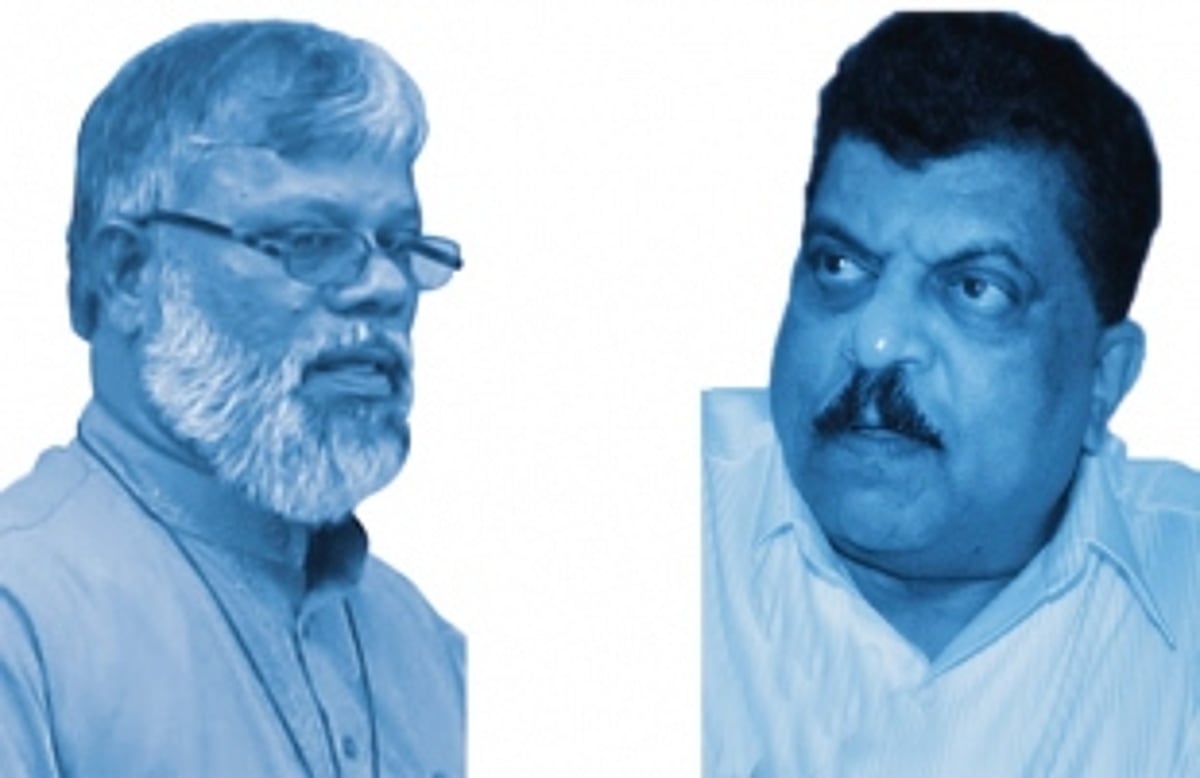
Fr Zeferino D’Souza: We would look to it as a positive move. Initially, when we had asked for English to be one of the mediums of instruction, the government thought of giving it to us as minorities. They said grants would be given for the minorities to teach English with Konkani as a compulsory subject till the tenth standard. The policy of the government was in giving grants to education in Konkani or in Marathi. This was the exception made in the policy for the minority institutions and grants would be given provided there was one Konkani subject from first to tenth.
Herald: What are your thoughts on the other decision to have bilingual textbooks as one of the pre-requisites to teaching English in the school?
Fr Zeferino: We have no problem with that. Learning something extra is always a good thing. Students will have an opportunity in learning two languages, which is of course a good thing. Students have the capacity to study more than one language. At least three languages they say. So I think it’s a benefit for the children to be learning in three languages. So they can learn English as well as Konkani or Marathi.
I feel for the time being this is the best decision, if there is a need for a change, we can always approach the government. This, for the time being is best. It is acceptable to any other section because everyone is included in this. They get the opportunity to learn both.
Herald: The issue of passing the bill is not new. Do you think it is any different this time?
Fr Zeferino: The issue still continues. Last time, after the cabinet note, the bill was taken to the house. It was realized later, that the bill didn’t reflect the cabinet note. It was therefore referred to the select committee for further action. Now we expect the select committee to reflect on that and that the new bill will reflect the cabinet note and it will be approved on the floor of the house at the next session of the assembly.
Herald: What is the role the DSE is taking in the MoI issue?
Fr Zeferino: The movement was not of the DSE. The movement was of the PTAs. It was spearheaded by the parents with the representatives of FORCE. There has been a misconception as to the role the DSE played. It was actually the Archdiocese Board of Education (ABE), the umbrella body for all the Catholic schools. ABE supported the parent’s movement and we are always with them. Our schools are standing because of the parents. We at DSE are the largest constituents of ABE.
We are giving them guidance. Managements are part of the entire concept of the movement. They can’t go against us because they need the parents and who ultimately needs the grants is the management. The grants are given to the management of the school. We have to work in tandem with the parents. We’re with the parents in every decision they take.
Herald: How responsive has the government been on this issue and do you see an end to the MoI issue?
Fr Zeferino: The government has been good, always taking us into confidence regarding the MoI issue. We’ve had a good rapport with the government that has always been willing to listen to us. The government has constituted an advisory council and ABE and DSE together with FORCE were also a part of it. We have always had a good relationship with the government.
We are hopeful and positive that this issue will be solved for good. We hope and pray that it is settled to the satisfaction of the parents. All the decisions have been taken and have manifested themselves as the cabinet note, now only the bill is left. The consultation is over, and the note is a reflection of these discussions and the bill will only be a reflection of this decision. I don’t think there is any reason to object to these as the cabinet note has provisions for everybody because ultimately what FORCE was asking for was not to make it mandatory for anyone, not imposing on anyone but to give them freedom.