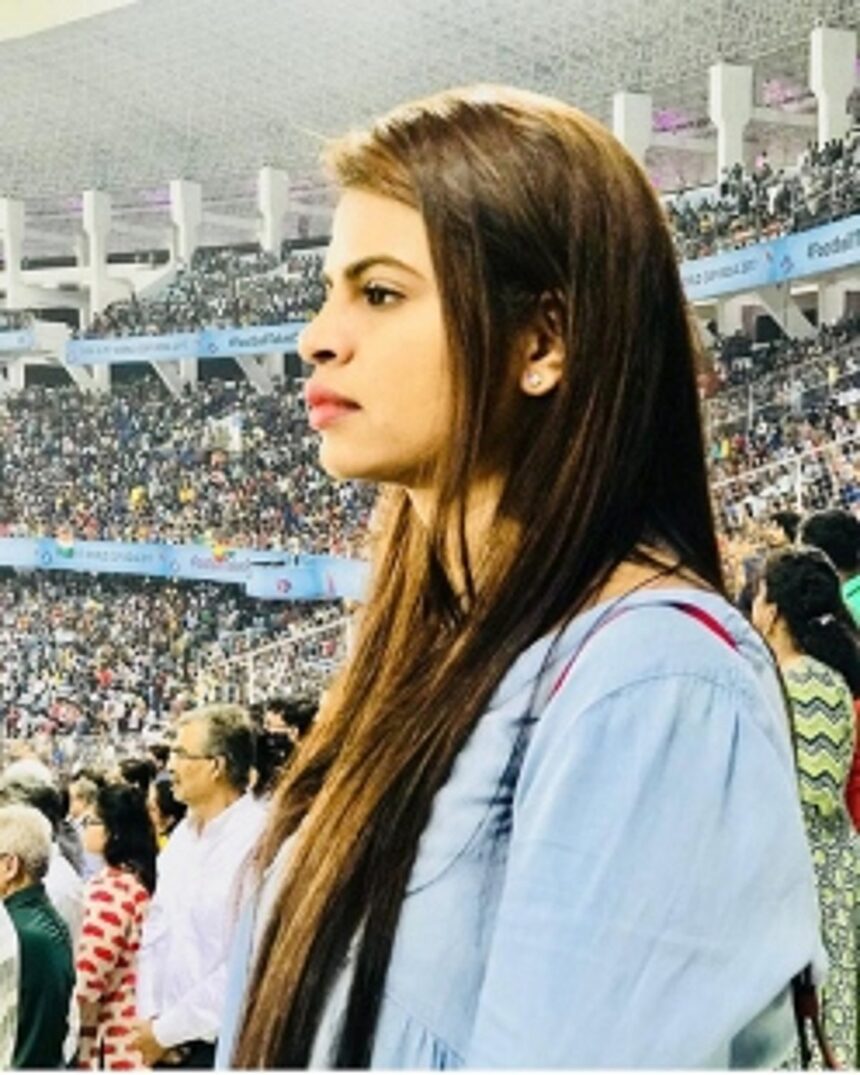
PANJIM: March 8 which is observed as the International Women’s Day has been aptly designated as AFC Women’s Football Day and AIFF has rightly made huge promises on women’s football development in its Vision 2047 document, pointed out Valanka Alemao, the lone woman from Goa in AIFF’s Executive Committee.
“A major aspect of the Vision 2047 document is to strengthen women’s football as it needs a better focus in India. The Federation under the leadership of Kalyan Chaubey has laid down the steps that will uplift the levels of women’s football in India. There is a new road map and it needs efficient implementation,” remarked the Varca-based lady.
“There is vast disparity between men’s and women’s football in India. There is a long way to go for women’s football which needs high number of women coaches and referees and even administrators with good incentives. Most importantly, club football needs more women’s teams and tournaments,” commented Valanka.
One of the essentials of the Vision 2047 document is to add more age groups and increase participation in grassroots, Under-13, Under-14, Under-17, school league, university league with each age group team playing at least 14, if not more number of matches. A beginning has already been made in Goa with the under-14 structure at State and Khelo India levels. There is need to increase the number of competitions for girls, and at the same time, the State league must see an increase in the number of club teams as the AIFF plans to make the women’s league a four-tier robust one, from the State to nationals,” explained Valanka.
“The AIFF roadmap envisages, under its long term planning, that 50 per cent of developmental clubs should have a women’s football division while the Federation would raise 20 standalone women’s football clubs in India. By 2047, it plans to have at least one iconic footballer in women’s football with international stardom. Earning a slot in FIFA Under-17 World Cup on sheer merit through competition and becoming a top-eight nation in Asia in women’s football by 2026 and top four in the continent by 2047,” are the objectives of the Vision document, elaborated Valanka.
“It’s an ambitious programme which calls for huge investment more so when viewed against the background that the number of competitions and the number of clubs must increase. But that’s needed, to motivate the new generations of female footballers as women are stronger both mentally and physically to achieve anything they set their mind to,” argued Valanka. It will now all depend on the pace of implementation and execution. The programme also calls for futsal and beach football for women.
With the United Nations theme for this year’s International Women’s Day being “DigitALL: Innovation and technology for gender equality”, it will be necessary to find innovative solutions to help women and girls unleash their human capital and become leaders, entrepreneurs and agents of change for an inclusive development. That calls for keeping on trying, believing in oneself, never giving up and keep on trying till the objectives are met.
There is a colossal task ahead for raising the standard of women’s football in the State as well as India. With continued efforts to promote grassroots and youth development, raising the number of competitions as well as matches so that one is engaged for six to eight months if not more, one would be able to further promote and develop girls and women’s football, reasoned out Valanka.
Valanka complimented all those involved in women’s football development in the State and the rest of the country, recognising especially all the women for their achievements without regard to divisions. She concluded with Michel Obama’s quote:
“There is no limit to what we, as women, can accomplish.” It is a day to celebrate the essence of every woman.”